🏛️ Taj Mahal (India)
🔎 Quick Facts and Why It Matters
The Taj Mahal, located in India, is one of the most iconic monuments in the world, renowned for its stunning architecture and historical significance as a symbol of enduring love.
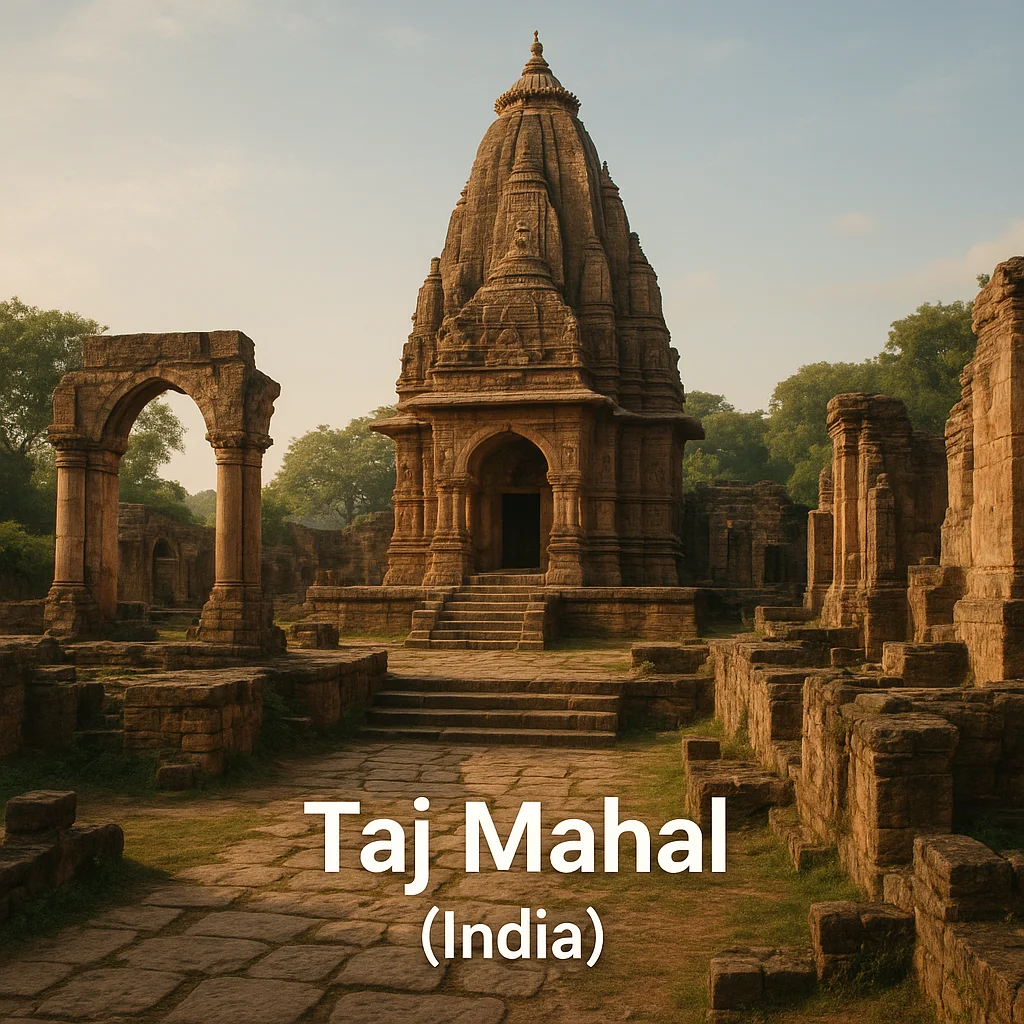
This magnificent site is a mausoleum built in the 17th century as a tribute to Mumtaz Mahal, the beloved wife of Mughal Emperor Shah Jahan. It is celebrated for its breathtaking symmetry and exquisite marble façades.
Visitors can expect a deeply engaging experience where they can explore the beautiful gardens, admire the intricate stonework, and learn about the rich history behind this UNESCO World Heritage Site.
- Location: Agra, India
- Era: 17th century Mughal period
- Typical Visit Length: 2–4 hours
- Visit Difficulty: Easy, mostly accessible
- Best Season: October to March
- Main Highlight: The central dome and reflecting pool
🗺️ Where It Is and How to Orient Yourself
The Taj Mahal is situated in the city of Agra, in the northern state of Uttar Pradesh, India. It lies close to the banks of the Yamuna River, providing a beautiful backdrop.
Agra is approximately 200 kilometers from New Delhi, which is the nearest major city and serves as a primary gateway due to its international airport and railway connections. From Delhi, Agra is accessible via a few hours' train journey or a leisurely drive.
While it's possible to visit the Taj Mahal on a day trip from New Delhi, many travelers opt to stay overnight to fully enjoy the monument and nearby attractions without feeling rushed.
🕰️ History in a Nutshell
The Taj Mahal was constructed by the Mughal Emperor Shah Jahan in the mid-17th century, between 1632 and 1653. It was built as a mausoleum for his wife, Mumtaz Mahal, following her death during childbirth.
Originally serving as a grand testament to Shah Jahan's love for his wife, the Taj Mahal also became an exemplary representation of Mughal architecture at its zenith.
Despite surviving numerous attempts of structural damage over the centuries, mainly due to war and natural elements, the site remains largely intact. Today, it is recognized and preserved as a World Heritage Site, admired for its timeless beauty.
⭐ Top Highlights You Should Not Miss
- The Main Dome
- The Reflecting Pool
- The Mughal Gardens
- The Decorative Pietra Dura
- The Great Gate (Darwaza-i-Rauza)
The main dome is the focal point of the Taj Mahal, famed for its perfect proportions and grandeur. The best photo spot is near the reflecting pool where the entire structure is mirrored, providing a captivating view.
The reflecting pool offers a stunning perspective of the Taj Mahal, creating a mirror image that enhances its symmetry, especially during sunrise and sunset.
Mughal Gardens, surrounding the structure, are extensive and meticulously maintained, offering tranquil walks with the entire mausoleum in view.
The vibrant pietra dura, intricate floral patterns made from precious stones embedded in white marble, showcase the artisans’ dedication to detail.
The Great Gate serves as a monumental entrance, with the full Taj Mahal visible as you pass through, offering a dramatic preview of what's to come.
🧱 Architecture, Materials, and Design (Made Simple)
The Taj Mahal is primarily constructed from white marble sourced from Makrana, India. This material not only lends the site its luminescent appearance but also reflects the changing light beautifully throughout the day.
Influenced by Persian, Islamic, and Indian architectural styles, the monument is famous for its symmetrical design. Its arches and minarets are quintessential examples of Mughal architecture.
Key architectural features include the central dome flanked by four smaller domes, intricate inlay work, and calligraphy using verses from the Quran, all of which add to the site’s unique character.
While some parts of the Taj Mahal have been restored to preserve their original appearance, these efforts have been mindful of maintaining the authenticity of the materials and methods used in its initial construction.
🎟️ Visiting Guide (Time, Tickets, and What to Expect)
A typical visit to the Taj Mahal can range from a brisk 2-hour tour to a more thorough 4-hour exploration, allowing time to fully absorb its beauty and significance.
Entry to the Taj Mahal involves a paid ticket, which allows access to the gardens and the mausoleum. Guided tours are available and can enhance the visit with historical insights.
The site generally opens from the early morning until late in the afternoon, with the schedule changing seasonally. Visitors are advised to check ahead as these times can be updated.
First-time visitors are encouraged to arrive early to avoid crowds, carry water for hydration, and wear comfortable shoes for walking.
🚆 How to Get There and Move Around
Visitors to the Taj Mahal have several options, including public transport, private taxis, and rideshare services. Agra's convenient transport network ensures ease of access.
For a beginner-friendly experience, entering via the East Gate is recommended as it tends to be less crowded. The site's terrain is mostly flat, making it accessible for all age groups, though some areas have large steps that should be navigated with caution.
🌤️ Best Season, Weather, and Time of Day
The best times to visit the Taj Mahal are during the cooler months from October to March, when temperatures are more comfortable and pleasant.
Photographers will find the early morning and late afternoon offer the best light for capturing the monument's radiance. This timing also generally means fewer crowds.
If visiting during the rainy season, exploring nearby indoor attractions such as museums can be a good alternative on particularly wet days.
⚠️ Safety, Rules, and Respectful Etiquette
Visitors should wear sturdy shoes given the uneven pathways and steps around the site. Comfortable, modest clothing is recommended, respecting cultural norms.
Many sections of the Taj Mahal are considered sacred, and visitors should maintain silence in these areas. Photography is usually allowed, though the use of flash or drones may be restricted.
Follow all posted signs, refrain from touching delicate carvings, and stick to designated paths to help preserve this remarkable site.
Practical safety tips include being cautious of slippery surfaces during rain, staying hydrated under the sun, and being aware of pickpockets in crowded areas.
🗺️ Nearby Places and a Simple One-Day Itinerary
Agra offers numerous other attractions that complement a visit to the Taj Mahal, including Agra Fort, Fatehpur Sikri, and the Tomb of Itimad-ud-Daulah.
- Morning: Visit the Taj Mahal
- Midday: Tour the Agra Fort
- Afternoon: Explore the local bazaars
- Evening: Enjoy a sunset view from Mehtab Bagh
🧩 Stories, Myths, and Common Questions
Is it true that Shah Jahan planned to build a black Taj Mahal? Historians suggest this is more myth than fact, based on European traveler accounts that lack evidence.
Many visitors are surprised to learn that the Taj Mahal is not a "lost" site. It has been continuously recognized and visited since its construction, thanks in part to its architectural beauty.
For families wondering about the visit's suitability for kids, the wide-open spaces make it easy for families to explore together, though it can be a long walk for some.
Guides are widely available and can enhance the experience by pointing out details and sharing the history of each element.
📌 Summary and Who This Site Is Best For
- A majestic mausoleum in Agra, India
- Constructed during the 17th century
- Built as a symbol of love by Emperor Shah Jahan
- Key highlights include the main dome and reflecting pool
- Features Mughal architecture with elaborate marble inlay
- Enjoyable as a 2–4 hour visit
- Best visited between October and March
- Follow safety guidelines and cultural etiquette
- Nearby attractions include Agra Fort and Fatehpur Sikri
- Known for its striking architectural symmetry
The Taj Mahal is perfect for history enthusiasts, architecture lovers, and families looking for a world-renowned heritage experience. Its historical value and breathtaking views make it a must-visit for any travel itinerary in India.
The sheer grandeur and intricate details of the Taj Mahal offer a transcendent experience that resonates with visitors, leaving them with lasting memories. As you plan your visit, remember to respect and preserve the site's historical significance for future generations.