🏛️ Saqqara Step Pyramid (Egypt)
🔎 Quick Facts and Why It Matters
The Saqqara Step Pyramid, located in Egypt, is one of the oldest stone structures and the very first pyramid, renowned for its architectural significance and historical mystery. Constructed during the 27th century BC, it stands as a testament to ancient Egyptian innovation.
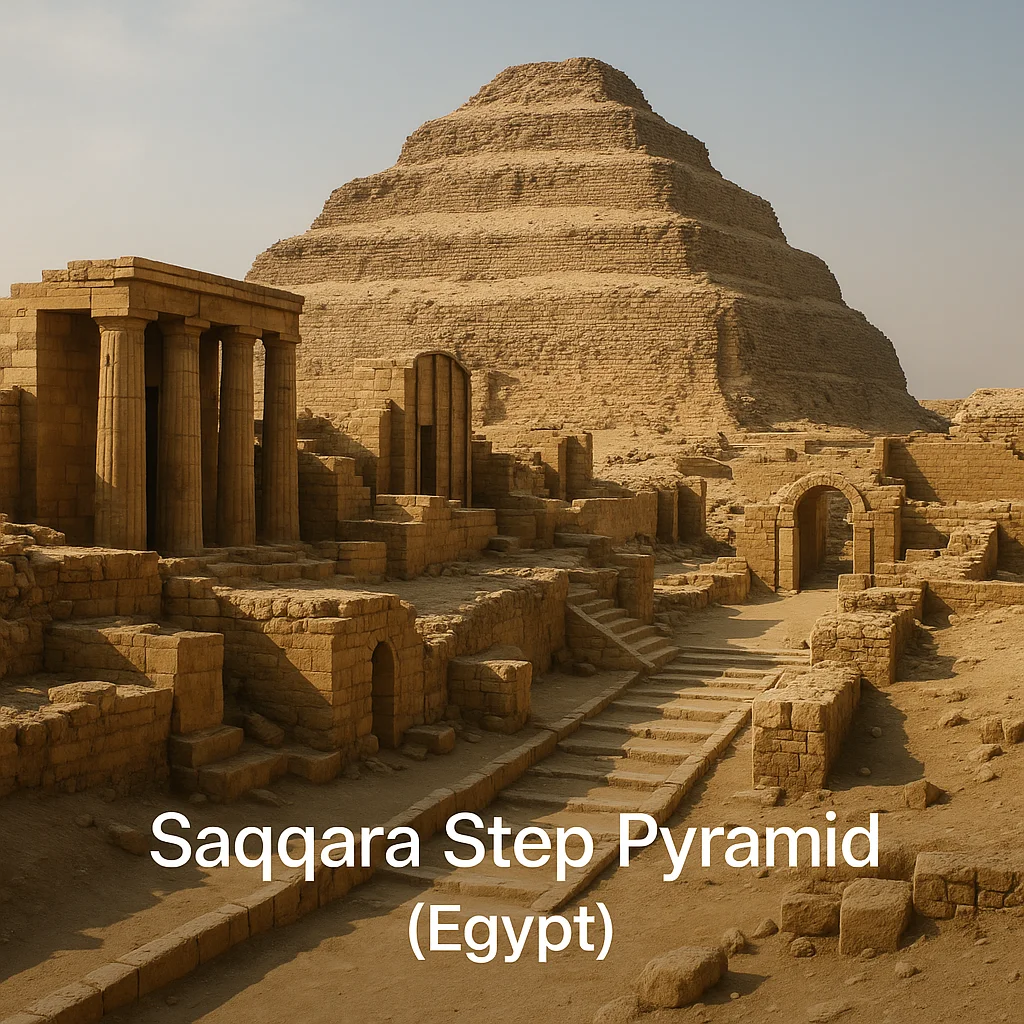
This unique pyramid draws thousands of visitors every year who are eager to walk among its ancient ruins, explore nearby tombs, and take in the expansive views of the surrounding desert landscape. Saqqara offers a glimpse into the early advancements in building techniques and the cultural evolution of ancient Egypt.
In this guide, you’ll learn about the origins and construction of the pyramid, its historical significance, and practical visiting tips. Insights include top highlights to explore, noteworthy architectural features, and crucial visitor etiquette.
- Country/Region: Egypt / Saqqara
- General Era: 27th century BC
- Typical Visit Length: 2-4 hours
- Visit Difficulty: Moderate (uneven ground, steps)
- Best Season: October to April
- Highlight: Step Pyramid, surrounding tombs
🗺️ Where It Is and How to Orient Yourself
Saqqara is located in Egypt, near the west bank of the Nile River. It is just south of Cairo, the Egyptian capital, making it accessible from major travel hubs like Cairo International Airport.
For visitors, a trip to Saqqara is possible as a day trip from Cairo, although an overnight stay in the area allows for a more relaxed exploration. The site is situated on a desert plateau, providing sweeping views of the surrounding landscapes.
From Cairo, Saqqara can be reached by road, making it an easy addition to an Egyptian itinerary. Picture the location as an expansive archaeological site emerging from the vast Egyptian desert.
🕰️ History in a Nutshell
The Step Pyramid was commissioned by Pharaoh Djoser and constructed during the Third Dynasty by the architect Imhotep. Initially serving as a royal burial site, it marked a significant shift in Egyptian funerary practice from mastabas (flat-roofed tombs) to pyramidal structures.
As the earliest colossal stone building in Egypt, the pyramid represented a period of prosperity and architectural experimentation. Over time, however, changes in political power and the development of alternate burial sites contributed to its decline and transformation into ruins.
Remarkably, the Step Pyramid remains today because of its robust stone construction and the enduring fascination with ancient Egyptian culture, which has driven conservation efforts.
⭐ Top Highlights You Should Not Miss
- The Step Pyramid of Djoser: The centerpiece of Saqqara, this pyramid stands in full view against the desert sky.
- The Serapeum: An underground temple complex renowned for its grand vaults and the Apis bull burials.
- The Pyramid of Unas: Famous for its pyramid texts, among the earliest religious inscriptions carved into the stone.
The Step Pyramid of Djoser is a six-tiered structure rising in the desert, with its complete pyramid form beautifully visible against the sky. A popular photo spot is from the main entrance, which offers a wide view with the pyramid flanked by ancient ceremonial courtyards.
The Serapeum consists of a series of underground galleries with massive stone sarcophagi. Although temples mainly cater to spiritual purposes, the Serapeum's visually compelling stonework draws many photographers to capture it in its entirety.
The Pyramid of Unas, though smaller, showcases intricate carvings inside, offering a rare opportunity to see pyramid texts. Outside, capture the full structure against the backdrop of the Egyptian plateau for memorable photography.
🧱 Architecture, Materials, and Design (Made Simple)
The Step Pyramid was constructed using limestone blocks, a pioneering use of stone on such a large scale. This transitioned from the earlier use of mudbricks, signaling a shift in architectural practice.
The architectural style combines traditional mastaba elements with innovative stepped layers, making it a precursor to later pyramids. The orderly arrangement of its terraces revolutionized monumental architecture.
Notable features include the pyramid’s original courtyard, enclosed by an impressive mortuary complex. Though some restoration work has been necessary, much of the original stonework remains intact, offering a view into ancient construction techniques.
🎟️ Visiting Guide (Time, Tickets, and What to Expect)
Visitors typically spend 2-4 hours exploring Saqqara, with options for quicker or deeper dives into the history of the place. Entry involves a main ticket for the pyramid complex, with additional fees for nearby tombs or temples.
The site is generally open from morning until late afternoon, but hours may vary by season. Arriving early is advisable to avoid the midday heat and crowds.
First-time visitors should carry water and sun protection, as shade is minimal. Wear comfortable footwear suitable for uneven terrain and prepare for both open desert areas and confined underground passages.
🚆 How to Get There and Move Around
Saqqara is accessible by car from Cairo, with travel options including rental, taxi, or organized tours. Public transit is less optimal due to the remote nature of the desert site.
Once at Saqqara, pathways allow for exploration by foot, although the surfaces can be uneven and demanding. Comfortable walking shoes are recommended to navigate the site safely.
For those with mobility concerns, some areas may be challenging due to steps and loose stones, so preparing accordingly is essential for a smooth visit.
🌤️ Best Season, Weather, and Time of Day
Visiting Saqqara is best between October and April, when cooler temperatures make the exploration more comfortable. This period also offers favorable lighting conditions for photography.
The early morning or late afternoon provides the best lighting for capturing the golden hues of the desert landscape without midday glare. Check local forecasts as weather can be unpredictable.
If the weather turns, consider visiting nearby museums or attractions in Cairo that offer expansive insights into Egypt’s history in sheltered environments.
⚠️ Safety, Rules, and Respectful Etiquette
Choose sturdy footwear to manage the uneven ground and steps. Modest clothing is advisable, respecting local customs and providing sun protection.
Photography is generally permitted, though some areas may restrict flash or drones. Always respect posted signs and adhere to guidelines to protect this historical site.
Stay on designated paths, refrain from climbing on structures, and avoid touching centuries-old carvings to preserve them for future generations. Be mindful of slippery stones, heat exposure, and monitor personal belongings in crowded areas.
🗺️ Nearby Places and a Simple One-Day Itinerary
- Morning: Start with the Step Pyramid and Djoser’s Courtyard.
- Midday: Visit the Serapeum and explore its underground galleries.
- Afternoon: Check out the Pyramid of Unas and its inscriptions.
- Evening: Return to Cairo and relax with a view of the Nile.
Enhance your visit with trips to nearby archaeological sites such as Memphis, the ancient capital, and the Dahshur Pyramid complex for a comprehensive day in Egyptian history. Alternatively, explore the Egyptian Museum in Cairo, rich with artifacts from the Saqqara era.
🧩 Stories, Myths, and Common Questions
Q: Is the Step Pyramid the oldest pyramid? A: Yes, the Step Pyramid is considered the oldest purpose-built stone pyramid, illustrating early pyramid construction techniques.
Q: Was Saqqara a lost city? A: No, Saqqara was never a “lost city” but rather a necropolis used for burials and ceremonies, continuously inhabited through ancient times.
Q: Is the walk around Saqqara challenging? A: While manageable for most, the walk involves moderate effort with uneven terrain; comfortable shoes and water are recommended.
Q: Is it suitable for kids? A: With supervision and safety precautions, children can enjoy Saqqara, but be mindful of the rugged walking paths.
Q: Is hiring a guide recommended? A: A guide can enrich your experience with historical insights and cultural context, worthwhile for a deeper understanding of the site.
📌 Summary and Who This Site Is Best For
- What It Is: First stone pyramid, ancient burial site
- Where It Is: Saqqara, near Cairo, Egypt
- Key History Takeaway: Revolutionary in pyramid-building
- Top Highlights: Step Pyramid, Serapeum, Pyramid of Unas
- Architecture/Materials: Stone layers, early limestone use
- Visit Length Guidance: 2-4 hours
- Best Season/Time: October-April, early/late in day
- Safety/Etiquette: Stay on paths; no climbing or touching
- Nearby Add-ons: Memphis, Dahshur, Cairo museums
- Memorable Fact: First and oldest large stone structure
Saqqara is ideal for families interested in history, photographers seeking unique shots, and those new to ancient architectural wonders. It provides a fascinating insight into early Egyptian engineering brilliance.
The sheer scale and historical significance of the Saqqara Step Pyramid make it a destination worth visiting. Its successful preservation offers a window into the world of the ancient Egyptians.
Visiting Saqqara is an enlightening experience, fostering a greater appreciation for history, culture, and the advancements of our ancestors. Proper preparation ensures it remains a respectful yet inspiring journey.