🏛️ Prambanan (Indonesia)
🔎 Quick Facts and Why It Matters
Prambanan is a magnificent 9th-century Hindu temple complex located in Central Java, Indonesia, celebrated for its towering, ornate structures and cultural significance. It stands as a testament to the architectural brilliance and rich history of the ancient Javanese civilization.
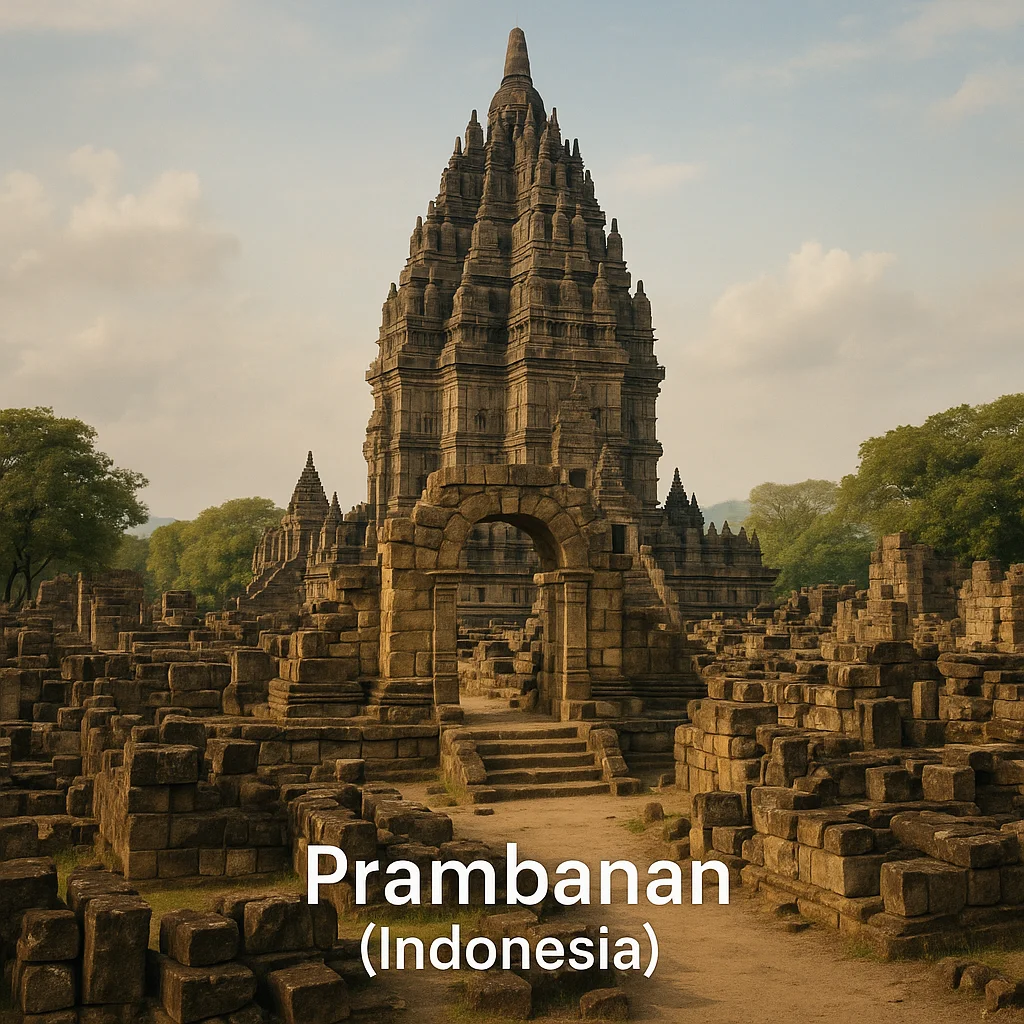
This UNESCO World Heritage site offers visitors the chance to explore its intricate temples and carvings, surrounded by lush landscapes. Walking through the ruins provides a sense of stepping back in time, offering a remarkable blend of history and scenic beauty.
In this guide, you will learn about Prambanan's fascinating history, architectural designs, top highlights, and practical tips for a memorable visit. We'll also share insights into the site's myths and common visitor questions.
- Location: Central Java, Indonesia
- Era: 9th century, Hindu kingdom period
- Typical Visit Length: 2–4 hours
- Difficulty: Moderate, walking required
- Best Season: Dry season (May to September) for clear views
- Main Highlight: Grand central temple of Shiva (Loro Jonggrang)
🗺️ Where It Is and How to Orient Yourself
Prambanan is located in Central Java, near the city of Yogyakarta. It is one of Indonesia's most iconic archaeological sites. The nearest major city and typical entry point for international travelers is Yogyakarta, which is well-connected by a domestic airport and rail services.
While Prambanan can be visited as a day trip from Yogyakarta, many find it enriching to spend a night in the area to experience other attractions. The temple complex is situated in a rural setting, surrounded by lush landscapes, making it easy to find on a mental map as a cultural jewel within a mostly agricultural region.
Yogyakarta serves as the gateway, with Prambanan lying to the northeast, accessible by a straightforward route through scenic rural roads. Considering the ease of access and the site’s historical value, Prambanan is a must-visit for any heritage traveler in Indonesia.
🕰️ History in a Nutshell
Prambanan was constructed in the 9th century by the Sanjaya Dynasty during the peak of Hinduism's influence in Java. It functioned as a majestic Hindu temple complex dedicated to the Trimurti—the three great Hindu deities Brahma, Vishnu, and Shiva.
The site flourished during the reign of the Mataram Kingdom, becoming a spiritual and cultural hub. However, it began to fall into neglect following a shift to Buddhism and political turmoil in the region.
Over time, volcanic eruptions and earthquakes contributed to its decay. It remained largely abandoned until rediscovery by Dutch archaeologists in the 19th century, leading to a significant restoration effort in the modern era.
⭐ Top Highlights You Should Not Miss
- Shiva Temple (Loro Jonggrang)
- Vishnu Temple
- Brahma Temple
- Prambanan Museum
- Ramayana Ballet Performance
The Shiva Temple is the largest structure within the complex, standing at 47 meters. Visitors can admire its towering spire and detailed bas-reliefs depicting scenes from the Ramayana, visible in full context against the backdrop of the sprawling temple grounds.
The Vishnu and Brahma Temples, smaller but equally beautiful, offer a close look at ancient stonework and are positioned symmetrically with the Shiva Temple, providing an axis of harmony and balance within the complex.
The adjacent Prambanan Museum offers exhibits on the site's history, archaeological efforts, and cultural legacy, making it an informative stop for those interested in deepening their understanding of the area's past.
The evening Ramayana Ballet, performed outdoors with the illuminated temples in the background, is a cultural highlight. It combines traditional dance, music, and drama to retell the epic story of Rama, providing a mesmerizing experience against the starlit sky.
🧱 Architecture, Materials, and Design (Made Simple)
The temples at Prambanan are predominantly constructed from volcanic stone, skillfully cut and fitted without mortar. This technique demonstrates the advanced engineering skills of the Javanese builders.
Architectural influences at Prambanan are primarily Hindu, characterized by tall, pointed spires and intricate stone carvings. Unlike the later Borobudur with its Buddhist stupas, Prambanan follows a Hindu cosmological layout.
Unique elements like the relief narratives of the Ramayana and ornate guardian statues differentiate Prambanan. Recent restorations have resurrected fallen stones, carefully preserving the original artistic spirit while stabilizing the structures for future generations.
🎟️ Visiting Guide (Time, Tickets, and What to Expect)
A typical visit to Prambanan can range from a quick 2-hour tour to a half-day exploration. The main zone requires an entry ticket; additional fees may apply for the museum or performances.
The site opens from morning until late afternoon, with occasional evening events. Arriving early helps avoid peak crowds and warmer midday temperatures; hours can vary seasonally or due to events.
First-time visitors should plan for check-in time at the entry, bring plenty of water, sun protection, and a guidebook or hire a local guide for in-depth insights.
🚆 How to Get There and Move Around
Visitors can reach Prambanan by public transportation, such as buses and trains, from Yogyakarta. Taxis and ride-sharing services offer convenience and flexibility, especially for those carrying more gear or traveling in groups.
The main entrance provides the most straightforward access; from there, well-marked paths guide visitors through the complex. Accessibility can be challenging, with uneven stones and steps, requiring comfort wearing suitable footwear.
🌤️ Best Season, Weather, and Time of Day
Visits are most comfortable during Indonesia's dry season, from May to September, when clearer skies enhance photographic opportunities.
Early morning visits provide cool weather and soft lighting, ideal for capturing the site's grandeur. Late afternoon offers warm tones and long shadows for dramatic photography.
Rainy days are best spent in the Prambanan Museum, ensuring you still enjoy the site's rich history without being disrupted by the weather.
⚠️ Safety, Rules, and Respectful Etiquette
Visitors should wear practical shoes to navigate uneven and sometimes slippery temple stones safely. It is essential to respect sacred sites by maintaining silence where requested and heeding all posted signs.
Photography is generally allowed, but flash and drone usage may be restricted, so always check local guidelines.
For conservation and personal safety, stick to the designated paths, avoid touching carvings, and be mindful of weather conditions that might exacerbate slipperiness.
🗺️ Nearby Places and a Simple One-Day Itinerary
- Morning: Explore Prambanan Temple Complex
- Midday: Visit Prambanan Museum
- Afternoon: Head to Ratu Boko Palace for views
- Evening: Attend Ramayana Ballet Performance
Nearby attractions include the Ratu Boko Palace, located on a hill offering panoramic views and a peaceful atmosphere for exploration and picnicking. The Kalasan Temple and the Plaosan Temple are also worthwhile stops for those interested in ancient Javanese architecture.
This flexible itinerary provides ample opportunities for both exploration and relaxation, with cultural depth and historical interest balanced throughout the day.
🧩 Stories, Myths, and Common Questions
Q: Is Prambanan considered a "lost city"?
A: No, Prambanan was known to the local population; the term relates more to its rediscovery by Western archaeologists in the 19th century.
Q: Who commissioned the construction of Prambanan?
A: The temple complex was commissioned by the Sanjaya Dynasty, a Hindu kingdom that reigned in central Java during the 9th century.
Q: Will my children enjoy the visit?
A: Yes, the wide-open spaces and fascinating architecture make it family-friendly, although care should be taken on steps and during peak heat.
Q: Is a guided tour necessary?
A: While not essential, a guide provides valuable insights into the complex’s history and significance, enhancing your visit experience.
📌 Summary and Who This Site Is Best For
- What it is: A 9th-century Hindu temple complex
- Where it is: Central Java, Indonesia
- Key history takeaway: Built by the Sanjaya Dynasty
- Top highlights: Shiva Temple, Ramayana Ballet
- Architecture/materials: Volcanic stone, Hindu design
- Visit length guidance: 2–4 hours
- Best season/time: Dry season, early morning/late afternoon
- Safety/etiquette: Wear appropriate footwear, respect signs
- Nearby add-ons: Ratu Boko Palace, Kalasan Temple
- One memorable fact: Largest Hindu temple complex in Indonesia
Prambanan offers a rich experience for history enthusiasts, architecture admirers, and cultural explorers alike. Families will find the open areas accommodating, while photographers will appreciate the dramatic backdrops. The comprehensive cultural insights and remarkable preservation efforts make it well worth the visit.
The allure of Prambanan lies in its storied past and artistic grandeur, a compelling destination for those interested in Southeast Asia's historical narratives. Enjoy a responsible visit, respecting both its cultural significance and natural beauty.