🏛️ Kinkaku-ji (Japan)
🔎 Quick Facts and Why It Matters
Kinkaku-ji, also known as the Golden Pavilion, is a stunning Zen Buddhist temple located in Kyoto, Japan. It is famous for its top two stories that are completely covered in gold leaf, reflecting beautifully in the surrounding pond.
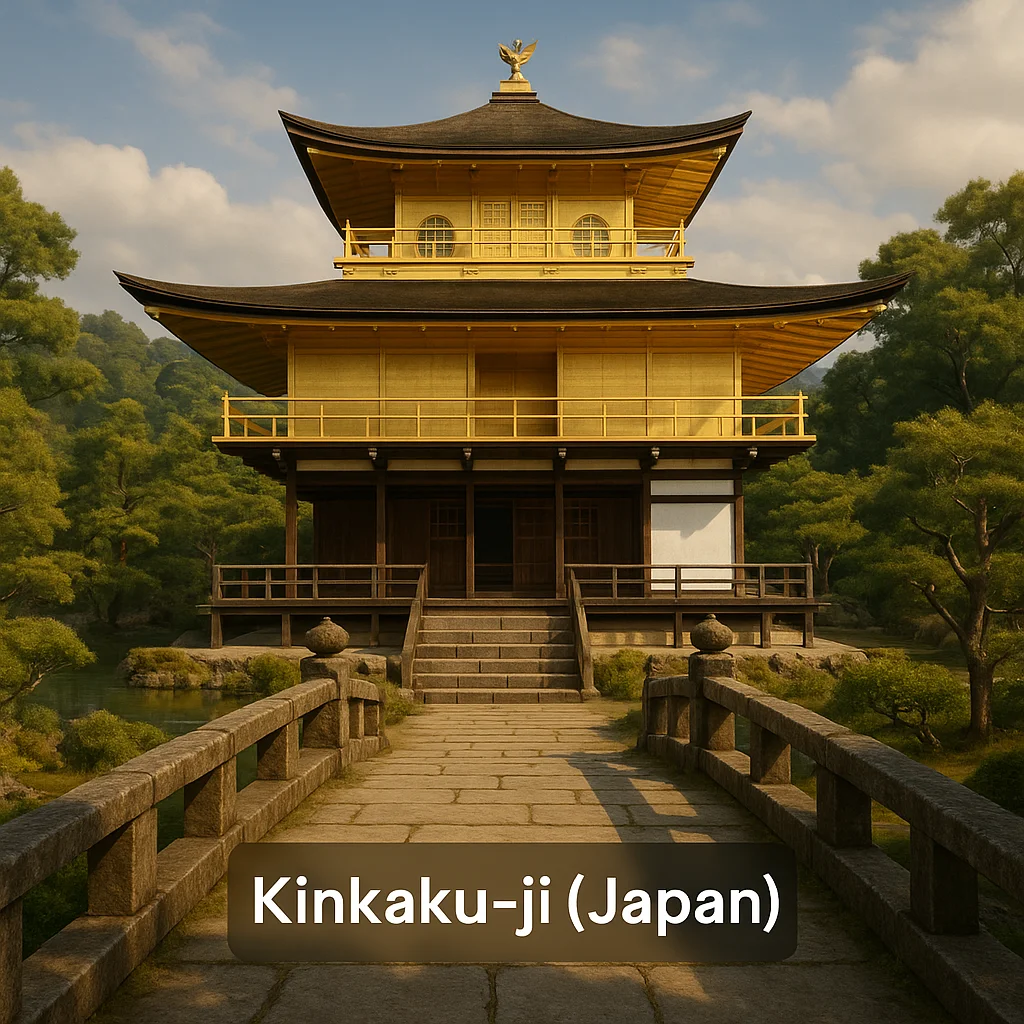
What makes Kinkaku-ji special is its breathtaking scenery and the serene reflection of the pavilion in the mirror-like Kyoko-chi pond. This site is a peaceful oasis that transports visitors into a tranquil world where the natural and man-made beauty blend seamlessly. It offers visitors a walking experience through meticulously manicured gardens and allows them to explore this UNESCO World Heritage Site at a relaxed pace.
In this guide, you'll learn about the history of Kinkaku-ji, explore its architectural marvels, discover its top highlights, and receive practical visiting tips. By understanding the context and features of this site, you will gain a deeper appreciation of its cultural significance and architectural beauty.
- Country: Japan
- Region: Kyoto
- Era: Originally built in the 14th century
- Typical Visit Length: 1–2 hours
- Visiting Difficulty: Easy, with well-maintained paths
- Best Season: Spring and autumn for blooming flowers and colorful foliage
- Highlight: The golden reflection in the pond
🗺️ Where It Is and How to Orient Yourself
Kinkaku-ji is in Kyoto, a city known for its rich history and well-preserved cultural heritage. Kyoto is easy to access from other parts of Japan and is approximately 460 kilometers southwest of Tokyo. The nearest major airport is Kansai International Airport, serving as the typical gateway to the region.
Many visitors choose to experience Kinkaku-ji as a day trip from Osaka or spend a few days in Kyoto to explore its numerous attractions. If you are staying in Kyoto, Kinkaku-ji is conveniently accessible by bus and offers a straightforward and leisurely visit.
The temple is situated north of Kyoto city's main urban area, in a picturesque setting surrounded by gardens and small hills. This location provides a perfect backdrop for the iconic views of the koyo chi pond and the pavilion itself.
🕰️ History in a Nutshell
Kinkaku-ji, originally known as Rokuon-ji, was built in the late 14th century during the Muromachi period by Ashikaga Yoshimitsu, the third shogun of the Ashikaga shogunate. It was initially constructed as a retirement villa before becoming a Zen temple upon Yoshimitsu's death.
The temple played an important role during its peak, acting as a symbol of the prosperous Muromachi period marked by a flourishing of the arts and culture. However, like many ancient sites, it faced challenges, including fire destruction and natural elements.
Despite these setbacks, the pavilion has been carefully restored, allowing its beauty and legacy to endure for future generations to admire and learn from.
⭐ Top Highlights You Should Not Miss
- Golden Pavilion
- Kyoko-chi Pond
- Tea Garden
The Golden Pavilion is the main star of the site with its gold-covered upper stories gleaming in the sunlight. Visitors can admire the stunning contrast between the gold and the surrounding greenery. For the best photo opportunities, the far side of the pond offers a full view of the entire structure with its reflection perfectly captured.
The Kyoko-chi Pond is central to the temple's landscape design. Its still waters create a mirror image of the Golden Pavilion, offering one of the most iconic views known to the world. Stand on the stone pathways for wide picturesque vistas inclusive of other small islands dotted with pine trees.
The Tea Garden provides visitors with a deeper appreciation of Japanese cultural practices. While walking through, you can enjoy the meticulously maintained flora and perhaps partake in a tea ceremony for an immersive cultural experience. Look for wide views back towards the pavilion along the gently winding paths.
🧱 Architecture, Materials, and Design (Made Simple)
Kinkaku-ji is a striking example of traditional Japanese architecture, primarily constructed with wood coated in gold leaf and surrounded by elaborate gardens. The distinct reflection of its gold leaf covering is a centerpiece of its beauty, juxtaposed against the serene pond and vibrant nature.
The architecture of Kinkaku-ji draws upon classical Japanese styles, with Zen influences evident in its simplistic yet elegant design. This includes intricate details such as the phoenix statue perched on the roof, symbolizing immortality, a quintessential feature symbolizing harmony with nature.
The original wooden structure suffered damage over time, but the restoration efforts have ensured that Kinkaku-ji remains true to its historical roots and artistic integrity. The pavilion you see today has faithfully preserved the beauty of its predecessor while standing solidly through careful craftsmanship.
🎟️ Visiting Guide (Time, Tickets, and What to Expect)
To fully appreciate Kinkaku-ji, a visit typically lasts between 1 to 2 hours. Visitors can explore the gardens and enjoy a leisurely walk around the temple grounds. Some parts may require entry tickets, and it’s best to check locally for current conditions as they can change based on the season.
The temple is generally open from morning until late afternoon, though it's wise to confirm specific times prior to visiting, as seasonal changes can affect hours. For a more enjoyable experience, consider arriving early in the morning to avoid crowds and to witness the tranquil setting as sunlight strikes the golden façade.
First-time visitors should wear comfortable walking shoes and carry water, especially in warmer months. Planning to stay shaded during the midday sun can enhance your visiting experience, and a hat may be a practical accessory.
🚆 How to Get There and Move Around
Kinkaku-ji is accessible via public transportation, with convenient bus routes connecting to the main attractions of Kyoto. Visitors can also choose taxis for a more direct journey. For those driving, parking is generally available but limited.
The main entrance path is a smooth, straightforward route suitable for all ages, including families and senior visitors. The site's layout is user-friendly, though some areas feature gentle slopes and might require caution.
Accessibility considerations include avoiding peak hours to ensure a more comfortable experience navigating around the beautiful but sometimes busy paths. The site is suitable for strollers and wheelchair users, with staff available for assistance if needed.
🌤️ Best Season, Weather, and Time of Day
The best seasons to visit Kinkaku-ji are spring and autumn. During spring, cherry blossoms add a picturesque charm, while autumn brings vibrant hues of red and gold to the surrounding trees, creating an unforgettable panorama.
The late afternoon offers breathtaking lighting conditions as the sun sets, wrapping the pavilion in a golden glow. Early mornings are ideal for a secluded, peaceful visit away from the midday crowds.
On rainy days, visitors can enjoy the reflective surfaces of the pond, which become even more mirror-like with the soft rain pattering down. Indoor spots nearby, such as other local museums or cultural centers, can serve as alternative plans.
⚠️ Safety, Rules, and Respectful Etiquette
Appropriate footwear is recommended for navigating the gravel paths and occasional uneven ground around Kinkaku-ji. Hats and sun protection can help safeguard against the elements when exploring during sunnier parts of the day.
As a cultural and religious site, respectful behavior is essential. Visitors are encouraged to speak softly in quiet areas and adhere to posted signage, particularly in sacred sections of the temple grounds.
Photography is generally allowed, but the use of flash or drones might be restricted as part of conservation efforts. Visitors should follow all on-site instructions regarding photography and avoid climbing or touching the structure for preservation reasons.
🗺️ Nearby Places and a Simple One-Day Itinerary
For those looking to extend their exploration, several intriguing sites lie within a short distance of Kinkaku-ji, including:
- Ryoan-ji Temple
- Ninna-ji Temple
- Kitaoji Market
- Morning: Visit Kinkaku-ji and stroll through the gardens
- Midday: Enjoy lunch at a local restaurant nearby
- Afternoon: Explore Ryoan-ji's famous rock garden
- Evening: Wander through the historic Ninna-ji Temple grounds
🧩 Stories, Myths, and Common Questions
Visitors often ask if the entire structure is made of gold. While the top two floors are covered in gold leaf, the underlying structure is wooden. It's essential to recognize that the temple's original gold decoration was lost to a fire in 1950 and has been restored to match historical accounts.
Another common misconception is that Kinkaku-ji was always a Zen temple. Originally, it served as a retirement villa, illustrating the adaptive reuse of historical sites over time in Japanese culture.
As for practical visitor advice, the walkways are mostly flat and easy to navigate, making it a family-friendly outing. A guide might enhance your experience by providing insights into the intricate history and design elements.
📌 Summary and Who This Site Is Best For
- Kinkaku-ji is a Golden Pavilion located in Kyoto, Japan
- It was originally built in the 14th century as a retirement villa
- A major highlight is its gold leaf-covered architecture
- Notable landmarks include the Golden Pavilion, Kyoko-chi Pond, and Tea Garden
- Features traditional Japanese architecture with Zen influences
- Ideal visit is 1 to 2 hours
- Best enjoyed during spring or autumn
- Emphasizes cultural respect and conservational etiquette
- Conveniently reachable, with Kyoto serving as a base
- A fascinating cultural experience offering scenic views and historical insights
Kinkaku-ji will appeal to a wide range of visitors, from families and history enthusiasts to photographers and those seeking a peaceful stroll. Its unparalleled beauty makes the effort to visit thoroughly worthwhile.
Visiting Kinkaku-ji offers a unique opportunity to explore stunning architecture and cultural history in a serene setting. Whether you're a seasoned traveler or a curious learner, this site provides an enriching and memorable experience.
Take the time to explore Kinkaku-ji thoughtfully, and remember to respect and preserve its beauty for future generations. By doing so, you'll be part of maintaining an enduring experience that connects us to the past.