🏛️ Borobudur (Indonesia)
🔎 Quick Facts and Why It Matters
Borobudur is one of Indonesia's most famous cultural landmarks and the world's largest Buddhist temple complex. It stands as a monument to incredible architectural and religious significance, offering a glimpse into the rich history and artistic excellence of ancient Java.
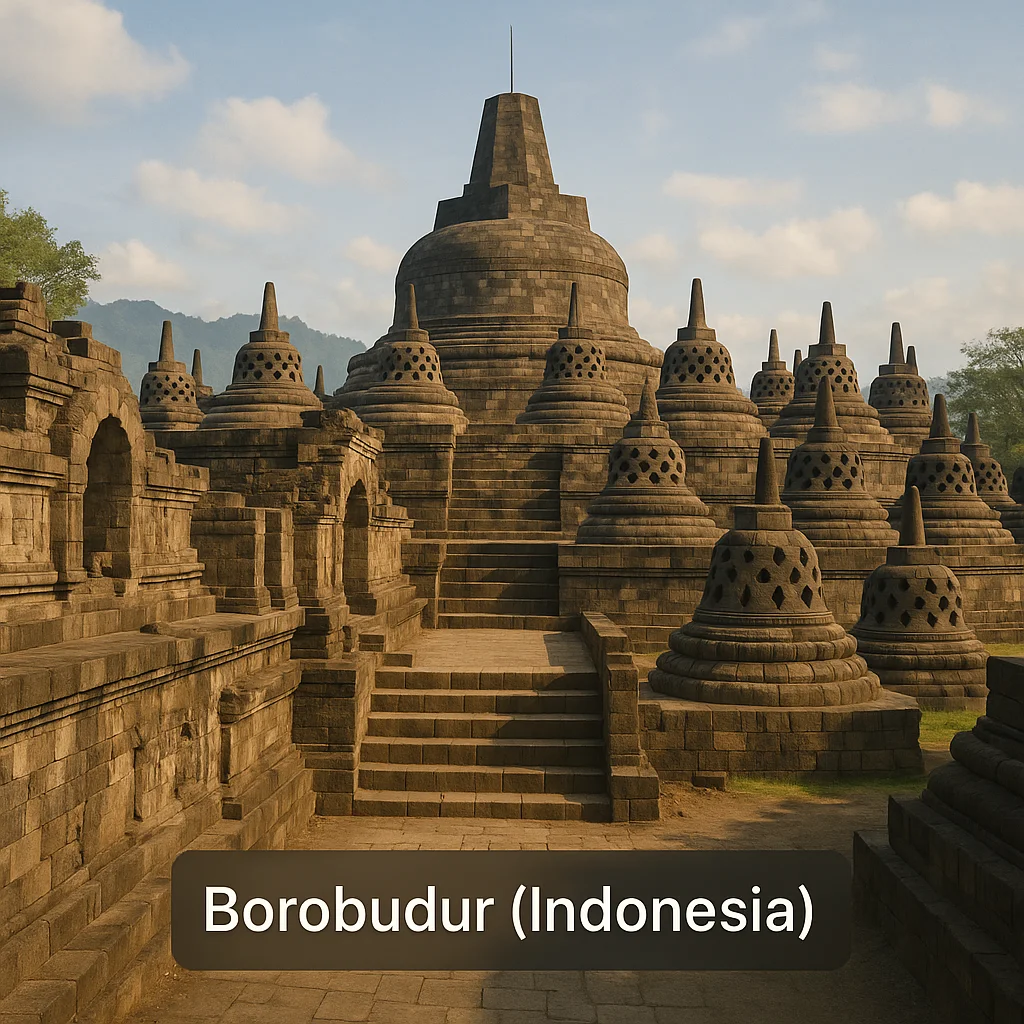
This colossal structure is renowned for its intricate stone carvings and unique step-pyramid design. Visitors can explore its terraces and marvel at the thousands of relief panels that showcase stories from Buddhist teachings. The temple offers a walkable experience where both history enthusiasts and casual travelers can appreciate its impressive construction and spiritual significance.
In this guide, you'll discover the fascinating history of Borobudur, its architectural uniqueness, and tips for making the most of your visit. You'll also learn about the surrounding area, how to get there, and what to look out for during your trip.
- Location: Central Java, Indonesia
- Era: Built in the 9th century
- Typical visit length: 2–3 hours
- Difficulty level: Moderate (many steps)
- Best season: Dry season (May to October)
- Main highlight: Stunning sunrise views
🗺️ Where It Is and How to Orient Yourself
Borobudur is located in the Kedu Valley, Central Java, Indonesia. The nearest major city is Yogyakarta, which serves as the primary gateway for visitors traveling to the site. Adisucipto International Airport in Yogyakarta offers convenient access for international tourists. From there, it's a roughly 40-minute drive to Borobudur.
While Borobudur can be explored as a day trip from Yogyakarta, staying overnight is often recommended to experience the serene ambiance during dawn or dusk. The temple itself is nestled amidst lush greenery against the backdrop of volcanic mountains, providing visitors a vivid natural setting alongside cultural exploration.
To picture the location, think of a vast landscape dotted with rice paddies and forested hills, with Borobudur standing proudly at its heart. This scenic setting adds to the ethereal quality of visiting the temple complex.
🕰️ History in a Nutshell
Borobudur was constructed in the 9th century during the reign of the Sailendra Dynasty, which ruled parts of Central Java and Sumatra. It was envisioned as a massive mandala, a sacred cosmic symbol in Buddhism, and used as a place of pilgrimage and meditation.
The temple reached its peak as a cultural, spiritual, and architectural marvel of its time. However, it fell into disuse as political power shifted and Islam spread across the region. For centuries, Borobudur was buried beneath layers of volcanic ash and lush jungle, hidden from sight.
The site was re-discovered in the 19th century during British and Dutch colonial periods, leading to restoration efforts. Today, it stands as a protected UNESCO World Heritage Site, preserved as a testament to Indonesia's rich cultural past.
⭐ Top Highlights You Should Not Miss
- The Grand Stupa
- Relief Panels
- Circular Terraces
- Sunrise/Sunset Viewpoints
- The Karmawibhangga Museum
The Grand Stupa, located at the top of Borobudur, is a key highlight and destination within the temple complex. As you reach the summit, you'll find this large stupa surrounded by smaller ones, with the entire structure set against a wide view of the surrounding landscape.
Exploring the relief panels is equally captivating. These intricate carvings tell stories from Buddhist texts and offer insight into life during the temple's peak era. Row by row, they wrap around the temple’s walkways, forming a narrative sequence imbued with detail and artistry.
Further exploration brings you to the circular terraces, which add to the symbolism of the temple's design. As you ascend, the terraces become smaller, reflecting the journey to enlightenment. From several spots around these terraces, enjoy panoramic views of the valley below.
For memorable photos and serene moments, visit during sunrise or sunset. The temple is bathed in soft light, offering a magical atmosphere. Be sure to also explore the Karmawibhangga Museum nearby to gain more historical context and understand the temple's restoration process.
🧱 Architecture, Materials, and Design (Made Simple)
Borobudur's construction largely utilized volcanic stone sourced from nearby rivers. This material was skillfully fashioned into numerous blocks, stacked and carved to form the temple's unique step-pyramid structure. The design reflects Javanese Buddhist architecture, with influences from Indian Gupta art in its iconography and reliefs.
A standout feature is the series of relief carvings that adorn its walls, illustrating scenes from Buddhist scriptures and Javanese life. These carvings have been meticulously maintained, although some sections were restored using historically accurate techniques and materials during preservation efforts.
The temple's design is both functional and symbolic, with terraced levels laid out to represent stages of enlightenment. Its high level of craftsmanship and layered structure allow Borobudur to be recognized instantly by its unique silhouette, dominated by a central dome surrounded by stupas.
🎟️ Visiting Guide (Time, Tickets, and What to Expect)
Plan for about two to three hours for a standard visit to Borobudur. For those wanting a deeper experience, half a day would allow for leisurely exploration and some quiet moments of reflection. It's advisable to check for any entrance fees and opt for guided tours to enrich your understanding of the site.
The complex is typically open from morning until late afternoon, but exact hours can vary, so verify this before planning your visit. It's encouraged to arrive early to avoid crowds and fully engage with the serene atmosphere. Carry sufficient water, wear comfortable attire, and consider a hat to shield against the sun.
Guided tours are available, providing insights that enrich the experience. Be prepared to cover significant ground, with steps to climb for full exploration. Consideration for effort and physical condition should be taken when planning to capture the temple's beauty in all its dimensions.
🚆 How to Get There and Move Around
Travelers commonly reach Borobudur from Yogyakarta via private tour vehicles, taxis, or buses, all of which provide a straightforward route to the site. Yogyakarta serves as the ideal base for accommodation and transport flexibility. Public buses also offer budget-friendly options but may require longer travel times.
For easy access, use the main entrance, conveniently equipped for most visitors. Note that the route involves steps and uneven terrain, so wear sturdy footwear. While much of Borobudur is accessible, some areas may pose challenges due to steep steps, making them less suitable for visitors with limited mobility.
🌤️ Best Season, Weather, and Time of Day
The best time to visit Borobudur is during the dry season, which runs from May to October. This period offers pleasant weather, minimizing rain interruptions and providing good light for photography. During these months, mornings and late afternoons are ideal for visiting, as temperatures are milder and lighting conditions enrich the experience.
If rain occurs, consider exploring the nearby museum or sheltered viewing areas that provide meaningful insights into Borobudur's history while staying dry. Adapting your plan to include both indoor and outdoor experiences allows for a balanced itinerary regardless of weather conditions.
⚠️ Safety, Rules, and Respectful Etiquette
Walking shoes with good grip are essential to navigate the site's many steps and uneven surfaces safely. When exploring sacred areas, dress respectfully, which generally means modest clothing that covers the shoulders and knees.
Please respect the sanctity of the temple by staying quiet in designated meditation areas. Photography is allowed, but use of drones and flashes might be restricted according to posted rules, so it's vital to follow guidelines provided.
Visitors should avoid touching or climbing on carvings to help preserve the stonework. The path can be slick, particularly on rainy days, and care should be taken around steep edges and crowded areas. Awareness of your surroundings will enhance both safety and the quality of the visit.
🗺️ Nearby Places and a Simple One-Day Itinerary
The area around Borobudur brims with other cultural and natural attractions. Consider visiting the Mendut Temple, Plaosan Temple, and the serene Progo River for a varied day of adventure and learning.
- Morning: Explore Borobudur early to soak in the sunrise and historical ambiance.
- Midday: Visit Mendut Temple, with its stunning statues, and have lunch at a local eatery.
- Afternoon: Head to Plaosan Temple for more architectural beauty and a quiet stroll.
- Evening: Return to Yogyakarta for dinner and a recap of the day's highlights.
These destinations together provide a well-rounded cultural experience that taps into both the site’s history and the region's broader cultural tapestry.
🧩 Stories, Myths, and Common Questions
Is Borobudur a temple or a stupa? Historians generally agree that Borobudur is both—it serves as a stupa and a monumental temple complex for Buddhist worship and pilgrimage.
How old is Borobudur? Built in the 9th century, Borobudur is over 1,200 years old, reflecting the artistic heritage of ancient Java.
Was Borobudur ever "lost"? Although buried and overgrown for centuries, the temple wasn’t entirely forgotten by the local populace before its re-discovery in the 19th century.
How hard is it to climb Borobudur? The ascent involves several steep but manageable flights of stairs. Visitors in reasonable health can typically make the climb without issue.
Is a guide worth it? Engaging a knowledgeable guide enhances the understanding of the intricate carvings and symbolic layout of Borobudur, making the visit more worthwhile.
📌 Summary and Who This Site Is Best For
- An ancient buddhist temple complex
- Located in Central Java, Indonesia
- Built in the 9th century by the Sailendra Dynasty
- Features the Grand Stupa, reliefs, and terraces
- Constructed with volcanic stone using Javanese and Indian influences
- Plan for a visit lasting 2–3 hours
- Best visited during the dry season for optimal conditions
- Respect sacred spaces by wearing appropriate clothing and staying quiet
- Nearby attractions include Mendut Temple and Plaosan Temple
- A monumental emblem of historical and spiritual significance
Borobudur is a destination for families, photographers, history aficionados, and those seeking a deep cultural experience. With its distinct construction and spiritual resonance, Borobudur offers an unparalleled glimpse into the past. It stands as a testament to human achievement and creativity, accessible and engaging for visitors worldwide. Allow this remarkable site to inspire your sense of wonder and appreciation for global heritage.