🏛️ Bayon Temple (Cambodia)
🔎 Quick Facts and Why It Matters
The Bayon Temple is a striking relic of Cambodia's rich history, known for its stone carvings and enigmatic faces. Located within the famous Angkor Archaeological Park, it stands as a testament to the creativity and spiritual aspirations of the ancient Khmer Empire.
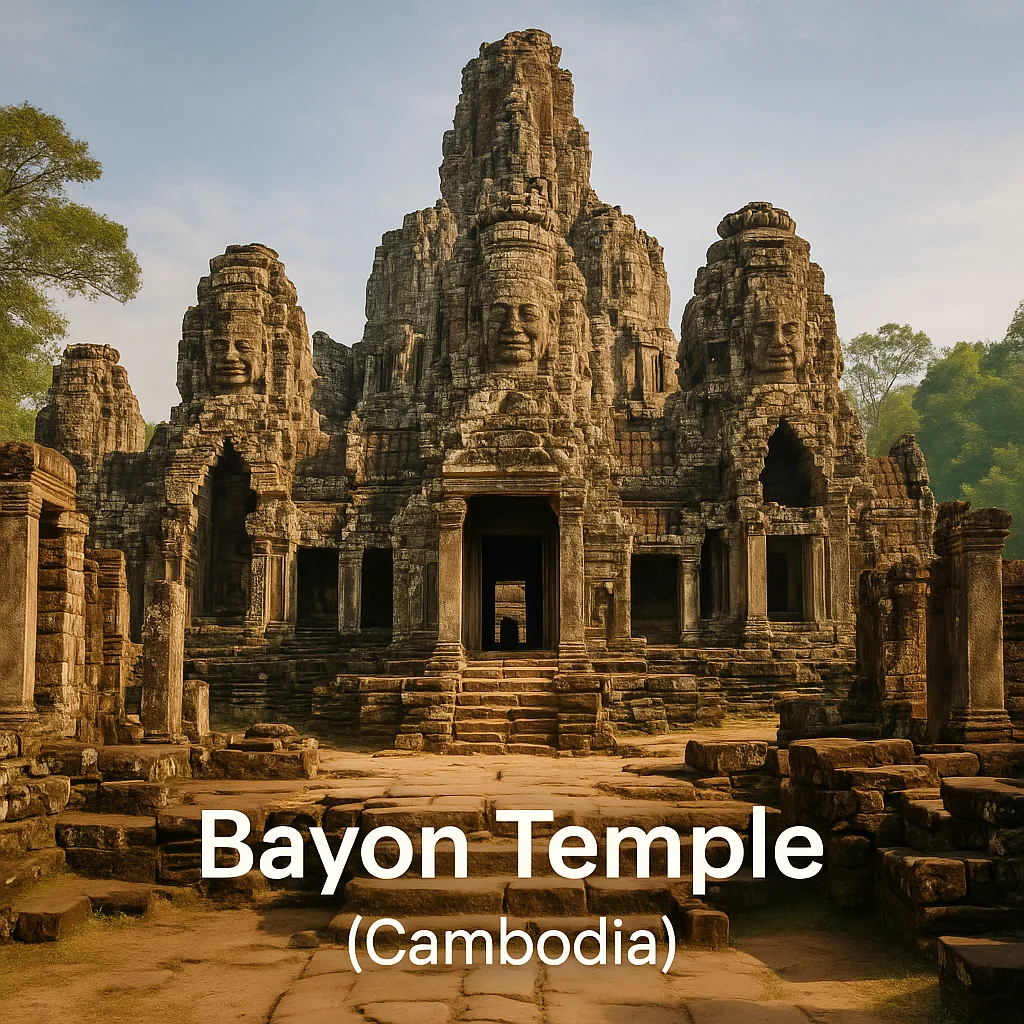
What sets Bayon apart is its abundance of stone-carved faces, smiling serenely from the temple towers. These intricate carvings invite visitors to ponder both historical and spiritual mysteries. As a walkable ruin with various viewpoints, Bayon Temple offers an immersive experience into the world of ancient Cambodian architecture.
In this guide, you'll learn about Bayon's fascinating history, its architectural marvels, and how to make the most of your visit. Prepare to step back in time and discover what makes this temple a highlight of any journey to Angkor.
- Location: Siem Reap Province, Cambodia
- Era: Late 12th to early 13th century
- Typical Visit Length: 1–2 hours
- Difficulty: Moderate, some stairs and uneven ground
- Best Season: Dry season (November to March)
- Highlight: Stone-carved faces and bas-reliefs
🗺️ Where It Is and How to Orient Yourself
Bayon Temple is located in Siem Reap Province, Cambodia, within the expansive Angkor Archaeological Park. This renowned historical area is close to the town of Siem Reap, making it a convenient destination for those flying into Siem Reap International Airport.
While it is possible to visit the temple as a day trip from Siem Reap, the wealth of history within Angkor Park is best appreciated over multiple days. The park is spread across the plains of central Cambodia, giving visitors a chance to explore its intricate network of ruins and learn about the Khmer Empire's grand past.
For those creating a mental map, Angkor Park is positioned in a rural setting, surrounded by small villages and lush landscapes. The central position of the Bayon Temple within the park makes it a logical starting point for discovering the surrounding monuments.
🕰️ History in a Nutshell
The Bayon Temple was constructed in the late 12th and early 13th centuries during the reign of King Jayavarman VII. It served as the central temple of King Jayavarman's capital, marking a departure from previous Hindu-inspired Angkor temples by embracing Mahayana Buddhism.
At its peak, Bayon was part of a bustling urban center filled with wooden houses, markets, and the king's court. Over time, the decline of the Khmer Empire, coupled with changes in religious practices, led to the temple's gradual abandonment.
Today, many of Bayon's structures survive due to the durability of their sandstone blocks, intriguing murals, and the fascinating, serene faces that continue to capture the imaginations of visitors worldwide.
⭐ Top Highlights You Should Not Miss
- The Central Tower
- Stone Faces
- Bas-Reliefs
- Library Buildings
- Grand Terraces
The central tower of Bayon, with its towering structure and enigmatic faces, serves as the heart of the temple. Its full structure is visible from various angles, offering iconic views best captured during the soft light of morning or late afternoon.
The stone faces at Bayon, often associated with either the king himself or the Bodhisattva Avalokiteshvara, are iconic. They adorn almost every tower, and a wide view of the entire façade captures their serene expressions against the clear Cambodian sky.
Bas-reliefs around Bayon depict vivid scenes of everyday life and historical events, providing fascinating glimpses into the past. When viewed in their full context, these panels tell complete stories across stone walls.
The library buildings, though smaller in scale, are architectural treasures. Their stone libraries show the design philosophy of the Khmer architects, blending functional spaces with religious symbolism.
Bayon's grand terraces present expansive views of the temple complexes. A full panoramic frame includes surrounding courtyards, offering insight into the layout and ceremonial spaces long used in public events.
🧱 Architecture, Materials, and Design (Made Simple)
Constructed primarily from sandstone, Bayon Temple showcases the sophisticated masonry skills of the Khmer builders. The stones were intricately carved and fitted without mortar, showing both the durability and aesthetic detail characteristic of this era.
The design is a mix of traditional Khmer architectural styling and distinctive Buddhist influences, making it unique among Angkor temples. The temple's many reliefs and faces exemplify this fusion, standing out as defining elements within the larger complex.
One of the most notable features of Bayon is its numerous face towers. These towers are unlike anything else found in Angkor, standing as imposing, yet strangely welcoming, markers of the temple’s significant spiritual and artistic triumphs.
🎟️ Visiting Guide (Time, Tickets, and What to Expect)
A standard visit to Bayon Temple typically lasts 1-2 hours, depending on your interest in exploring details such as the bas-reliefs and the towering faces. For those eager to delve deeply, additional time can be spent capturing photographs or simply standing in awe of the artistry.
Visitors need a ticket to enter the Angkor Archaeological Park, which includes Bayon Temple. Tickets can cover one, three, or seven days of park access, allowing an in-depth exploration of multiple sites. Tour options range from self-guided walks to expert-led tours that explain the cultural and architectural significance of the ruins.
The park generally allows entry from early morning to late afternoon, although exact times can vary by season, so checking current details closer to your visit is recommended. Arriving early helps avoid crowds, and it's wise to carry water, sunscreen, and a hat to manage the midday heat.
🚆 How to Get There and Move Around
Accessing the Bayon Temple is straightforward from Siem Reap, with options including tuk-tuks, taxis, and bicycles. Taxis and tuk-tuks offer the comfort and flexibility necessary for families or those carrying photography equipment.
While there are multiple entrances to Angkor Park, the main gate offers the most straightforward access for beginners. Once inside, signage and well-trodden paths help navigate the ancient ruins comfortably.
Visitors should be aware that the terrain can be uneven, with some steep steps. Sensible footwear is recommended to ensure safety while exploring the sometimes challenging paths and stairs within the temple complex.
🌤️ Best Season, Weather, and Time of Day
The best season to visit Bayon Temple is during the dry months from November to March when the weather in Siem Reap is generally cooler and more comfortable for exploring.
The early morning, particularly just after sunrise, offers a magical time to visit when the light illuminates the temple faces in dramatic ways. Late afternoon also provides beautiful lighting conditions as the sun sets.
If visiting during the rainy season, be prepared for sudden showers, and consider exploring the sheltered areas or nearby museums to stay dry while still engaging with the region's history.
⚠️ Safety, Rules, and Respectful Etiquette
When visiting Bayon Temple, comfortable shoes are a must for navigating the uneven stones and stairs. Dressing modestly is also important, as it is a place with spiritual significance for many.
Cultural sensitivity is crucial; maintain quiet in sacred areas and respect signs indicating restricted access. Photography is generally welcome, but be mindful of limitations on flash usage and drone operations, adhering to any posted rules.
Avoid touching delicate carvings to help preserve these ancient artworks for future visitors. Stay on marked trails and be cautious of slippery stones, especially after rain. Always be aware of your surroundings to prevent pickpocketing in crowded areas.
🗺️ Nearby Places and a Simple One-Day Itinerary
Besides Bayon, there are many intriguing sites nearby. Angkor Thom, the massive city that once surrounded Bayon, is a must-see, along with the iconic Angkor Wat and the enchanting Ta Prohm with its tree-overgrown ruins.
- Morning: Visit Bayon Temple early to catch the sunrise and explore the bas-reliefs.
- Midday: Head to Angkor Thom's enormous city gate and the Terrace of the Elephants for further exploration.
- Afternoon: Explore Angkor Wat's stunning architecture and bas-reliefs.
- Evening: Conclude the day at the Ta Prohm, when the lighting and atmosphere are picturesque.
🧩 Stories, Myths, and Common Questions
Q: Is Bayon Temple connected to Angkor Wat?
A: Bayon is part of Angkor Thom, another central complex of the Khmer Empire. It complements, rather than directly connects to, Angkor Wat, both standing as separate but significant sites.
Q: Are the faces of Bayon all identical?
A: While they share a common serene expression, subtle differences in detail and craftsmanship make each face unique, signifying different aspects of the king or the Bodhisattva Avalokiteshvara.
Q: Can children handle the visit?
A: Yes, with supervision. Some areas require careful navigation, but kids can enjoy the adventure of discovering faces and stories hidden among the ruins.
Q: Is a guide recommended?
A: Hiring a guide can significantly enhance your understanding of Bayon's rich history and architectural nuances, providing context that enriches the experience.
📌 Summary and Who This Site Is Best For
- Ancient Khmer temple complex
- Located in Angkor Archaeological Park, Cambodia
- Built by Jayavarman VII, 12th-13th century
- Famous for stone faces and bas-reliefs
- Sandstone construction, no mortar usage
- 1-2 hour visits typical
- Best visited November-March, early mornings recommended
- Shoes for uneven paths, respect cultural norms
- Visit Angkor Wat and Ta Prohm nearby
- Symbol of Cambodia's historical and spiritual legacy
Bayon Temple is an ideal destination for families, history enthusiasts, photographers, and anyone interested in ancient cultures. Its combination of historical depth and visual beauty makes it worth the effort of travel, offering a glimpse into a once-flourishing civilization.
The serene and enigmatic expressions on the stone faces of Bayon evoke a sense of mystery and timelessness that stays with visitors long after their trip. For those seeking to explore the wonders of Southeast Asia's history, Bayon Temple remains a must-visit landmark.
In your travels, remember to respect the ancient stones and the sacred spaces they create. A visit to Bayon is not just a step back in time but a journey into the spiritual and cultural heart of Cambodia.