🏛️ Abu Simbel (Egypt)
🔎 Quick Facts and Why It Matters
Abu Simbel is a magnificent ancient temple complex in southern Egypt, renowned for its grandiose rock-cut temples commissioned by Pharaoh Ramses II. It's famous worldwide for its monumental scale and incredible feat of relocation in the 20th century.
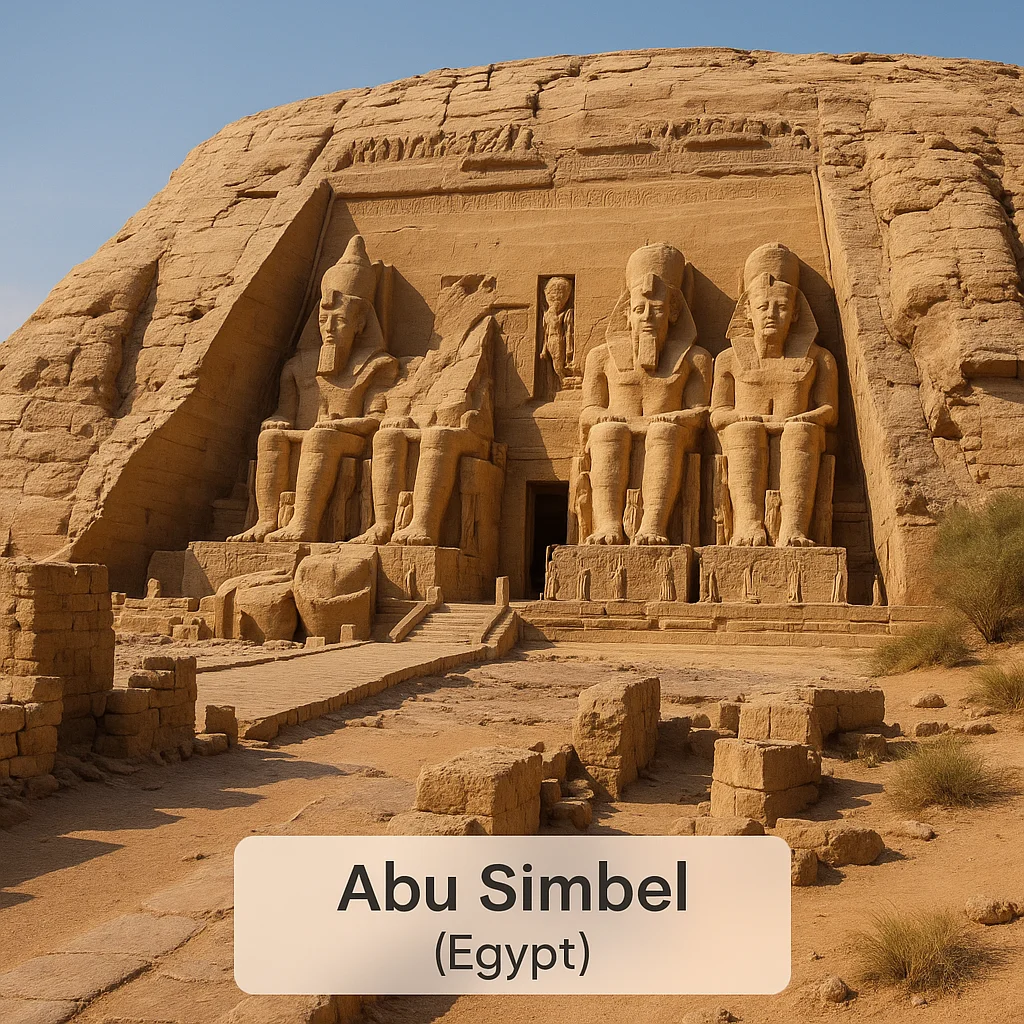
Abu Simbel stands out due to its awe-inspiring architecture and historical significance. As you explore, you'll be able to walk through the colossal temples adorned with detailed carvings, offering a window into Egypt's iconic past.
This guide will prepare you for your visit, providing insights into its history, architectural highlights, and practical travel tips to enhance your experience at this timeless wonder.
- Location: Southern Egypt, near the Nile River
- Era: Built in the 13th century BCE
- Typical Visit Length: 2 to 3 hours
- Difficulty: Moderate; requires walking and stair navigation
- Best Season: Winter months for cooler temperatures
- Highlight: Grand entrance of the Great Temple
- UNESCO World Heritage Site: Yes
🗺️ Where It Is and How to Orient Yourself
Abu Simbel is located in southern Egypt, close to the border with Sudan. It sits on the western bank of Lake Nasser and is part of the Aswan Governorate.
The nearest major city is Aswan, which serves as the usual gateway for visitors heading to Abu Simbel. Aswan is accessible by plane, train, or river cruise from major cities such as Cairo and Luxor.
A day trip from Aswan is feasible, but staying overnight in the nearby town can enhance the experience, allowing for early morning or late afternoon visits when temperatures are cooler.
🕰️ History in a Nutshell
The temples at Abu Simbel were built by Pharaoh Ramses II in the 13th century BCE as a lasting monument to himself and his queen, Nefertari, to commemorate his victory at the Battle of Kadesh.
During their peak, the temples served both a religious and political purpose, displaying the might of the pharaoh and serving as a place of worship for ancient Egyptian deities.
Abu Simbel became a relic of history as it was buried in sand over time, preserving its structures. A massive UNESCO-led effort in the 1960s relocated the temples to higher ground due to the construction of the Aswan High Dam, safeguarding them from submersion.
⭐ Top Highlights You Should Not Miss
- The Great Temple of Ramses II
- The Small Temple of Hathor and Nefertari
- The Sun Festival Alignment
- The Colossal Statues
- Temple Entryways
The Great Temple of Ramses II is the most imposing structure, its façade adorned with four colossal statues of Ramses sitting majestically; from here, take a photo capturing the entire façade in its desert backdrop.
The Small Temple is dedicated to the goddess Hathor and Queen Nefertari and is slightly smaller but equally intricate, offering beautiful carvings and intimate halls.
The Sun Festival Alignment, occurring twice a year, allows sunlight to penetrate the temple, illuminating the innermost statues—a unique event linked to ancient solar worship.
🧱 Architecture, Materials, and Design (Made Simple)
The temples of Abu Simbel are hewn directly from solid sandstone cliffs, showcasing the remarkable craftsmanship of ancient Egyptian stone-carving techniques and engineering prowess.
The design follows classic ancient Egyptian styles, featuring hieroglyphic inscriptions and ornate wall reliefs depicting Ramses II and mythological scenes, exemplifying the New Kingdom period.
Notable architectural details include the colossal seated statues, standing at about 20 meters tall, and the intricate interior designs, which have been carefully preserved and restored.
🎟️ Visiting Guide (Time, Tickets, and What to Expect)
Depending on your interest, a visit can range from 2 to 3 hours. It's advisable to plan for a morning or late afternoon visit to avoid the midday heat.
Entry is generally ticketed, and variations may exist for guided tours offering deeper insights. As operating hours can change, it's best to check locally closer to your visit.
First-timers should come prepared with water, sun protection, and comfortable walking shoes as they explore the complex. The cooler months from October to April offer the most pleasant visiting weather.
🚆 How to Get There and Move Around
Visitors can typically reach Abu Simbel by road or air, with regular flights landing at the nearby airport or organized buses and private tours from Aswan. Self-drives offer flexibility but require careful planning.
The complex itself is accessible, but visitors should be prepared for some walking, and those with mobility issues may find the uneven terrain challenging.
🌤️ Best Season, Weather, and Time of Day
The best time to visit Abu Simbel is during Egypt's cooler winter months, from October to April, when temperatures are more conducive for outdoor exploration.
Early morning visits are ideal for capturing stunning sunrise photos and experiencing the temples in cooler conditions, while late afternoon visits can offer dramatic lighting on the temple facades.
If visiting during warmer months, consider spending midday hours in a shaded area or exploring local indoor attractions in Aswan.
⚠️ Safety, Rules, and Respectful Etiquette
Visitors should wear sturdy footwear to navigate the uneven surfaces and stone steps safely, and dress modestly, respecting local customs, particularly in sacred spaces.
Photography is allowed, but flash or drones may be restricted. Always check and follow posted signage to ensure compliance with site rules.
To help preserve the site, avoid climbing or touching the monuments, stick to designated paths, and be mindful of environmental and heritage conservation guidelines.
🗺️ Nearby Places and a Simple One-Day Itinerary
Abu Simbel's surrounding area has several points of interest, including Lake Nasser, the Nubian Museum in Aswan, and the Philae Temple.
- Morning: Visit Abu Simbel early to enjoy the sunrise and explore the temples.
- Midday: Head back to Aswan, stopping to view Lake Nasser's serene waters.
- Afternoon: Explore the Nubian Museum to learn about the region's culture.
- Evening: Enjoy a relaxing dinner overlooking the Nile in Aswan.
🧩 Stories, Myths, and Common Questions
Q: Is Abu Simbel a lost city? A: No, while sometimes thought of as lost, Abu Simbel was never a city; it was buried by sand until rediscovered, preserving its state.
Q: Who built Abu Simbel? A: The temples were built by Pharaoh Ramses II during his reign in the 13th century BCE.
Q: Is the site suitable for children? A: While children can enjoy the visit, mindful supervision is advisable due to uneven terrain.
Q: Are guides necessary? A: While not necessary, a guide can enhance understanding with historical context and insightful stories.
📌 Summary and Who This Site Is Best For
- Ancient Egyptian temple complex
- Located in southern Egypt near Lake Nasser
- Built by Ramses II as part of a religious and political statement
- Highlights include the colossal statues and solar alignment events
- Made from solid sandstone with intricate carvings and hieroglyphics
- Visit takes about 2 to 3 hours on a typical day
- Best visited in the cooler months for a pleasant experience
- Respectful visiting includes avoiding flash photography and touching monuments
- Nearby attractions include the Nubian Museum and Philae Temple
- Unique relocation to save from flooding is a remarkable aspect
Abu Simbel is perfect for history enthusiasts, culture buffs, and photographers seeking to capture ancient Egypt's grandeur. Its imposing structures and rich history offer an unforgettable journey into the past.
Whether visiting for its architectural excellence, historical significance, or the sheer awe of its colossal statues, Abu Simbel provides a rewarding experience for any traveler eager to explore Egypt's heritage.
With its unique setting and rich stories, Abu Simbel stands as a testament to human perseverance and creativity, beckoning responsible travelers to discover its majestic wonders.