🏛️ Hiroshima Peace Memorial (Japan)
🔎 Quick Facts and Why It Matters
The Hiroshima Peace Memorial, commonly known as the Atomic Bomb Dome, is a powerful symbol of peace and the catastrophic destruction caused by nuclear warfare. It stands as a poignant reminder of the events of August 6, 1945, when the city of Hiroshima suffered an atomic bombing.
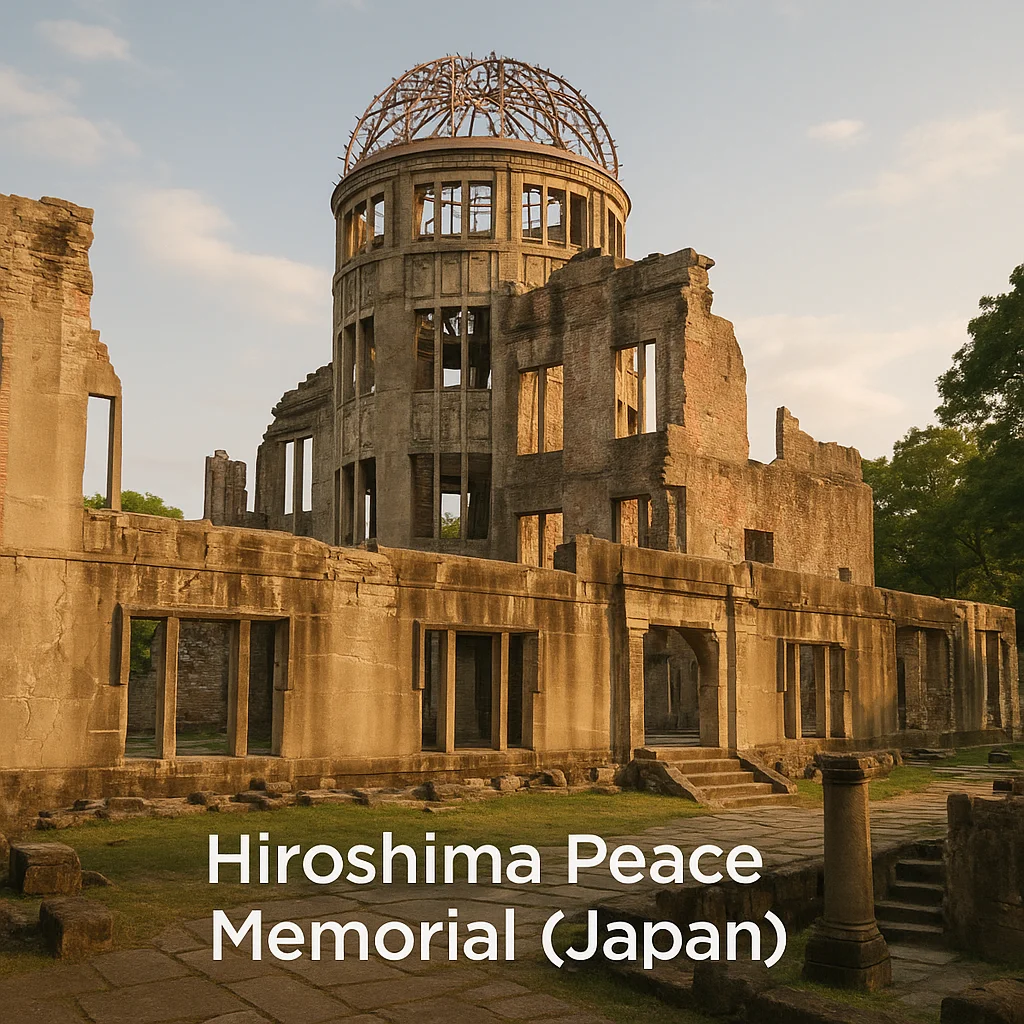
This UNESCO World Heritage site offers a solemn and reflective experience for visitors. The memorial is unique because it is one of the few structures left standing near the bomb's hypocenter. Visitors can walk around the ruins and ponder the resilience of humanity amidst tragedy.
In this guide, you will learn about the historical context, architectural significance, and visitor guidelines to make the most of your visit to this thought-provoking site.
- Location: Japan, Hiroshima Prefecture
- Era: Mid-20th century (1945)
- Typical visit length: 1-2 hours
- Difficulty: Easy, wheelchair accessible
- Best season to visit: Spring and Fall
- Top highlight: The preserved ruin of the Atomic Bomb Dome
🗺️ Where It Is and How to Orient Yourself
Located in the bustling city of Hiroshima, in the Hiroshima Prefecture of Japan, the Hiroshima Peace Memorial stands proudly along the banks of the Motoyasu River. The site is a central part of the Hiroshima Peace Memorial Park, a space created for reflection and remembrance.
The nearest major city is Hiroshima itself, with the Hiroshima Station acting as a key transport hub. The memorial is easily reachable by a short tram ride or a leisurely walk from the station. Travelers often find Hiroshima to be an accessible and engaging city, making an overnight stay an enriching experience.
Picture the memorial as a riverside icon nestled within a vibrant urban landscape. It provides a tranquil break from the bustling city, located close to the heart of Hiroshima, which is situated on the coastal plains of southwestern Honshu Island.
🕰️ History in a Nutshell
The original building, completed in 1915, served as the Hiroshima Prefectural Industrial Promotion Hall. Designed by Czech architect Jan Letzel, it was a symbol of Hiroshima's burgeoning industrialization prior to World War II.
On August 6, 1945, during World War II, an American B-29 bomber dropped the atomic bomb "Little Boy" on Hiroshima. The bomb exploded almost directly above the building, yet its skeletal frame endured the blast, preserving its core structure.
The devastation led to Hiroshima's near-total destruction, but the ruins of this building were preserved to commemorate the impact of nuclear war. It remains as an emblem of both destruction and hope for global peace.
⭐ Top Highlights You Should Not Miss
- Atomic Bomb Dome
- Children's Peace Monument
- Peace Memorial Museum
- Peace Flame
- Cenotaph for the A-bomb Victims
The Atomic Bomb Dome is the standout feature of the memorial. It's a moving experience to see the entire façade in frame, with its crumbling dome and exposed iron framework set against the skies—a potent image representing resilience.
The Children's Peace Monument, a testament to the young victims of the bombing, features a statue with paper cranes—a symbol of hope. Capture a wide view with the surrounding park in context to grasp the full emotional impact.
The Peace Memorial Museum offers an expansive, museum-style experience with detailed exhibits on the bombing and its aftermath. It gives visitors historical depth and personal accounts, painting a full picture of the event's toll.
The Peace Flame, intended to burn until all nuclear weapons are abolished, is a landmark of hope and persistence. A photo from the park's main avenue captures the flame with the dome in the background—alignments of past and future hopes.
The Cenotaph for the A-bomb Victims, a somber arched tomb, holds the names of those who perished. It aligns beautifully with the Peace Flame and the Atomic Bomb Dome at its backdrop—ideal for contemplative photographs showing both honor and remembrance.
🧱 Architecture, Materials, and Design (Made Simple)
The Hiroshima Peace Memorial was constructed using reinforced concrete with brick walls. The architectural style reflects early 20th-century European influences, visible in its once-grand façade and decorative brickwork now reduced to its core elements.
Architecturally, the structure's importance lies in its persistence; despite catastrophic damage, parts of the dome remained intact. The exposed ironwork and shell have become iconic, symbolizing strength amidst adversity.
Key details include the skeletal dome and the charred brick walls, which historians and architects have carefully preserved. While parts have been strengthened to prevent collapse, the site consciously maintains its original form to respect its historical authenticity.
🎟️ Visiting Guide (Time, Tickets, and What to Expect)
A visit can be quick (1 hour), standard (2 hours), or deep (3+ hours) depending on your interest in exploring the park and museum in detail. Entry to the park and dome area is generally free, but the museum typically requires a modest entrance fee, subject to periodic changes.
The site opens in the morning and closes in the late afternoon, with variations based on the season. It is advisable to verify current operating hours before visiting. Early arrivals can enjoy a quieter experience.
First-timers should arrive early, bring a hat and comfortable shoes, and carry water, especially during warmer months. The park offers some shade, but it's best prepared for a day outdoors.
🚆 How to Get There and Move Around
Travelers can choose from several transport options: a tram or taxi ride from Hiroshima Station is direct and convenient, while those who prefer a leisurely pace can enjoy a short walk.
Several pathways lead into the Peace Memorial Park, though the main entrance provides a straightforward route. The area is wheelchair accessible, but some older parts of the park may feature uneven surfaces.
Visitors should be mindful of any mobility constraints due to the park's open layout, ensuring a comfortable exploration experience.
🌤️ Best Season, Weather, and Time of Day
The best time to visit is during spring (March-May) and fall (September-November) when the weather is mild and the landscapes are vibrant. Summer can be hot and humid, while winter is cooler and less crowded.
The early morning or late afternoon light casts beautiful shadows and hues, perfect for thoughtful photography and peaceful walks. Seasonal festivals and events can also enhance the visit experience during these times.
If it rains, the Hiroshima Peace Memorial Museum offers an indoor alternative, providing deep insights while ensuring a comfortable visit protected from the elements.
⚠️ Safety, Rules, and Respectful Etiquette
Visitors should wear comfortable shoes due to uneven surfaces and varied terrain. Modest dress is recommended out of respect for the site's solemnity.
Attention to signage and maintaining quiet in observation areas are essential for cultural respect. Photography is generally allowed, though some restrictions apply; always check for posted guidelines.
Preserve the area by not climbing ruins and avoiding contact with fragile structures. Practical vigilance regarding heat exposure or packed areas ensures a pleasant, respectful experience.
🗺️ Nearby Places and a Simple One-Day Itinerary
The surrounding area offers various attractions worth visiting. The Hiroshima Castle, Shukkeien Garden, Hiroshima Museum of Art, and the vibrant downtown area provide enriching cultural and leisure experiences.
- Morning: Start at the Hiroshima Peace Memorial Park and visit the museum.
- Midday: Enjoy Shukkeien Garden for a peaceful lunch spot.
- Afternoon: Explore Hiroshima Castle and its surrounding grounds.
- Evening: Stroll through downtown Hiroshima for dinner and shopping.
🧩 Stories, Myths, and Common Questions
Can I touch the ruins? It's important to maintain a respectful distance and not touch the ruins to help preserve their integrity.
Is the site kid-friendly? Yes, the park is open and accessible, with educational opportunities suitable for children under adult supervision.
Do I need a guide? While not necessary, guided tours can provide comprehensive historical insights for those interested in deeper understanding.
Why wasn’t the Atomic Bomb Dome demolished? Preserving the structure represents educational and memorial significance, promoting peace and remembrance of the bombing’s impact.
Was this Hiroshima's only tall building? Historically, it was among the more significant industrial structures but not the only tall building in pre-war Hiroshima.
📌 Summary and Who This Site Is Best For
- The Hiroshima Peace Memorial is a memorial and educational site.
- It is located in Hiroshima, Japan, near the Motoyasu River.
- The key historical takeaway is the survival of the domed ruin as a peace symbol.
- Notable highlights include the Atomic Bomb Dome and Peace Memorial Museum.
- Materials feature preserved brick and concrete with exposed iron framework.
- A standard visit length is 1-2 hours, accommodating various interests.
- The best season for a visit is spring or fall, with morning or late afternoon visuals.
- Respectful etiquette includes quiet reflection and photo rule awareness.
- Nearby, explore gardens and museums for a rounded day of culture and history.
- Memorable fact: The Atomic Bomb Dome survived a blast directly against its foundation.
The Hiroshima Peace Memorial is ideal for history enthusiasts, peace studies scholars, and families seeking educational trips. Photographers and those interested in architectural preservation will also find it rewarding.
The site’s significance as a symbol of peace and reflection on nuclear warfare makes it an essential visit for those interested in world heritage and cultural understanding.
By sharing in this profound history, visitors are encouraged to promote peace and empathy, ensuring the relevance of Hiroshima's message for generations to come.