🏛️ Berlin Wall Sites (Germany)
🔎 Quick Facts and Why It Matters
The Berlin Wall was a significant structure that symbolized the division between East and West Berlin from 1961 to 1989 during the Cold War era. It is an important reminder of the political and social tensions of the time.
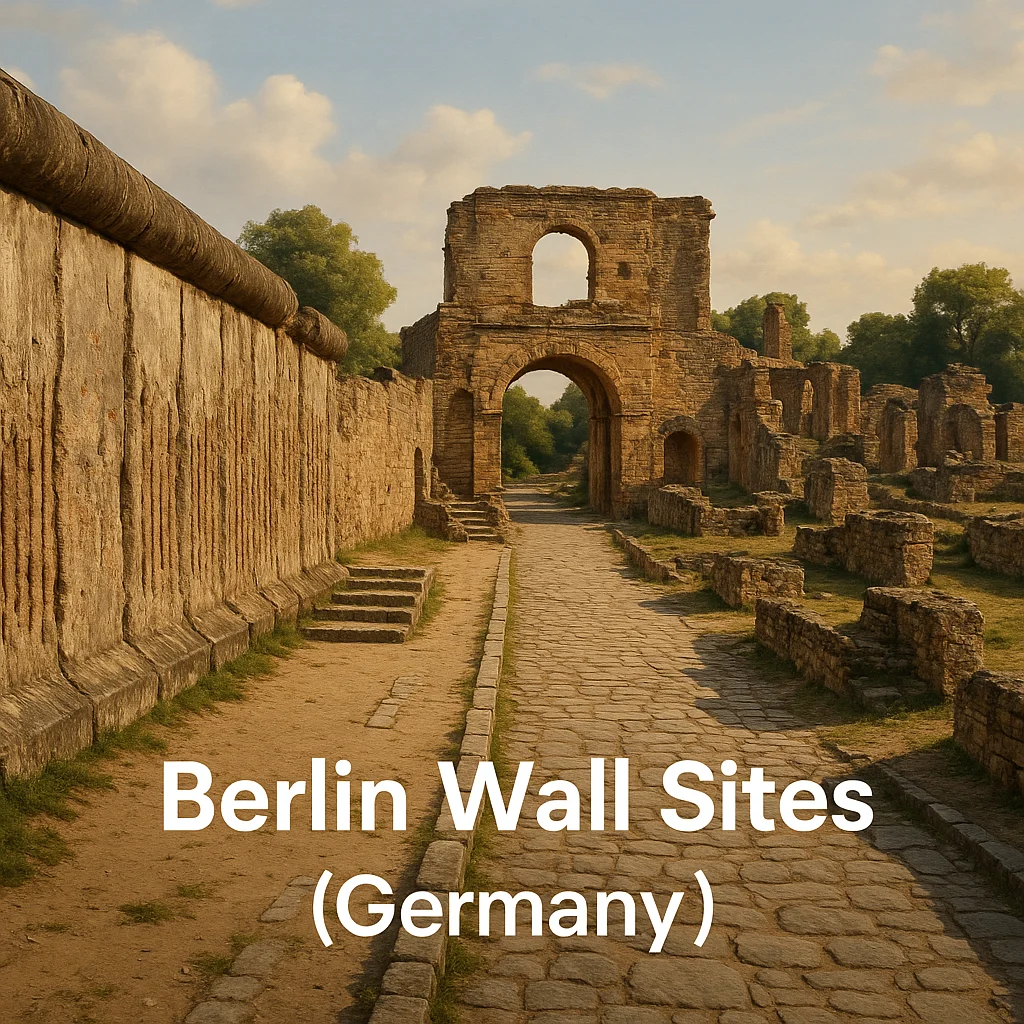
Visiting the Berlin Wall sites allows you to explore a range of experiences, from walking through open-air galleries and visiting museums, to standing over impressive viewpoints. Each location offers a unique glimpse into history and modern transformations.
This guide will help you navigate the historic sites linked to the Berlin Wall, understand their historical context, and appreciate the unique architectural features they present.
- Country/Region: Germany / Berlin
- Era: Cold War (1961-1989)
- Typical Visit Length: 2-4 hours
- Visit Difficulty: Easy to moderate
- Best Season: Spring and Fall
- Highlight: East Side Gallery
🗺️ Where It Is and How to Orient Yourself
The Berlin Wall sites are located in the heart of Berlin, Germany's capital city. Berlin is both easy to reach and navigate for visitors arriving by air or rail.
Most tourists enter Berlin via the Berlin Brandenburg Airport or by train into one of the city's central rail stations. The wall sites are accessible from the city center, making day trips easy without needing overnight accommodations nearby.
Berlin itself is situated on a flat plain, making it straightforward for visitors to plan their routes as they journey between historic sites like Checkpoint Charlie and the Berlin Wall Memorial.
🕰️ History in a Nutshell
The Berlin Wall was erected by the German Democratic Republic (East Germany) in 1961 to prevent East Berliners from fleeing to West Berlin. It served as a physical and ideological division of Berlin and represented the greater division between East and West politically.
At its peak, the Wall altered the lives of millions, symbolizing political tension during the Cold War. In 1989, amidst political changes and public protests, the Wall was famously brought down, leading to Germany’s reunification.
Today, remnants of the Wall serve as historical landmarks to remember and educate about the era while celebrating the triumph of unity and peace.
⭐ Top Highlights You Should Not Miss
- East Side Gallery
- Berlin Wall Memorial
- Checkpoint Charlie
The East Side Gallery is the most iconic, showcasing a section of the Wall adorned with murals. A full structure view provides the opportunity to appreciate its artsy transformation. It's best photographed from angles that capture both the artwork and the Wall's length.
The Berlin Wall Memorial offers insight into the Wall’s construction and impact with an expansive wide view, surrounded by preserved segments and an informative visitor center.
Checkpoint Charlie is a renowned military post of the Cold War era. Its small museum and replicas of guardhouses ensure visitors understand its historical significance. The best photo spots include the wide street context with the checkpoint in the foreground.
🧱 Architecture, Materials, and Design (Made Simple)
The Berlin Wall was constructed using concrete slabs reinforced with steel bars, making it formidable. These materials ensured its durability over nearly three decades.
The design wasn’t just functional; the Wall became a canvas for artists from both sides, leading to the creation of the East Side Gallery, a colorful mural showcasing international calls for peace.
Unique features include the Wall's distinctive height and textures, with sections reflecting restoration efforts while respecting the original intent for educational purposes.
🎟️ Visiting Guide (Time, Tickets, and What to Expect)
Visitors can explore the Berlin Wall sites in varying depths. A quick visit might take an hour, while a standard exploration of all sites can take 2-4 hours. For in-depth understanding, longer stays are beneficial.
Most sections, like the East Side Gallery, are freely accessible, while others, such as the museums at Checkpoint Charlie, might require a ticket. Details can change, so checking beforehand is advisable.
The sites typically operate from morning to afternoon, with some seasonal variations. First-time visitors should arrive early to avoid crowds and should plan to stay hydrated and sun-protected.
🚆 How to Get There and Move Around
Public transportation in Berlin is efficient, with easy access via buses, trams, and the U-Bahn (subway). For newcomers, starting from Alexanderplatz and following signs to nearby sites is convenient.
Numerous entrances exist around Berlin. However, the most direct route for beginners is through accessible areas like Bernauer Strasse, featuring clearer signage and less difficulty for those with mobility limitations.
While most sites are navigable, visitors should be prepared for some uneven grounds, but overall, the routes are manageable.
🌤️ Best Season, Weather, and Time of Day
The best times to visit Berlin Wall sites are in spring and fall due to mild temperatures and fewer crowds. Avoid mid-summer heat and peak tourist seasons if possible.
Early morning or late afternoon visits provide cooler conditions and optimal lighting for photography, enhancing the visual appeal of murals and memorials alike.
For rainy days, the Berlin Wall Museum provides an indoor alternative, allowing visitors to deepen their historical understanding while staying comfortable and dry.
⚠️ Safety, Rules, and Respectful Etiquette
Visitors should wear comfortable shoes and be prepared for uneven paving and potential slippery stones after rain. Culturally, it's important to respect all signs indicating quiet zones and sacred remembrance areas.
Photography is generally welcomed, but restrictions might apply for flash or drones. Following posted guidelines ensures a respectful visit and helps protect the site.
Conservation efforts are crucial, so refrain from climbing on the Wall or touching delicate sections to preserve its historical integrity.
🗺️ Nearby Places and a Simple One-Day Itinerary
Adding nearby attractions enriches the Berlin Wall exploration. Consider visiting the Brandenburg Gate, the Reichstag, the Holocaust Memorial, or Museum Island for a broader historical view.
- Morning: Start at the East Side Gallery and Checkpoint Charlie.
- Midday: Visit the Berlin Wall Memorial and Museum for deeper insights.
- Afternoon: Head to the Brandenburg Gate and lastly, explore Museum Island.
- Evening: Enjoy a relaxing dinner in nearby historical districts.
🧩 Stories, Myths, and Common Questions
Myth: Some believe the Wall entirely encircled Berlin, but it divided just East and West Berlin. Historians clarify it was a contained barrier rather than a city-wide perimeter.
Age Misunderstanding: Although the Wall fell in 1989, its effects lasted well into the 1990s, with reunification and integration processes following.
Purpose Clarification: The Wall was constructed to stop emigration from East to West Berlin during increasing Cold War tensions.
Visit Concerns: The sites are kid-friendly, and guides can enhance the educational aspect. However, younger visitors might need simplified explanations of the complex history involved.
📌 Summary and Who This Site Is Best For
- What it is: A historical symbol of the Cold War division.
- Where it is: Central Berlin, Germany.
- Key history takeaway: A reminder of division and subsequent reunification.
- Top highlights: East Side Gallery, Berlin Wall Memorial, Checkpoint Charlie.
- Architecture/materials: Reinforced concrete, artistic murals.
- Visit length guidance: 2-4 hours, with ample exploration opportunities.
- Best season/time: Spring/fall, early morning or late afternoon.
- Safety/etiquette: Respect cultural signs and conservation efforts.
- Nearby add-ons: Brandenburg Gate, Holocaust Memorial, Museum Island.
- One memorable fact: This Wall's fall paved the way for German reunification.
The Berlin Wall sites offer a profound experience for families, history enthusiasts, and those interested in Cold War-era stories. Photographers will relish capturing the murals' vibrant aspects while hikers will appreciate exploring its expansive urban paths.
The effort to visit is richly rewarded with a deeper understanding of history and its lasting impact on modern society. Embrace this trip as a respectful journey through past struggles and resolutions.
We hope your visit to these historic sites is both inspiring and enlightening, promoting responsible tourism and a deeper appreciation of history's lessons.