🏛️ Luang Prabang (Laos)
🔎 Quick Facts and Why It Matters
Luang Prabang is a UNESCO World Heritage Site located in northern Laos, known for its rich cultural heritage and well-preserved architecture. It is famous for its unique blend of traditional Laotian and colonial French influences.
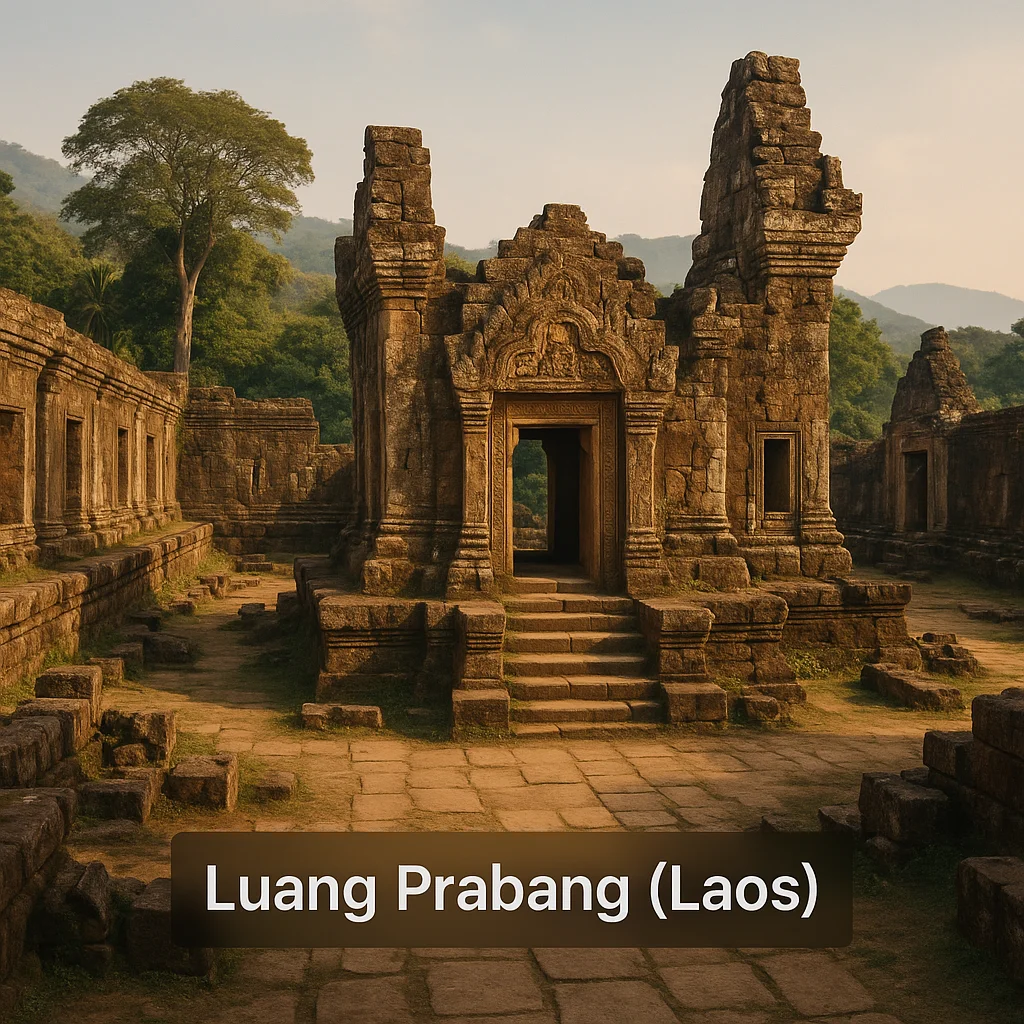
Visitors to Luang Prabang can expect to find a peaceful town surrounded by lush mountains and the Mekong River, offering a serene environment perfect for exploring historical temples and nature alike. It's a place where you can slowly traverse through history, with walkable sites and picturesque viewpoints.
In this guide, you'll learn about Luang Prabang's historical significance, its top highlights, and tips for making the most of your visit. You'll find practical advice on navigating the area, understanding the architectural styles, and respecting local customs.
- Location: Northern Laos
- Era: 14th Century and Colonial Period
- Visit Length: 1-3 days
- Difficulty: Easy to Moderate
- Best Season: November to March
- Highlight: Mount Phousi for panoramic views
🗺️ Where It Is and How to Orient Yourself
Luang Prabang is located in northern Laos, nestled in a mountainous region at the confluence of the Mekong and Nam Khan rivers. It's approximately 300 kilometers north of the capital city, Vientiane, making it a well-loved cultural hub.
The nearest major gateway to Luang Prabang is Luang Prabang International Airport. Travelers often arrive via this airport, charting direct flights from regional hubs like Bangkok, Hanoi, and Kuala Lumpur.
While the town is compact enough for a day trip, staying overnight is recommended to enjoy its full charm, including the evening markets and sunrise views. The town is relatively mountainous, providing a scenic backdrop that enhances the adventure.
🕰️ History in a Nutshell
Luang Prabang was established as the capital of the first Lao kingdom, Lane Xang, in the 14th century. It served as the royal capital for centuries, where kings ruled and Buddhism flourished.
During the 19th century, Luang Prabang became part of French Indochina, influencing its architecture and adding colonial elements to the existing Lao structures. This blend created a unique architectural signature.
The town's prominence waned over time as the capital moved to Vientiane. However, its historical and cultural buildings remained intact, thus preserving its charm and leading to its UNESCO World Heritage designation in 1995.
⭐ Top Highlights You Should Not Miss
- Mount Phousi
- Royal Palace Museum
- Wat Xieng Thong Temple
- Pha Tad Ke Botanical Garden
- Kuang Si Waterfalls
Mount Phousi offers panoramic views of Luang Prabang and the surrounding countryside. The climb is moderately challenging, but the full summit view, particularly at sunset, is rewarding.
The Royal Palace Museum showcases artifacts from the days when Luang Prabang was the royal capital. The wide view of its elegant façade provides a glimpse into the royal lifestyle.
Wat Xieng Thong is an architecturally significant temple, embodying classic Lao style with its ornate mosaics and wide eave roofs directing the eye to the stunningly intricate main building.
Pha Tad Ke Botanical Garden, aside from its lush plant life, provides tours explaining the region’s botanical heritage. The vista of the entire garden, set against scenic river views, gives a refreshing experience of nature's splendor.
Kuang Si Waterfalls, though slightly outside the town, are a treat for nature lovers. Visitors can enjoy a full view of cascading falls surrounded by verdant woodland, making it a perfect photo spot.
🧱 Architecture, Materials, and Design (Made Simple)
The architecture of Luang Prabang is a mix of Lao traditional designs and French colonial influences. Traditionally, structures were built using local wood and bamboo, with brick and stucco added during the colonial period.
This architectural blend is discernable in the town's temples and royal buildings, where you'll see French shutters alongside Lao-style curved roofs and gold embellishments.
Unique details include the "sim," or ordination hall, with its carved and gilded decorations, and the colonial quarter with its arches and shuttered windows. Restoration efforts have carefully preserved these features, maintaining a balance between originality and conservation.
🎟️ Visiting Guide (Time, Tickets, and What to Expect)
Reserving one to three days will allow visitors to explore Luang Prabang thoroughly. Quick visits can focus on central highlights, while longer stays can delve into lesser-known sites and enjoy local cuisine.
Most heritage sites, like the Royal Palace Museum and Wat Xieng Thong, require a nominal entry fee. Museum visits might require separate tickets, while guided tours can offer enriched historical insights.
Opening times generally span from the morning to late afternoon, yet they can change, so checking ahead is wise. For a relaxed visit, arriving early helps avoid crowds, especially in the cooler dry season.
🚆 How to Get There and Move Around
Travelers can reach Luang Prabang by air, landing at Luang Prabang International Airport. From the airport, taxis and tuk-tuks are readily available to take you into town.
Within the town, walking is feasible since the main attractions are centrally located. However, renting a bicycle or hiring a tuk-tuk is an excellent way to explore more distant sites.
Accessibility can be varied; certain areas require climbing steps or navigating uneven paths, so comfortable shoes are recommended. Parts of the landscape might challenge those with mobility issues, yet the central areas are relatively accessible.
🌤️ Best Season, Weather, and Time of Day
The ideal time to visit Luang Prabang is from November to March, when the weather is cooler and drier, offering a pleasant temperature for exploring.
Sunrise and sunset are the golden hours for photography, with soft light highlighting the town's beauty. Early mornings are recommended for temple visits to avoid heat and crowds.
In case of rain, which is more common between June and October, indoor activities like visiting the Traditional Arts and Ethnology Centre provide cultural insights while staying dry.
⚠️ Safety, Rules, and Respectful Etiquette
Visitors should wear appropriate clothing covering shoulders and knees when visiting sacred sites. Shoes suitable for uneven stones and paths are also advisable.
Respecting local customs includes remaining quiet in temple areas and adhering to signage instructions. Photography typically excludes flash use, and drones might be restricted, so it’s best to follow posted rules.
For your safety, stick to designated paths to prevent damages to the fragile ruins. Weather-related risks like slippery stones and sun exposure can be mitigated by careful planning and hydration.
🗺️ Nearby Places and a Simple One-Day Itinerary
Beyond Luang Prabang’s main attractions, visitors can explore the Traditional Arts and Ethnology Centre, Ock Pop Tok for traditional textiles, or the stunning views from the Bamboo Bridge area during the dry season.
- Morning: Climb Mount Phousi for sunrise
- Midday: Explore Royal Palace Museum and enjoy lunch
- Afternoon: Visit Wat Xieng Thong and stroll the Mekong riverside
- Evening: Explore the Night Market for souvenirs and local snacks
🧩 Stories, Myths, and Common Questions
Q: Is Luang Prabang an ancient city?
A: While it holds ancient elements, it was significantly influenced by colonial periods more recently, creating a layered historical mix.
Q: Are the waterfalls hard to reach?
A: The Kuang Si Waterfalls are accessible by organized tours or rented transport, but require a short walk from the entrance.
Q: Is a guided tour necessary?
A: While not required, guided tours can deepen your understanding of the town's history and significance.
Q: Is Luang Prabang kid-friendly?
A: Yes, the town offers various activities that are enjoyable and educational for children, with manageable distances and gentle landscapes.
Q: What languages are spoken?
A: Lao is the primary language, though English is commonly spoken in tourist areas.
📌 Summary and Who This Site Is Best For
- A UNESCO World Heritage Site in northern Laos
- Located at the confluence of the Mekong and Nam Khan rivers
- Former royal capital with rich history and architecture
- Highlights include Mount Phousi and Wat Xieng Thong
- Features a blend of Lao and French colonial designs
- Recommended visit length is 1-3 days
- Best visited from November to March
- Respectful etiquette is important, especially in sacred areas
- Nearby activities include exploring night markets and waterfalls
- A memorable site for its tranquility and blend of cultures
Luang Prabang is an excellent destination for families seeking a cultural experience, photographers aiming to capture stunning landscapes, and history lovers eager to explore Southeast Asia's past.
Its welcoming atmosphere and varied attractions make it worth the journey, allowing visitors to immerse themselves in both natural beauty and historical depth.
Enjoying Luang Prabang responsibly ensures it remains a cherished historical site for future generations.