🏛️ Lijiang Old Town (China)
🔎 Quick Facts and Why It Matters
Lijiang Old Town, a UNESCO World Heritage Site, is renowned for its intricate canal systems and ancient architecture, offering a glimpse into the vibrant history of China's Yunnan province.
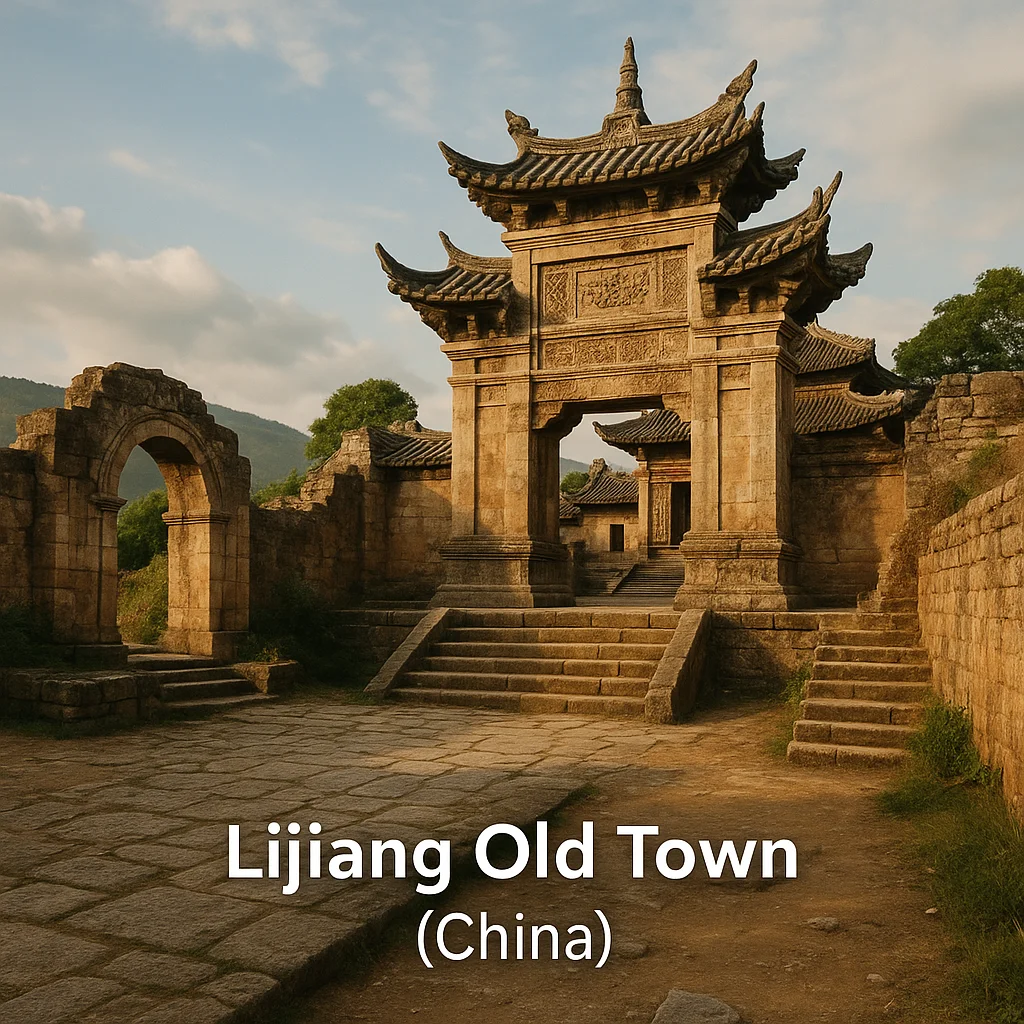
This ancient town stands out because of its well-preserved wooden buildings, stone streets, and vibrant Naxi culture, making it a unique blend of history and living heritage.
As a walkable area filled with beautiful viewpoints and cultural experiences, visitors can enjoy exploring different corners of the town, capturing its many charms.
In this guide, you'll learn about the town's history, its architectural marvels, and how to make the most of your visit with practical tips.
- Location: Yunnan Province, China
- Era: 13th century, Song Dynasty origins
- Typical Visit Length: Half-day to two days
- Visit Difficulty: Easy to medium, depending on chosen route
- Best Season: Spring and autumn for mild weather
- Highlights: Ancient architecture, canals, Naxi culture
🗺️ Where It Is and How to Orient Yourself
Lijiang Old Town is located in the Yunnan Province of China, nestled in a picturesque mountain valley. This area is known for its stunning natural landscapes and rich cultural heritage.
The nearest major city to Lijiang is Kunming, which serves as a typical gateway with its railway and airport connections, providing convenient access to the town. Visitors often travel from Kunming to Lijiang, making it a feasible day trip or an even better overnight stay.
The town's location amidst the striking Jade Dragon Snow Mountain range offers a captivating backdrop, creating a mental image of a historical town set against majestic peaks.
🕰️ History in a Nutshell
Lijiang Old Town's origins date back to the Song Dynasty in the 13th century, when it thrived as a bustling trade center along the Ancient Tea Horse Road. Over time, it became an important hub for commercial, cultural, and transportation activities.
During its peak, the town's strategic location made it a vibrant intersection for different cultures, notably the Naxi people, who influenced its development through distinct architectural and cultural traditions.
The town's decline began as modern transportation routes developed, yet its preservation efforts and recognition by UNESCO have maintained its historic charm for future generations.
⭐ Top Highlights You Should Not Miss
- Sifang Street Square
- Mu Family Mansion
- Black Dragon Pool
- Wangu Tower
- Ancient Canals
Sifang Street Square is the social and cultural heart of Lijiang Old Town. Known for its vibrant atmosphere, it's a must-see spot where visitors can observe traditional Naxi performances and enjoy local markets. This expansive square offers a wide view including surrounding timber-frame buildings.
Mu Family Mansion, a replica of the original Naxi rulers' palace, showcases intricate wooden architecture and beautiful gardens, providing insights into the lifestyle of the elite class. The entire façade can be seen in full, offering an opportunity for comprehensive appreciation.
Black Dragon Pool provides stunning reflections of the Jade Dragon Snow Mountain and traditional pavilions, serving as a postcard-perfect photo opportunity with both the water and the mountain fully visible in frame.
Wangu Tower offers panoramic views over the Old Town and surrounding areas from Lion Hill. The hike up is rewarded with a breathtaking wide-angle view including the full townscape and the distant mountain range.
The Ancient Canals of Lijiang, fed by snowmelt from the mountains, form a network running through the town, creating picturesque scenes that highlight the town's unique water management system. Visitors can enjoy seeing the full structure and flow of these canals in a spacious setting.
🧱 Architecture, Materials, and Design (Made Simple)
Lijiang Old Town's architecture prominently features wood and stone as the primary materials. Buildings are noted for their tiled roofs, wooden beams, and stone bases, reflecting traditional Chinese architectural styles.
The style is influenced by elements from the Ming and Qing dynasties, visible in the detailed woodcarvings, sweeping rooflines, and vibrant decorative motifs.
Unique aspects of the architecture include the town's distinctive grey roof tiles, elaborately carved wooden window frames, and stone-paved streets that wind through the town, defining its historical character.
Restoration efforts have focused on preserving the original elements while ensuring structural stability, seamlessly blending new and old materials without diminishing the town's authenticity.
🎟️ Visiting Guide (Time, Tickets, and What to Expect)
Visitors typically spend a half-day to two days exploring the Old Town, depending on their interest levels in history and architecture.
While access to the town itself is generally free, certain areas like the Mu Family Mansion may require an additional ticket, and guided tours can enhance the experience through contextual storytelling.
The town is open from morning to late afternoon; however, it's advised to check specific sites for their opening patterns, as these can vary seasonally.
First-time visitors should consider arriving early to avoid crowds, carry water for hydration, and bring a hat for sun protection, given that shaded areas can be limited.
🚆 How to Get There and Move Around
Travelers can reach Lijiang by train or plane to the nearest airport or rail hub, followed by a short taxi or bus ride to the town itself.
The Old Town is best explored on foot, as vehicular access is limited due to its narrow, cobblestone streets, but this walking approach allows for a full appreciation of the environment.
Beginners should start at Sifang Street Square, the main entrance, as it's centrally located and provides a navigable starting point for other attractions.
While Lijiang is generally accessible, visitors should be mindful of steep steps and uneven surfaces, which may pose challenges for those with mobility concerns.
🌤️ Best Season, Weather, and Time of Day
The most pleasant times to visit Lijiang are during the spring and autumn months, when the weather is mild and crowds are more manageable.
Exploring early in the morning or late in the afternoon can provide serene experiences and the best light for photography, highlighting the town’s vibrant colors.
In the event of rain, visitors can seek out indoor attractions such as museums or enjoy covered areas within the town, ensuring their visit remains enjoyable despite the weather.
⚠️ Safety, Rules, and Respectful Etiquette
Visitors should wear comfortable shoes suitable for cobblestone streets and staircases. Due to weather variations, layers are recommended for comfort.
Being a place of cultural significance, visitors are encouraged to maintain quiet respect, especially in sacred areas, and to follow any posted signage or guidelines.
Photography is generally allowed, but the use of flash or drones may be restricted in certain areas. Visitors should respect these rules to preserve the site's tranquility.
It's essential to stay on designated paths and avoid touching or climbing on fragile structures to aid in conservation efforts. Being aware of one's surroundings can minimize risks such as slippery stones or minor altitude effects.
🗺️ Nearby Places and a Simple One-Day Itinerary
A number of fascinating sites surround Lijiang. These include Jade Dragon Snow Mountain, Shuhe Ancient Town, Baisha Village, and the Lugu Lake for nature enthusiasts.
- Morning: Begin at Sifang Street Square with breakfast nearby
- Midday: Visit Mu Family Mansion for historical insights
- Afternoon: Explore Black Dragon Pool for scenic photography
- Evening: Stroll through the canals and enjoy dinner overlooking them
🧩 Stories, Myths, and Common Questions
Q: Is Lijiang Old Town actually over a thousand years old?
A: While the town's origins are ancient, much of what exists today dates from the Ming and Qing dynasties, which is about 600-800 years old.
Q: Is this town considered a "lost city"?
A: No, historians do not refer to Lijiang as a lost city, but as a well-preserved historic town that continues to thrive today.
Q: Is a guided tour recommended, and why?
A: A guided tour can be beneficial as it provides detailed historical context and nuances of the Naxi culture, enhancing the overall experience.
Q: Is the walk around the town challenging?
A: Most areas are fairly easy to navigate, but some steep sections and staircases can be more challenging.
Q: Can families with young children visit comfortably?
A: Yes, families are welcome. The town offers various child-friendly areas, although some supervision is required near water and uneven paths.
📌 Summary and Who This Site Is Best For
- What it is: A cultural and historical ancient town
- Where it is: Located in Lijiang, Yunnan Province, China
- Key history takeaway: Important Naxi cultural hub on an ancient trade route
- Top highlights: Sifang Street Square, Mu Family Mansion, Black Dragon Pool
- Architecture/materials: Wood and stone, Ming and Qing style
- Visit length guidance: Half-day to two days depending on depth of interest
- Best season/time: Spring and autumn, early or late day times for best lighting
- Safety/etiquette: Wear suitable footwear, respect cultural spaces and photography rules
- Nearby add-ons: Jade Dragon Snow Mountain, Shuhe Ancient Town
- One memorable fact: Renowned for its canal systems, blending nature and city seamlessly
Lijiang Old Town is ideal for families, photographers, and history enthusiasts who enjoy exploring scenic, culturally rich areas. Its walkable streets and vibrant culture make it a memorable destination well worth exploring.
The town offers an authentic peek into China's past, combining architectural beauty with living traditions. Its picturesque setting and historical significance make it a site of great educational and visual appeal.
Encouraging responsible visiting ensures this unique historical treasure can continue to inspire generations to come.