🏛️ Historic Kyoto (Japan)
🔎 Quick Facts and Why It Matters
Kyoto, the heart of Japan's culture and history, is revered for its stunning preserved architecture and traditional lifestyle that has remained largely unchanged for centuries. This city is a precious testament to the rich history and enduring legacy of Japan's imperial past.
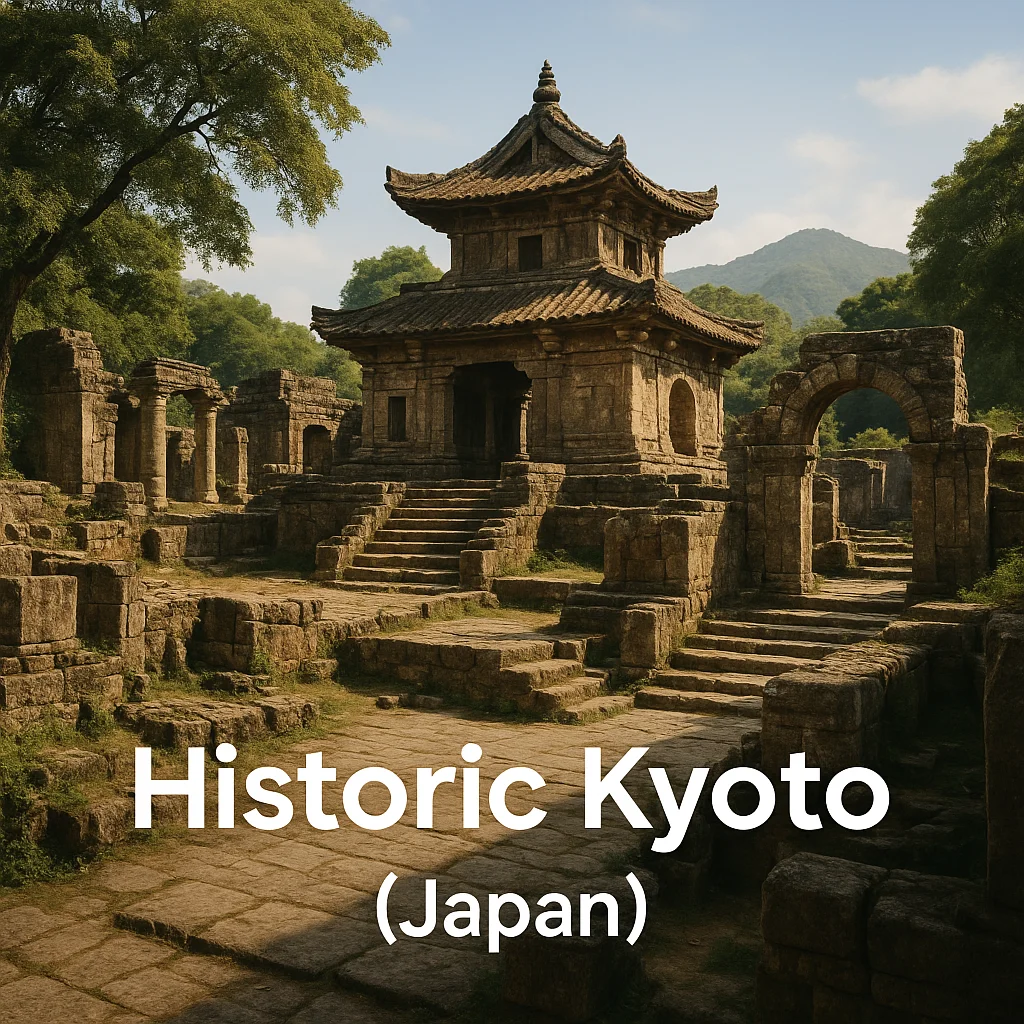
Kyoto offers visitors a unique experience to walk through ancient streets, visit historic temples, and absorb the serene atmosphere of its beautifully maintained landscapes. The experience is akin to stepping back in time, offering an immersive glimpse into Japan's storied past.
This guide will take you through the essentials of exploring Kyoto's historic sites, offering insights into its history, architecture, and tips for making the most of your visit. From the famed Kinkaku-ji, or the Golden Pavilion, to the tranquil gardens, there's much to discover.
- Country/Region: Japan, Kansai Region
- General Era: Heian Period (~794 AD)
- Typical Visit Length: 2 to 4 days
- Difficulty: Easy to moderate
- Best Season: Spring and Autumn
- Highlight: Kinkaku-ji (Golden Pavilion)
🗺️ Where It Is and How to Orient Yourself
Kyoto is located on the central part of Honshu Island in Japan’s Kansai region. It's well-positioned among the mountains and famed for its historical importance as Japan's capital for over a millennium.
The nearest major city to Kyoto is Osaka, which is also the typical gateway for most international travelers via Kansai International Airport. Kyoto is accessible by an efficient rail network, including the Shinkansen, making it feasible as a day trip from Osaka, although an overnight stay is recommended to fully appreciate its offerings.
To orient yourself, imagine Kyoto nestled in a mountain valley; it is both scenic and strategically placed, with the city itself filled with countless temples, traditional neighborhoods, and captivating shrines waiting to be explored.
🕰️ History in a Nutshell
The founding of Kyoto as Heian-kyō dates back to the 8th century when it served as the capital of Japan. It was meticulously planned and modeled after the ancient Chinese city of Chang'an, establishing it as a major cultural and political center.
During its peak, Kyoto was the heart of Japanese culture, politics, and religion. Over centuries, the city evolved amidst changes such as wars and shifting imperial powers, but it retained its status as a spiritual and cultural hub.
Despite the devastation of many historical events, Kyoto remarkably avoided destruction during World War II, allowing many of its historical sites to survive. This preservation contributes to its reputation as a timeless repository of Japanese art and culture today.
⭐ Top Highlights You Should Not Miss
- Kinkaku-ji (Golden Pavilion)
- Kiyomizu-dera Temple
- Nijo Castle
- Fushimi Inari Taisha
- Arashiyama Bamboo Grove
The Kinkaku-ji, or Golden Pavilion, is an iconic Zen temple in northern Kyoto. Its top two floors are completely covered in gold leaf, creating a spectacular view, especially when reflected in the pond. The best photo spot is from across the pond for a complete view including the tranquil surroundings.
Kiyomizu-dera, famous for its wooden stage that juts out from the hillside, provides a panoramic view of cherry and maple trees below that burst into color during seasonal changes. Capture this view from the base of the temple hill to include both the temple and its seasonal backdrop in the frame.
Nijo Castle is a UNESCO World Heritage Site noted for its beautiful gardens and well-preserved castle buildings from the Edo period. Stand at the front gate for a wide angle that includes the entire castle façade and its gardens.
Fushimi Inari Taisha is renowned for its thousands of red torii gates. A wide-angle photo capturing the entrance to the torii path gives context to their seemingly endless procession up the sacred mountain.
Arashiyama Bamboo Grove offers a serene ambiance as you walk through towering bamboo stalks. Best viewed when the path is relatively empty, try to capture it as you enter the grove with a shot including both the path and high-reaching bamboo.
🧱 Architecture, Materials, and Design (Made Simple)
Kyoto's architecture incorporates traditional wooden structures, noted for their resilience to Japan's humid climate and earthquakes. The use of wood also aligns with Shinto and Buddhist principles celebrating the natural world.
The design influence here is notably Japanese, characterized by simplicity, natural materials, and intentional asymmetry, which fosters harmony between the structures and their natural settings. This approach is evident in the Zen gardens and temple layouts.
Unique architectural features like the golden exterior of Kinkaku-ji and the sliding screens of traditional machiya townhouses make Kyoto's heritage sites recognizable. While some sites have undergone restoration, efforts have been made to preserve the original aesthetic as much as possible.
🎟️ Visiting Guide (Time, Tickets, and What to Expect)
Plan to spend at least two days in Kyoto, with quick tours of major sites possible in half a day, but a standard visit ideally needing one full day per major area of interest.
Entry to major landmarks often requires a fee, while some gardens and shrines offer free access. Guided tours can provide insightful context but are not necessary for everyone as many sites offer comprehensive informational plaques.
Sites typically open from morning until late afternoon; however, timings can change with the season, so it is wise to check expected hours closer to your visit. Arriving early in the morning helps beat the crowds and provides a peaceful experience.
Wear comfortable shoes for walking, and consider carrying water and a hat to manage the sun, particularly during peak months.
🚆 How to Get There and Move Around
Kyoto is well-connected by public transport, with local buses and trains providing extensive coverage. Renting a bicycle is also a popular and efficient way to explore the city's flat regions.
For beginners, taking a taxi or relying on guided bus routes is the easiest way to navigate between distant sites. Accessibility is generally good, but some historical sites have steep steps and narrow paths that might pose challenges.
Entering Kyoto from larger cities like Osaka involves relatively short train rides, ensuring a smooth start to your journey in the city.
🌤️ Best Season, Weather, and Time of Day
The best time to visit Kyoto is during spring (March to May) and autumn (September to November), when the weather is mild, and the natural beauty is on full display with cherry blossoms and vibrant foliage.
Visits in the early morning or late afternoon provide a more relaxed atmosphere and softer light for photography. In summer, aim for morning visits to avoid midday heat.
On rainy days, indoor attractions such as museums or the indoor halls of temples can provide a dry yet engaging experience. The Kyoto National Museum is a great alternative.
⚠️ Safety, Rules, and Respectful Etiquette
Wear appropriate footwear for uneven surfaces and bring layers to adjust to changing weather conditions. Respect quiet zones, especially in temples and during ceremonies.
Photography inside certain temple interiors may be restricted, so always look for signage and follow local rules regarding flash photography and drones.
To preserve the sites, visitors should remain on marked paths and avoid touching or climbing on fragile structures. Keep hydrated and aware of your surroundings, particularly in crowded spaces.
🗺️ Nearby Places and a Simple One-Day Itinerary
Extend your Kyoto adventure by visiting nearby attractions such as the Kyoto Imperial Palace, Gion District for traditional tea houses, or Lake Biwa for breathtaking water views.
- Morning: Explore Kinkaku-ji followed by Ryoan-ji Zen garden.
- Midday: Head to Nijo Castle, stopping for lunch in the nearby district.
- Afternoon: Walk through Arashiyama Bamboo Grove, ending with Fushimi Inari Taisha.
- Evening: Relax with a traditional tea ceremony in Gion.
🧩 Stories, Myths, and Common Questions
Myth: All Kyoto buildings are centuries old. Truth: While many structures are historic, some are reconstructions or thoroughly restored to preserve their appearance.
Understanding: Kyoto was never bombed during World War II. Indeed, it was spared due to its cultural significance.
Visitor Question: Is the walk around Kyoto tiring? Answer: The terrain is mostly manageable with some slopes; occasional breaks are recommended.
Visitor Question: Is Kyoto suitable for children? Answer: Absolutely, with many parks and interactive experiences fitting for families.
Visitor Question: Should I take a guide? Answer: Guides offer valuable insights, especially if you are interested in in-depth history.
📌 Summary and Who This Site Is Best For
- it is a historic and cultural epicenter in Japan
- located in the heart of Honshu Island
- was the capital of Japan for over a millennium
- features highlights like Kinkaku-ji and Fushimi Inari Taisha
- architecture showcases traditional Japanese design
- visit length recommended: 2 to 4 days
- best visited during spring or autumn
- emphasize respectful behavior and safety
- nearby you can explore Lake Biwa and the Gion District
- a memorable site for its preserved historical context and beauty
Kyoto will captivate families, photographers, and history enthusiasts alike with its profound serenity and abundant historical treasures. Its blend of natural beauty and cultural depth makes it an inspiring destination for anyone interested in Japan's rich heritage.
Whether you're drawn to its architectural marvels or want to experience a moment of tranquility in its zen gardens, Kyoto offers an enriching journey into the past. Visit with respect and enjoy the timeless charm that only Kyoto can offer, ensuring you leave with memories that will last a lifetime.