🏛️ Gyeongju Historic Areas (South Korea)
🔎 Quick Facts and Why It Matters
Gyeongju Historic Areas are a significant collection of cultural sites in South Korea, renowned for their ancient temples, pagodas, and burial mounds. Often termed as "the museum without walls," Gyeongju offers a glimpse into the rich history of the Silla Dynasty.
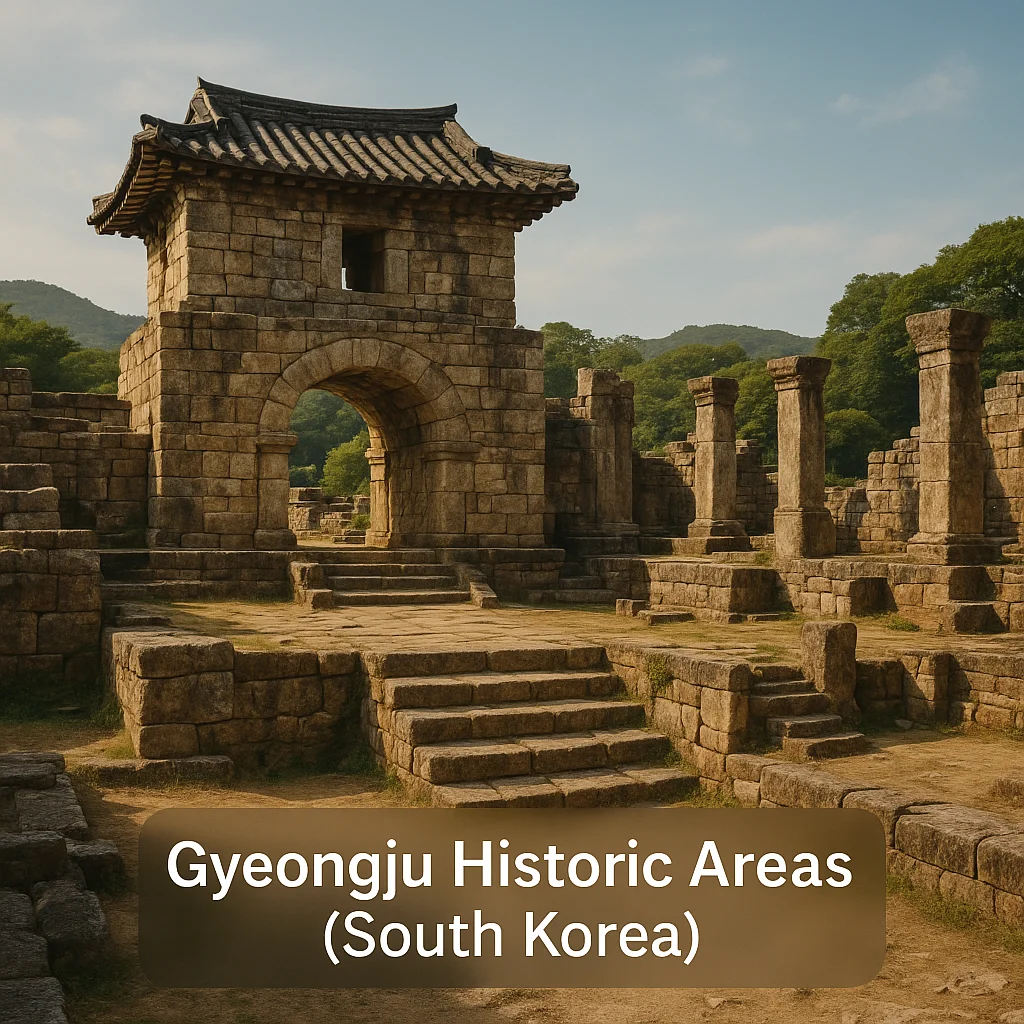
What makes Gyeongju particularly special is its vast and immersive experience. Visitors can stroll through multiple sites, absorbing the essence of ancient Korean culture while surrounded by impressive natural beauty.
This guide will take you through the highlights of Gyeongju, offering insights into its history, architecture, and practical tips for making the most of your visit.
- Country/Region: South Korea, Gyeongju
- General Era: Silla Dynasty, 7th to 10th century
- Typical Visit Length: Half to full day
- Difficulty: Moderate (walking required)
- Best Season: Spring and autumn for mild weather
- Highlight: Bulguksa Temple
🗺️ Where It Is and How to Orient Yourself
Gyeongju is located in the southeastern part of South Korea, within North Gyeongsang Province. It is near Pohang, a coastal city, and is easily accessible as a cultural hub in the region.
The nearest major city for travelers is Busan, with Gimhae International Airport serving as the typical gateway. There are frequent rail connections to Gyeongju, making it a convenient destination for a day trip or a more relaxed overnight stay.
The city is nestled in a mountainous area, with the Namsan Mountain providing a scenic backdrop, ensuring visitors can explore both natural and cultural wonders seamlessly.
🕰️ History in a Nutshell
Gyeongju served as the capital of the Silla Kingdom, which unified much of the Korean Peninsula from the 7th to the 10th century. The sites in the historic areas were primarily constructed during this period when the kingdom was at its zenith.
The central site, Bulguksa Temple, functioned as a major religious and political center. As centuries passed, the fall of the Silla Dynasty led to decline and the partial abandonment of some structures.
Today, many ruins remain due to both natural preservation and conscientious restoration efforts by Korean authorities, ensuring that the city's grand history can still be explored.
⭐ Top Highlights You Should Not Miss
- Bulguksa Temple
- Seokguram Grotto
- Cheomseongdae Observatory
- Daereungwon Tomb Complex
Bulguksa Temple, a UNESCO World Heritage Site, is a prime example of Buddhist art, with its renowned stone pagodas. The full structure is visible against the lush landscape, offering a panoramic view that is perfect for photos.
Seokguram Grotto holds a magnificent Buddha statue surrounded by stunning reliefs. The entire façade and entrance are in frame against a mountainous setting, making it a serene spot.
Cheomseongdae Observatory, one of the oldest surviving astronomical observatories in Asia, provides a fascinating glimpse into ancient scientific endeavors, with a wide view that includes surrounding fields.
Daereungwon Tomb Complex hosts several royal tombs in beautifully arranged grassy mounds. The site's pathways offer full views of these impressive structures amidst peaceful gardens.
🧱 Architecture, Materials, and Design (Made Simple)
The Gyeongju Historic Areas mainly feature stone-built structures, leveraging various construction techniques from masonry to carved stone blocks. The Silla architecture often shows influences of Korean and Chinese styles.
Unique features include the bulbous pagodas of Bulguksa Temple and the intricate stone carvings of Seokguram Grotto. These elements showcase a blend of practicality and artistry, distinctively Korean.
Some of the structures have seen partial restorations, allowing guests to appreciate both original remnants and careful reconstructions, particularly where erosion or past conflicts caused damage.
🎟️ Visiting Guide (Time, Tickets, and What to Expect)
A quick visit can take about two hours, while a comprehensive tour may last a full day. Entry to most sites requires a ticket, with Bulguksa Temple and Seokguram Grotto sometimes combined for convenience.
General operating hours span from morning to late afternoon, with potential adjustments for seasons. It's wise to verify current times before visiting to optimize your experience.
For first-timers, arriving early allows for quieter exploration and better light for photography. Bringing essentials like water, a hat, and comfortable shoes is recommended, as walking is necessary.
🚆 How to Get There and Move Around
Transport options from Busan involve trains and buses to Gyeongju. The city's sites are interconnected by local buses, but taxis and cycling are also feasible options for comfortable exploration.
The most beginner-friendly route often starts with Bulguksa Temple, progressing to the grottos, given the clear signage and ease of access. Note that there are some steep steps, especially at Seokguram Grotto.
Accessibility varies; paved walkways exist, but uneven stones and gentle slopes require attention for those with mobility issues.
🌤️ Best Season, Weather, and Time of Day
The optimal times to explore Gyeongju are spring and autumn, as temperatures are pleasant, and the surroundings are either blooming or richly colored. Summers can be hot and humid, while winters are chilly.
The best light for viewing and photographing the sites usually occurs in the early morning or late afternoon, creating dramatic long shadows and softer light.
On rainy days, consider visiting covered sites like museums in Gyeongju, offering comparable educational experiences.
⚠️ Safety, Rules, and Respectful Etiquette
Visitors should wear sturdy shoes due to uneven surfaces and potential hikes. Respectful clothing is advised, particularly at religious sites like temples and grottos.
Photography is generally allowed, though some areas restrict flash or drone use; when in doubt, refer to posted regulations.
To help with conservation efforts, stay on designated paths, avoid touching delicate surfaces, and refrain from climbing on monuments.
It's also wise to be cautious of slippery stones during wet weather and stay hydrated and protected from sun exposure.
🗺️ Nearby Places and a Simple One-Day Itinerary
- Morning: Begin at Bulguksa Temple
- Midday: Visit Seokguram Grotto
- Afternoon: Explore Cheomseongdae Observatory
- Evening: Stroll through Daereungwon Tomb Complex
Additional nearby attractions include the Gyeongju National Museum, offering a comprehensive overview of Silla history, and Anapji Pond, perfect for an evening visit with its illuminated pavilions.
🧩 Stories, Myths, and Common Questions
Q: Is Gyeongju really a "lost city"? A: While often described in romantic terms, Gyeongju was never truly lost; it merely experienced decline after the unification of the Korean Peninsula shifted the capital.
Q: How challenging is it to walk around? A: The terrain is moderately challenging, with a mix of paved paths and uneven ground. Most healthy visitors manage without difficulty.
Q: Is a guided tour worth it? A: For those keen on historical details and stories behind each site, a guided tour can enrich the experience significantly.
Q: Are the tombs open for exploration? A: Tomb interiors are generally not accessible to preserve archaeological integrity, but viewing from outside offers enough details.
📌 Summary and Who This Site Is Best For
- What it is: Historic ruins of the Silla Kingdom capital
- Where it is: Gyeongju, South Korea
- Key history takeaway: Silla Dynasty brilliance
- Top highlights: Bulguksa Temple, Seokguram Grotto
- Architecture/materials: Stone masonry and carved blocks
- Visit length guidance: Half to full day depending on interest
- Best season/time: Spring and autumn, early morning or late afternoon
- Safety/etiquette: Stay on paths, respect cultural sites
- Nearby add-ons: Gyeongju National Museum, Anapji Pond
- One memorable fact: "Museum without walls" for its open-air experience
Gyeongju is particularly enjoyable for families, cultural and history enthusiasts, and photographers. Those with an interest in Korean culture or ancient history will find it especially rewarding.
Visiting Gyeongju offers a unique mixture of nature and history, appealing due to its accessibility and depth of experiences.
As you plan your visit, remember to embrace the calm and heritage of the site, ensuring a respectful and informative experience.