🏛️ Granada Historic Quarter (Spain)
🔎 Quick Facts and Why It Matters
Granada Historic Quarter is a fascinating blend of Moorish, Christian, and Jewish influences nestled in the foothills of the Sierra Nevada mountains. It is renowned for its cultural and architectural richness stemming from centuries of varied history and importance as a center of learning and art.
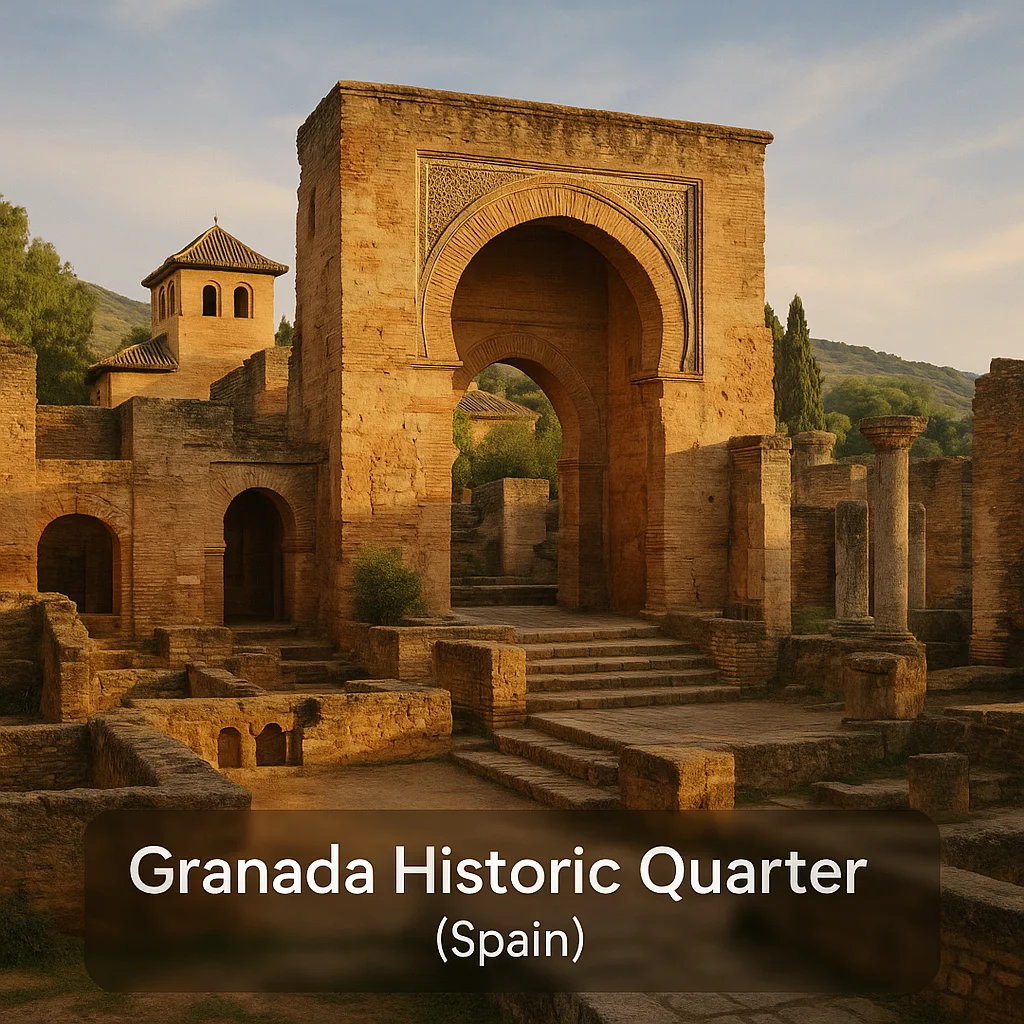
The quarter is particularly special for its remarkable preservation of the Alhambra, a palace and fortress complex that showcases the height of Moorish art and architecture in Europe. The intricate designs and panoramic views offer visitors a museum-style experience combined with the charm of walkable historic streets.
This guide will take you through the main highlights of Granada's Historic Quarter, what to look out for, and how to make the most of your visit. Expect to learn about key historical periods, architectural features, and practical tips for planning your trip.
- Country/Region: Spain, Andalusia
- General Era: 13th to 16th centuries
- Typical Visit Length: 4 to 6 hours
- Difficulty: Moderate (some steps and inclines)
- Best Season: Spring and Fall
- Highlight: Alhambra Palace
🗺️ Where It Is and How to Orient Yourself
Granada Historic Quarter is situated in Andalusia, Spain, and is part of the city of Granada. It is close to the Sierra Nevada mountains, which provides a breathtaking natural backdrop to the architectural wonders in the city.
The nearest major city with an airport and convenient rail links is Malaga, making it a common gateway for travelers. A journey from Malaga to Granada typically takes a couple of hours, whether by train or car.
While ambitious travelers might try to make it a day trip, staying for at least a night allows for a more relaxed exploration of the area's features. The quarter is positioned within a mountain valley, making for dramatic vistas in all directions, with lush greenery contrasting the ancient stone structures.
🕰️ History in a Nutshell
The historic quarter of Granada was primarily developed under the Nasrid dynasty, which ruled in the region from the 13th to the 15th century. The Alhambra was originally built as a fortress and later expanded into a royal palace during this time, serving as the seat of the Emirate of Granada.
The quarter flourished during the Nasrid period, known for its cultural prosperity and architectural advancements. However, the completion of the Reconquista in 1492 by the Catholic Monarchs marked a dramatic change, leading to the city eventually falling under Christian rule.
Although many structures were altered or repurposed throughout the years, Granada's iconic Islamic architecture remains largely because it was continuously in use or carefully preserved. As a result, it stands today both as an emblem of cultural fusion and a testament to centuries-old craftsmanship.
⭐ Top Highlights You Should Not Miss
- Alhambra
- Generalife
- Albaicín
- Granada Cathedral
- La Cartuja Monastery
The Alhambra is by far the crown jewel of Granada, renowned for its stunning Islamic architecture. While visiting, ensure you take in the full structure visible from the Generalife gardens. The intricate carvings and serene pools reflect the peak of Moorish art.
The Generalife serves as the former summer palace of the Nasrid sultans and offers visitors lush gardens with a wide view of the surrounding landscape. Photograph the entire façade in frame with a backdrop of the Sierra Nevada.
The Albaicín is an ancient Moorish quarter full of narrow winding streets and whitewashed buildings. Look for the scenic points where you can see the entire quarter in context with the Alhambra in the distance.
Granada Cathedral, a magnificent representation of Renaissance architecture, should not be missed. Best viewed from a distance to see its grandeur, the cathedral's interior also holds numerous treasures.
La Cartuja Monastery is a bit outside the main historic center, but its baroque architecture and opulent decorations are well worth the trip. Ensure a wide view with the surrounding courtyard when taking photos.
🧱 Architecture, Materials, and Design (Made Simple)
The structures in Granada's Historic Quarter predominantly use materials such as local stone, brick, and plaster, with intricate designs carved into the walls. Common construction methods included using tiers of arches and domes, often supported by elegant columns.
The Alhambra shows strong Moorish influences, evident in its horseshoe arches and delicate stucco work. Visitors will recognize the sprawling complex by its magnificent palaces adorned with symmetrical patterns and detailed tilework.
One unique detail to note is the use of water features in many designs, from fountains to reflective pools, which add both aesthetic beauty and a cooling effect. The combination of indoor and outdoor spaces, such as courtyards, is another hallmark of the Nasrid style.
Many parts of the Alhambra and other sites have been restored over time. While some original structures remain, restoration efforts have been minimal to maintain authenticity without overshadowing historical elements with modern repairs.
🎟️ Visiting Guide (Time, Tickets, and What to Expect)
Visitors to the historic quarter typically spend anywhere from half a day to a full day exploring the various sites. A quick visit might only allow for a glimpse of key attractions; a deeper exploration could involve guided tours and leisurely visits to each area.
Access to the Alhambra often involves paying for tickets, and it is advisable to book in advance due to limited daily admissions. Other parts of the quarter, including the Albaicín, are freely accessible, though certain museums and exhibits also require tickets.
The popular visiting hours generally span from morning into late afternoon, although this can fluctuate with the seasons. It's wise to check current schedules before your visit, as entry rules and times may change.
First-time visitors should arrive early to avoid crowds, especially in the Alhambra. Bringing water, wearing comfortable shoes, and having a hat are recommended as some areas lack shade.
🚆 How to Get There and Move Around
Granada Historic Quarter can be reached via public transportation from Malaga or by car. Once in Granada, local buses and taxis provide convenient ways to reach the historic center.
If you prefer walking, you can start from the city center and make your way up to the Alhambra. Alternatively, a taxi or bus can save energy for exploring within the quarter.
The site does present challenges for those with mobility issues due to steep inclines and cobblestone paths. However, some areas provide smoother access routes for a more inclusive experience.
🌤️ Best Season, Weather, and Time of Day
Spring and fall are the best seasons to visit Granada due to mild temperatures and fewer tourists. The weather is more comfortable for walking, and the greenery is particularly vibrant following winter rains.
Early morning or late afternoon are optimal times for photography, offering soft lighting and cooler temperatures. These times also help in avoiding peak tourist crowds, especially at popular spots like the Alhambra.
Should it rain, visitors might consider exploring covered spaces like the museums in the Cathedral area or the smaller indoor exhibitions that include historical artifacts from the region.
⚠️ Safety, Rules, and Respectful Etiquette
Wear sturdy shoes, as the terrain can be uneven with cobblestones and steps. While there are no stringent cultural dress codes, it's respectful to cover shoulders and knees when entering sacred places.
In quieter areas, such as the Generalife and specific sections of the Alhambra, a respectful silence is appreciated. Follow any posted photography rules; drone use and flash photography may be restricted.
It's crucial to stay on designated paths and resist the urge to climb on walls or touch fragile carvings to help preserve the site. Be mindful of heat and crowded spaces, as pickpockets can be an issue in busier areas.
🗺️ Nearby Places and a Simple One-Day Itinerary
The exploration of Granada's Historic Quarter can be complemented by nearby attractions offering contrasting settings and experiences, from the charm of rural retreats to the splendor of other historical sites.
- Morning: Start at the Albaicín district for a morning stroll, absorbing the ambiance of its narrow alleys and panoramic views.
- Midday: Head to the Alhambra and immerse yourself in its gardens and arabesque interiors.
- Afternoon: Visit the Generalife to see its stunning landscape design before exploring La Cartuja Monastery outside the core area.
- Evening: Enjoy local cuisine at a traditional tapas bar back in the historic quarter.
🧩 Stories, Myths, and Common Questions
Q: Is it true that the Alhambra was abandoned for centuries?
A: Although neglected for some time, historians clarify it was never truly "lost" and saw periodic restoration since the 19th century.
Q: Can young children visit?
A: The historic quarter can be enjoyed by families, though the steep inclines and stairs might be challenging for very young children.
Q: Is hiring a guide necessary?
A: While not essential, a guided tour can enhance understanding of the rich history and subtle details you might otherwise miss.
📌 Summary and Who This Site Is Best For
- Site: Granada Historic Quarter
- Location: Granada, Andalusia, Spain
- Key Historical Era: 13th-16th centuries
- Top Highlight: Alhambra and Generalife
- Architecture: Moorish, Renaissance
- Visit Length: 4-6 hours typically
- Best Seasons: Spring and Fall
- Safety: Watch for uneven paths; stay hydrated
- Nearby Sites: Albaicín, Granada Cathedral
- Memorable Fact: Blend of multiple cultures in its design
Granada's Historic Quarter is perfect for history enthusiasts and architectural admirers, thanks to its preserved sites showcasing centuries of cultural intermingling. Families and photographers will equally enjoy the scenic beauty and rich educational prospects.
Its harmonious blend of natural and man-made beauty makes it well worth the visit, providing insights into key historical transitions that shaped modern Spain.
Remember to explore responsibly, respecting the rules and engaging with the local culture, ensuring the historic quarter remains an enriching site for future visitors.