🏛️ Fez Medina (Morocco)
🔎 Quick Facts and Why It Matters
Fez Medina, located in Morocco, is one of the largest and most well-preserved medieval cities in the world, renowned for its historical significance and cultural richness. It is a UNESCO World Heritage site recognized for its labyrinthine streets and vibrant atmosphere.
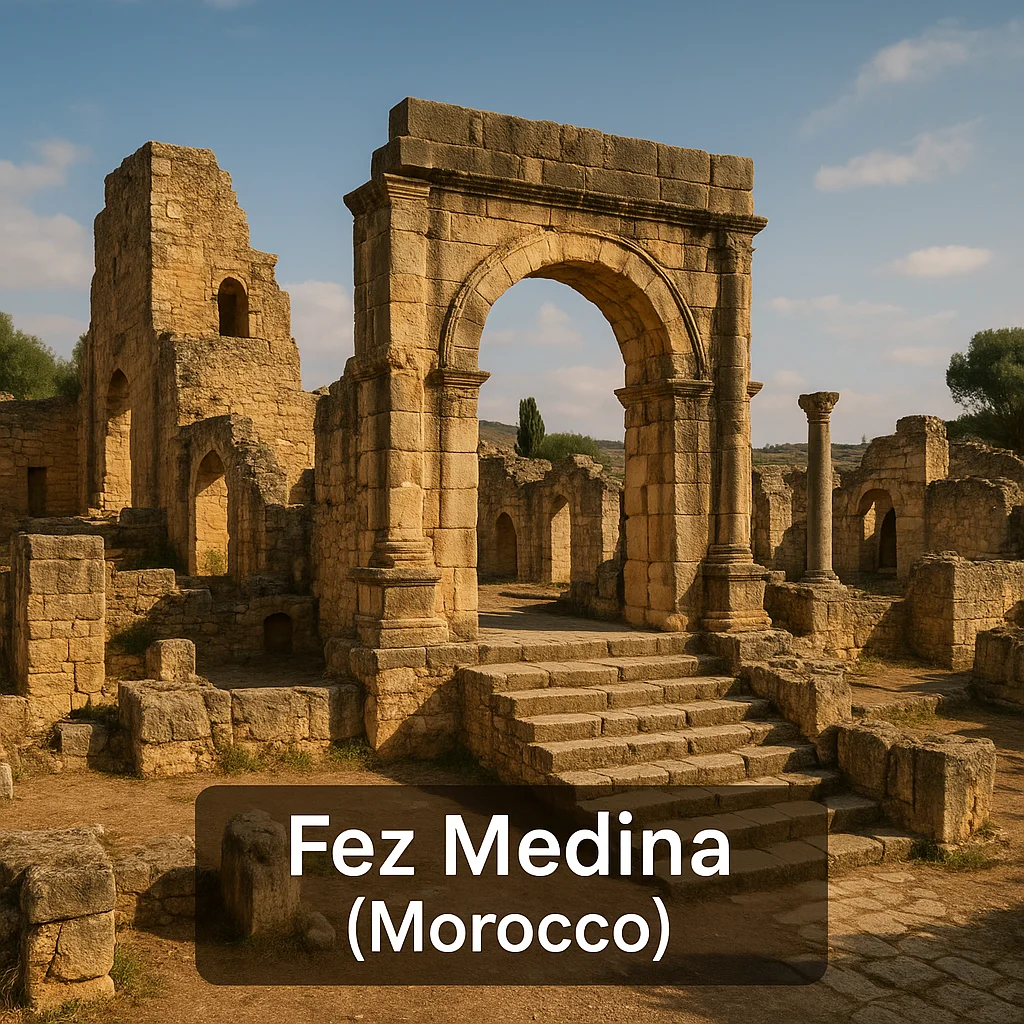
The medina offers visitors a unique experience with its narrow alleys, bustling souks (markets), and stunning examples of Islamic architecture. Exploring Fez Medina is like stepping back in time, providing insight into the lives and traditions that span centuries.
In this guide, you will learn about the historical context, architectural highlights, and practical information to make the most of your visit to Fez Medina.
- Country/Region: Morocco, North Africa
- Era: Founded in the 9th century
- Typical Visit Length: 1–2 days
- Difficulty: Moderate (due to narrow, uneven streets)
- Best Season: Spring and Fall
- Highlight: The University of Al Quaraouiyine
🗺️ Where It Is and How to Orient Yourself
Fez Medina is situated in the city of Fez, in northern Morocco. It is part of the larger city of Fez, which is a major cultural and spiritual center of the country. The nearest major city with an airport is Casablanca, from where many travelers begin their journey.
The medina is best experienced as an overnight trip, since it offers a myriad of sights that cannot be easily covered in a single day. Visitors often stay within the medina or in nearby accommodations to fully immerse themselves in its atmosphere.
To conceptualize its location, picture Fez in a valley surrounded by low hills, making it accessible yet distinct from the bustling modern facets of the city.
🕰️ History in a Nutshell
Fez Medina was founded in the 9th century by Idris I, but it truly flourished in the 13th and 14th centuries under the Marinid dynasty. It became a thriving center for trade, knowledge, and spirituality, renowned for its scholars, artisans, and merchants.
The city endured various historical changes, including shifts in political power and economic decline during colonial periods. Despite these changes, Fez Medina remained a hub for Islamic education and culture.
Its preservation as a heritage site today owes much to its cultural importance and continuous habitation, with modern conservation efforts ensuring its survival for future generations.
⭐ Top Highlights You Should Not Miss
- The University of Al Quaraouiyine
- Bou Inania Madrasa
- Chouara Tannery
- Nejjarine Museum of Wooden Arts & Crafts
- Bab Bou Jeloud (Blue Gate)
The University of Al Quaraouiyine is considered the oldest existing, continually operating higher educational institution in the world. A wide view with the entire courtyard and ancient classrooms in frame provides a majestic historical context.
Bou Inania Madrasa, with its ornate marble and woodwork, is a fine example of Islamic architecture. Capture the entire façade along with the intricate entranceway for the best photos.
The Chouara Tannery offers a vivid, sensory experience. Visitors can view the full operation area from surrounding terraces, witnessing traditional leather-making processes.
Visit the Nejjarine Museum to see the comprehensive wooden artifacts collection presented in a beautifully restored funduq, a traditional inn.
The Bab Bou Jeloud, or Blue Gate, is the western entrance to the medina, showcasing remarkable tile work. Capture this iconic landmark with a view of the lively street behind it.
🧱 Architecture, Materials, and Design (Made Simple)
The architecture of Fez Medina prominently features limestone, mosaic tiles, cedar wood, and plaster. Its construction methods reflect traditional Islamic design with an emphasis on geometric patterns and decorative arts.
Influences from Moorish and Berber aesthetics are evident in the Medina’s architecture, particularly in the arch styles, intricate arabesques, and vibrant zellige tile work.
A notable design feature is the muqarnas, or honeycomb vaulting, used extensively in religious and educational buildings within the medina. Restoration efforts are visible in certain areas to preserve these unique features, blending them seamlessly with their original designs.
🎟️ Visiting Guide (Time, Tickets, and What to Expect)
For a quick visit, allocate at least half a day, but spending a full day or two provides a more in-depth experience. Many attractions within the medina are freely accessible, while others may require tickets or offer guided tours.
Visiting hours generally span from morning until late afternoon, although specific site schedules can vary. It’s advisable to check in advance. Summer can be hot, so bring water and a hat, while mornings or late afternoons offer a more comfortable climate for exploration.
To maximize your visit, an early start allows you to enjoy the Medina before crowds gather. Additionally, consider carrying a map or hiring a local guide to prevent getting lost in the maze-like streets.
🚆 How to Get There and Move Around
Fez Medina is accessible by train or car from major Moroccan cities. The nearest airport is Fès–Saïs, which receives flights from various international destinations.
Once in Fez, walking is the best way to experience the medina, keeping in mind its narrow, uneven streets. Public transport or taxis can drop you at the edge of the medina, with Bab Bou Jeloud being a convenient starting point.
There are multiple entrances to the medina, but Bab Bou Jeloud is particularly beginner-friendly, offering easy access to key attractions with the least risk of getting lost.
🌤️ Best Season, Weather, and Time of Day
The best seasons to visit Fez Medina are spring (March to May) and fall (September to November) when temperatures are milder. Summer days can be quite hot and crowded.
Morning or late afternoon visits provide the most pleasant experience with softer light enhancing the medina’s ambiance, perfect for photography. It also helps avoid the midday heat.
In case of rain, visitors can explore covered markets or visit nearby museums, ensuring the experience remains enjoyable despite less favorable weather.
⚠️ Safety, Rules, and Respectful Etiquette
Wear comfortable shoes suitable for walking on cobblestone streets and adjust clothing to respect local customs, covering shoulders and knees.
Always follow signage, respect quiet areas, especially around mosques, and seek permission before photographing people or sensitive sites. Drones and flash photography are often restricted.
Avoid touching ancient artifacts or carvings to help preserve their condition. Be alert to your surroundings as the medina can be crowded, and pickpockets may be present. Stay hydrated and cautious of slippery stones, particularly in the tannery or markets.
🗺️ Nearby Places and a Simple One-Day Itinerary
Expand your visit to include the Royal Palace gates, the Mellah (old Jewish quarter), and the Jnan Sbil Gardens for a tranquil escape.
- Morning: Explore the University of Al Quaraouiyine and Bou Inania Madrasa
- Midday: Lunch and shopping in the main souks
- Afternoon: Visit Chouara Tannery and the Nejjarine Museum
- Evening: Relax at one of the local cafes or riads
This itinerary offers a balanced experience, providing insight into both the historical and contemporary life of Fez Medina.
🧩 Stories, Myths, and Common Questions
Myth: Is Fez Medina a lost city from ancient times?
Answer: No, Fez Medina has never been lost. It has a continuous history since its foundation in the 9th century and remains a vibrant, inhabited city.
Question: Is it difficult to navigate the medina on foot?
Answer: Navigation can be challenging due to its maze-like structure, but with a map or local guide, it becomes manageable and rewarding.
Question: Is it kid-friendly?
Answer: Yes, the medina can be enjoyed by families, though some areas like the tannery may have strong odors, so parental discretion is advised.
📌 Summary and Who This Site Is Best For
- An ancient medina in Morocco
- Located in the city of Fez
- Historical center for trade and education
- Highlights include ancient universities and artisan crafts
- Notable for Islamic architecture and design
- Visit lengths range from a few hours to multiple days
- Best experienced in spring or fall
- Follow guidelines for safety and etiquette
- Nearby attractions enrich the overall visit
- Fez Medina hosts the world's oldest university still in operation
Fez Medina is ideal for history enthusiasts, families seeking educational experiences, and photographers drawn to its vibrant, architectural beauty. The medina’s rich history and cultural significance make it a worthwhile destination, offering an unparalleled glimpse into Morocco's past and present.
Whether exploring its bustling markets or absorbing the serene atmosphere of its mosques, Fez Medina charms and educates all who venture within its ancient walls. Embrace the journey mindfully, respecting both the site and its living history.