🏛️ Suwon Hwaseong Fortress (South Korea)
🔎 Quick Facts and Why It Matters
Suwon Hwaseong Fortress is an awe-inspiring architectural marvel in South Korea, well-known for its historical significance and stunning preservation. As a UNESCO World Heritage site, it offers visitors a unique glimpse into the ingenuity and foresight of the late 18th century.
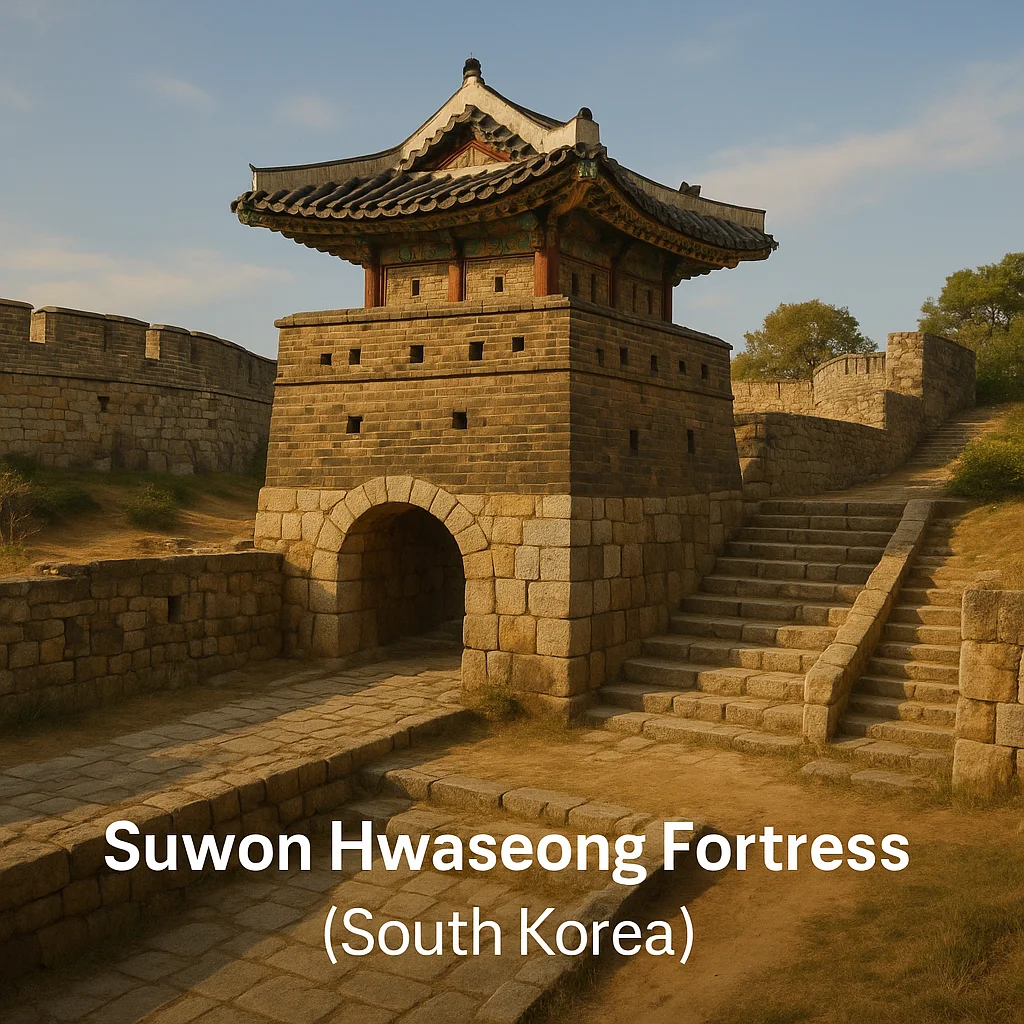
This fortress is special due to its innovative design, which combines both traditional Korean and modern Western military architecture principles. It offers a walkable exploration experience with panoramic views of Suwon city, providing an immersive cultural journey.
In this guide, you'll learn about the fortress's historical background, architectural highlights, visiting tips, and nearby attractions. It is an opportunity to deeply appreciate a pivotal era in Korean history.
- Location: Suwon, Gyeonggi-do, South Korea
- Era: Late 18th century
- Typical Visit Length: 2 to 4 hours
- Walking Difficulty: Moderate
- Best Season to Visit: Spring and fall
- Key Highlights: Seojangdae, Hwaseomun Gate, Paldalmun Gate
🗺️ Where It Is and How to Orient Yourself
The Suwon Hwaseong Fortress is located in Suwon, a city in the Gyeonggi-do province of South Korea. Situated just 30 kilometers south of Seoul, Suwon is easily accessible and often visited as a day trip from the capital.
Visitors usually reach Suwon via Seoul's major transportation hubs, such as Incheon International Airport or the sprawling Seoul Station. The city itself is well-connected via public transit, making it a straightforward day excursion. An overnight stay would allow for a more relaxed visit.
Suwon's landscape is primarily urban, with the fortress offering a raised vantage point. From various parts of the fortress, you can see modern cityscapes mingling with historical landmarks, set against the backdrop of low-lying hills.
🕰️ History in a Nutshell
Suwon Hwaseong Fortress was commissioned by King Jeongjo of the Joseon Dynasty in the late 18th century, particularly around 1794 to 1796. The fortress's construction was part of the king's strategic and symbolic efforts to strengthen the dynasty's power and honor his deceased father.
The fortress served as both a defensive and administrative center, reflecting advancements in military architecture. Its design was deeply influenced by both Korean traditions and 18th-century European fortification techniques, making it a prime example of architectural fusion.
Although Suwon Hwaseong Fortress experienced damage during various conflicts, including the Korean War, extensive restoration projects have preserved its condition, allowing visitors to explore its historical splendor today.
⭐ Top Highlights You Should Not Miss
- Seojangdae (Western Command Post)
- Hwaseomun Gate
- Paldalmun Gate
- Hwaseong Haenggung Palace
- Namsung Bastion
Seojangdae, the Western Command Post, offers one of the best panoramic views of Suwon city from the fortress's elevated ramparts. It's a perfect spot for a full-structure photograph that captures the melding of history and urban development.
Hwaseomun Gate is a beautiful example of traditional Korean gate architecture and provides insight into fortress defense mechanisms. The entire gate is framed by its original walls, offering an immersive historical perspective.
Paldalmun Gate stands as the southern gate of the fortress, blending into the bustling city environment. Capturing the full façade within the bustling context makes for a vibrant photo opportunity.
Hwaseong Haenggung Palace is nestled inside the fortress and was a royal residence during tours. Its courtyard and halls lend themselves to a wide view, showcasing traditional Korean architectural elements.
The Namsung Bastion demonstrates the advanced defensive structures of the time, with its command post and artillery installations visible along the rolling hills of the fortress grounds.
🧱 Architecture, Materials, and Design (Made Simple)
Suwon Hwaseong Fortress was primarily built with stone, brick, and mortar. The combination of these materials provided structural resilience and security, critical for a site intended for defense.
Influenced by both traditional Korean styles and modern Western techniques, the fortress showcases a unique blend. The use of holes in the walls for oil pots and the parapets reflect advanced military care.
Remarkably, the Hwaseong Fortress is well-known for its beautifully crafted archways and ornate wooden decorations of gates. Inscribed tablets reveal historical reigns and events, contributing to its distinctiveness.
Though restoration efforts have taken place, historical integrity remains paramount; the original techniques and materials were carefully used to maintain authenticity, providing an authentic view of the past.
🎟️ Visiting Guide (Time, Tickets, and What to Expect)
Visiting Suwon Hwaseong Fortress can vary in length. A quick visit may take about an hour, a standard exploration two to three hours, and a deeper dive about half a day.
There are general admission fees to access the main sights, such as Hwaseong Haenggung Palace, with ticket patterns including all-access or specific attraction entry. Guided tours are available for those who wish to enrich their understanding.
The fortress typically opens in the morning and closes in the late afternoon, with hours shifting slightly according to season. Visitors should double-check these details as they can change.
For best results, arrive early, bring water, wear comfortable walking shoes, and consider a sun hat. Planning for plenty of shade breaks is a good strategy, especially in warmer weather.
🚆 How to Get There and Move Around
Visitors can reach the fortress by various means: public transport from Seoul, taxis, or renting a car for a self-guided drive. The KTX or subway trains are efficient options with clear signage leading to the site.
For those arriving on foot, the Paldalmun Gate is a great starting point. It leads naturally into the trunk of the fortress network, with well-marked paths guiding visitors throughout.
The fortress grounds involve moderate walking, with steep steps and uneven paths in places. Wheelchair access is somewhat limited due to the historical terrain, so planning accordingly is advised.
🌤️ Best Season, Weather, and Time of Day
Suwon Hwaseong Fortress is most enjoyable during the mild weather of spring or fall. The pleasant temperatures and colorful sceneries enhance the exploratory experience.
Early mornings and late afternoons are ideal visit times, offering soft lighting and reduced crowds. Perhaps schedule mid-day for indoor sites if visiting during the hotter seasons.
Visitors on a rainy day might consider exploring nearby museums or enjoying the sheltered sections of the Hwaseong Haenggung Palace for a dry cultural experience.
⚠️ Safety, Rules, and Respectful Etiquette
Visitors should wear appropriate clothing and shoes for navigating uneven surfaces and potential steps. Soft soles and comfortable attire help.
As a historically significant site, quietness and respect in certain areas, especially around palaces, is encouraged. Signs often inform appropriate behavior, such as where photography is allowed without flash.
Visitors should remain on designated paths to protect the site; climbing or touching fragile structures is discouraged. Safety cautions such as slippery surfaces, seasonal heat, or crowd management should be considered thoughtfully.
🗺️ Nearby Places and a Simple One-Day Itinerary
Suwon is rich with adjacent attractions, suitable for those extending their visit. Consider these nearby sites:
- 📜 Suwon Museum
- 🌿 Yongjusa Temple
- 🛍️ Suwon Traditional Market
- ⛩️ Hwaryeongjeon Shrine
- 🏞️ Manseok Park
- Morning: Start with a tour of Suwon Hwaseong Fortress, capturing the cityscape at Seojangdae.
- Midday: Explore the Hwaseong Haenggung Palace and take a break for lunch at a nearby traditional restaurant.
- Afternoon: Visit the Suwon Museum for intriguing artifacts and exhibits, followed by a peaceful stroll around Yongjusa Temple.
- Evening: End the day by shopping at the Suwon Traditional Market and savoring local delicacies.
🧩 Stories, Myths, and Common Questions
Myth: Was the fortress built as a base for military expansion?
Clarification: Historians agree it was primarily defensive and administrative rather than expansionist.
Question: How challenging is the walking tour?
Answer: The pathways are mostly moderate, with some steep areas, suitable for active visitors.
Question: Is a guide really necessary?
Answer: While not necessary, a guided tour offers enriched insights into obscure historical context and anecdotes.
📌 Summary and Who This Site Is Best For
- What it is: A UNESCO World Heritage fortress
- Where it is: Suwon, Gyeonggi-do, South Korea
- Key history takeaway: Late 18th-century architectural fusion
- Top highlights: Seojangdae, Hwaseomun Gate, Paldalmun Gate
- Architecture/materials: Stone and brick, European and Korean influences
- Visit length guidance: 2 to 4 hours
- Best season/time: Spring or fall; early morning or late afternoon
- Safety/etiquette: Mind pathways, respect quiet zones, stay hydrated
- Nearby add-ons: Suwon Museum, Yongjusa Temple
- One memorable fact: Fusion of different architectural techniques
Suwon Hwaseong Fortress offers a rewarding experience for history enthusiasts, architectural fans, and photographers. Families can also enjoy the lush surroundings and historical intrigue. Its combination of cultural richness and scenic beauty makes it well worth the exploration.
The efforts to preserve both original elements and accurate restorations contribute to a nearly authentic step back in time, inviting visitors to discover the roots of modern Korean resilience and creativity.
As you plan your visit, remember to treasure and respect the heritage site, ensuring it remains intact for future generations to experience its majestic allure.