🏛️ Masada (Israel)
🔎 Quick Facts and Why It Matters
Masada is an ancient fortress located atop a rock plateau in Israel, known famously for its dramatic history during the First Jewish-Roman War. It is a symbol of Jewish heroism and resilience.
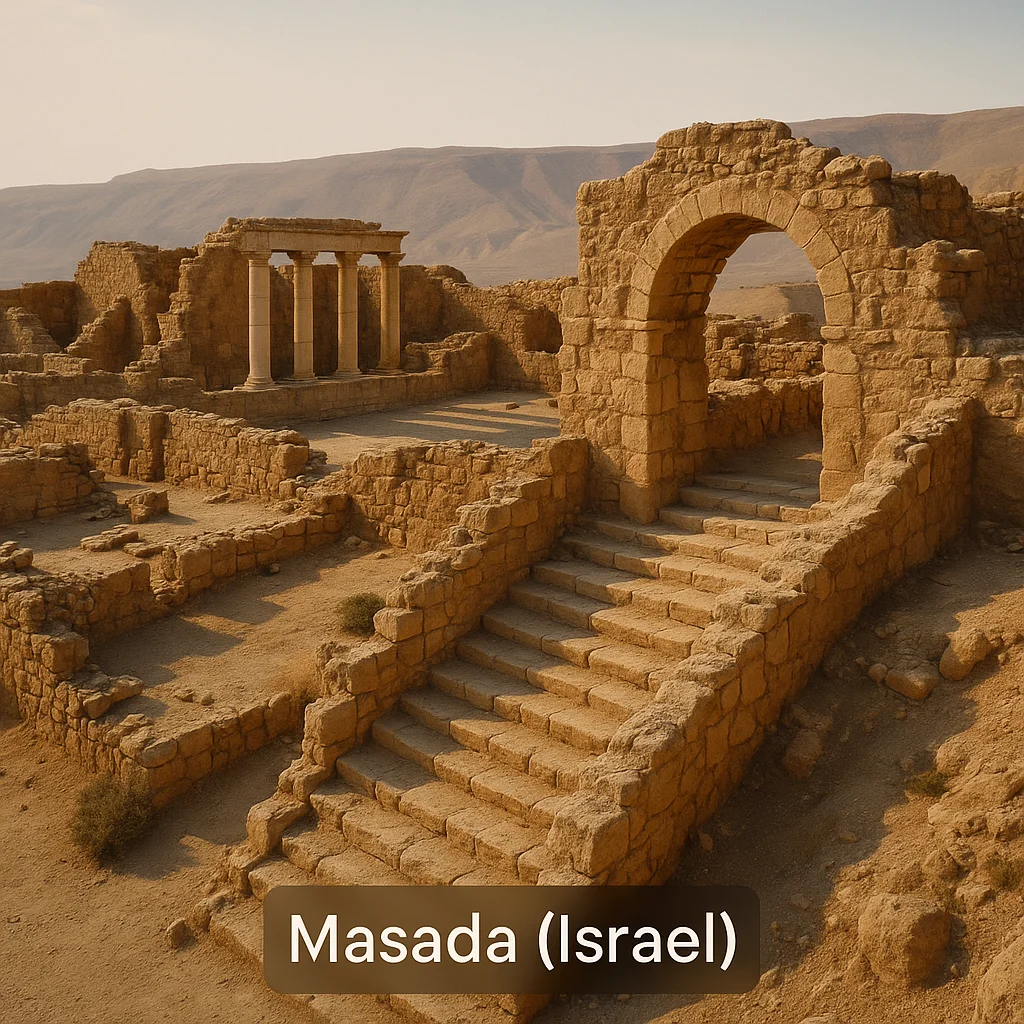
What makes Masada unique is its location and the haunting story of its last stand involving Zealots who took refuge there. It offers a deeply moving experience, with walkable ruins and expansive views of the Dead Sea and surrounding desert.
This guide will introduce you to the significance of Masada, provide insights into its key historical and architectural highlights, and offer practical tips for planning your visit.
- Country/Region: Israel, Southern District
- General Era: 1st century BCE
- Typical Visit Length: 2-4 hours
- Visit Difficulty: Moderate (steep climbs)
- Best Season: Spring and Autumn
- Highlight: The dramatic history and panoramic views
🗺️ Where It Is and How to Orient Yourself
Masada is situated in the Southern District of Israel on the edge of the Judean Desert, overlooking the Dead Sea. It is about 18 kilometers southeast of the city of Arad and can be reached from Jerusalem or Tel Aviv.
The nearest major city with a transport hub is Jerusalem, where visitors can access bus services or drive themselves to the base of Masada. It is ideally visited as a day trip, although accommodation options nearby make an overnight stay convenient for those wishing to explore further.
For orientation, picture Masada as a fortress perched on a barren plateau. The site is part of the desert landscape, surrounded by rocky cliffs, with the sparking blue of the Dead Sea visible from its heights.
🕰️ History in a Nutshell
Masada was originally constructed by King Herod the Great in the 1st century BCE as a fortified palace complex. It served as a refuge and symbol of power amidst the vast desert expanses.
Its most famous chapter was during the First Jewish-Roman War (66-73 CE) when Jewish rebels occupied the fortress after the destruction of the Second Temple in Jerusalem. Masada was the site of the last stand of the Jewish Zealots against the Roman Empire.
The site fell into ruin following the dramatic siege by Roman forces. The rebels were overcome, leaving behind a poignant story of defiance and tragedy, which endures to this day.
⭐ Top Highlights You Should Not Miss
- Herod's Northern Palace
- The Siege Ramp
- The Synagogue
- The Bathhouse
- The Roman Camp
Herod's Northern Palace is a marvel of engineering, built terraced down the cliffs with a panoramic view of the Dead Sea. The best photo spot captures the entire façade from below, set against the backdrop of the vast desert horizons.
The Siege Ramp stands as a testament to Roman tenacity. Constructed to breach Masada's defenses, its broad slope is well-preserved and evident in wide aerial shots capturing the Roman camp layout below.
The Synagogue is one of the oldest examples of a synagogue discovered, lending insight into early Jewish practices. Look for the full interior visible in photos, giving context to its religious use.
The Bathhouse, with its preserved hypocaust heating system, is an excellent example of ancient Roman bath technology, seen vividly from a higher vantage point overlooking its layout.
The Roman Camp outlines the encirclement of Masada and is best viewed from the heights of the fortress, offering a strategic angle showing how Romans besieged the site.
🧱 Architecture, Materials, and Design (Made Simple)
The architecture of Masada predominantly features stone blocks and mortar, consistent with Roman and Judaean styles of the period. Herod's palaces were designed to impress and intimidate, using locally quarried stone and advanced masonry techniques.
Architectural influences include Roman palatial design, evident in the bathhouse and the luxurious features of the palaces with their frescoed walls. The importance of defense is evident in the thick casemate walls and strategically placed storerooms.
Distinctive features include Herod's innovative three-tiered palace design, the complex water system using aqueducts and cisterns, and the remains of the Roman camps and siege ramp, illustrating both unique local adaptations and Roman military architecture. Many elements are original, while some restoration helps visualize the grandeur of the site without overshadowing its authenticity.
🎟️ Visiting Guide (Time, Tickets, and What to Expect)
A typical visit to Masada might take between 2 to 4 hours, depending on interest levels and walking speed. Entry is usually ticketed, offering access to the plateau, with options for guided tours enriching the experience with in-depth history.
Masada is generally open from early morning to late afternoon, with entry patterns subject to seasonal changes. It's advisable to check local resources ahead of a visit and plan to arrive early to beat the heat and crowds.
First-time visitors should bring plenty of water, wear a hat and sunscreen, and prepare for uneven paths with appropriate footwear. The cable car is a convenient option for reaching the top, while the Snake Path offers a rewarding climb for the adventurous.
🚆 How to Get There and Move Around
Visitors can reach Masada using public buses from cities like Jerusalem or by driving. A cable car ride or the challenging Snake Path are the two main routes to the summit from the Visitor Center on the eastern side.
For ease, the cable car provides quick access, while the Snake Path involves a steep ascent, suitable for those in good health. Accessibility may pose challenges; the site features many stairs and uneven terrain that could be difficult for those with limited mobility.
🌤️ Best Season, Weather, and Time of Day
The best times to visit Masada are in Spring (March to May) and Autumn (September to November) when temperatures are more moderate. Mornings and late afternoons offer the most pleasant visit with softer lighting enhancing photographs and reducing heat exposure.
Avoid visiting during the peak midday sun, especially in summer. If rain occurs, visitors might prefer indoor experiences in nearby venues, though storms are rare in the arid region.
⚠️ Safety, Rules, and Respectful Etiquette
Comfortable shoes are essential due to uneven paths and potential rough steps. Visitors should respect sacred and quiet areas such as the synagogue and adhere to all signage.
Photography rules generally prohibit flash and drones, emphasizing preservation and safety. Visitors should stay on marked paths, avoid climbing on ruins, and not touch fragile surfaces to help conserve the site.
While the site is relatively safe, the high altitude and heat can cause dehydration; thus, proper hydration is vital. Awareness of surroundings can prevent slipping on stones and ensure a respectful visit experience.
🗺️ Nearby Places and a Simple One-Day Itinerary
Nearby, you can explore the Dead Sea for its unique buoyant swimming experience and visit Ein Gedi for scenic hikes. The city of Arad offers hospitality and a glimpse into local life.
- Morning: Hike the Snake Path or take the cable car to Masada
- Midday: Tour the fortress, focusing on Herod's Northern Palace and the Synagogue
- Afternoon: Descend and relax in the therapeutic waters of the Dead Sea
- Evening: Enjoy a sunset view from a local beach or a serene retreat in a nearby spa
🧩 Stories, Myths, and Common Questions
Q: Did everyone at Masada really commit mass suicide?
Many historians agree the story told by ancient historian Josephus may be exaggerated. Though believed true, some evidence supports the idea that not all perished.
Q: Is it true Masada was lost for centuries?
Masada was not 'lost' in the sense of mystery, but rather deserted. The site was recognized over centuries due to its dramatic locale and historical reports.
Q: How challenging is the walk to Masada?
The Snake Path is steep and challenging, requiring moderate fitness. The cable car offers an easier ascent, making the site accessible to most visitors.
Q: Is it suitable for children?
Yes, especially with the cable car. However, guardians should keep track of them due to elevated sites and steep drops.
Q: Is a guide worth it?
A guiding expert provides context and detail that highlight Masada's historical importance, making the visit more enriching.
📌 Summary and Who This Site Is Best For
- An ancient fortress
- Located in Israel's Southern District
- Key history: Final stand of Jewish rebels
- Top highlights: Herod's Palace, Synagogue
- Architecture: Roman-Judaean design
- Visit Length: 2–4 hours recommended
- Best Season/Time: Spring/Autumn mornings
- Safety/Etiquette: Adhere to rules, bring water
- Nearby Add-ons: Dead Sea, Ein Gedi
- Memorable Fact: Symbol of Jewish resolve
Masada is ideal for history enthusiasts, photographers, and those appreciating natural landscapes. Its rich history and stunning vistas make it a worthwhile endeavor.
Families, solo travelers, and groups will find something to admire, whether it's the stories of past defiance or the breathtaking view at sunrise. Ensuring a respectful, thoughtful visit will leave travelers with deep insights and lasting memories.
Masada continues to be a place of education, reflection, and wonder, capturing the hearts of all who journey to its storied heights.