🏛️ Jerash Ruins & Walls (Jordan)
🔎 Quick Facts and Why It Matters
Jerash Ruins, located in Jordan, is one of the best-preserved sites of Roman architecture outside Italy and is famous for its grand colonnaded streets and monumental gateways.
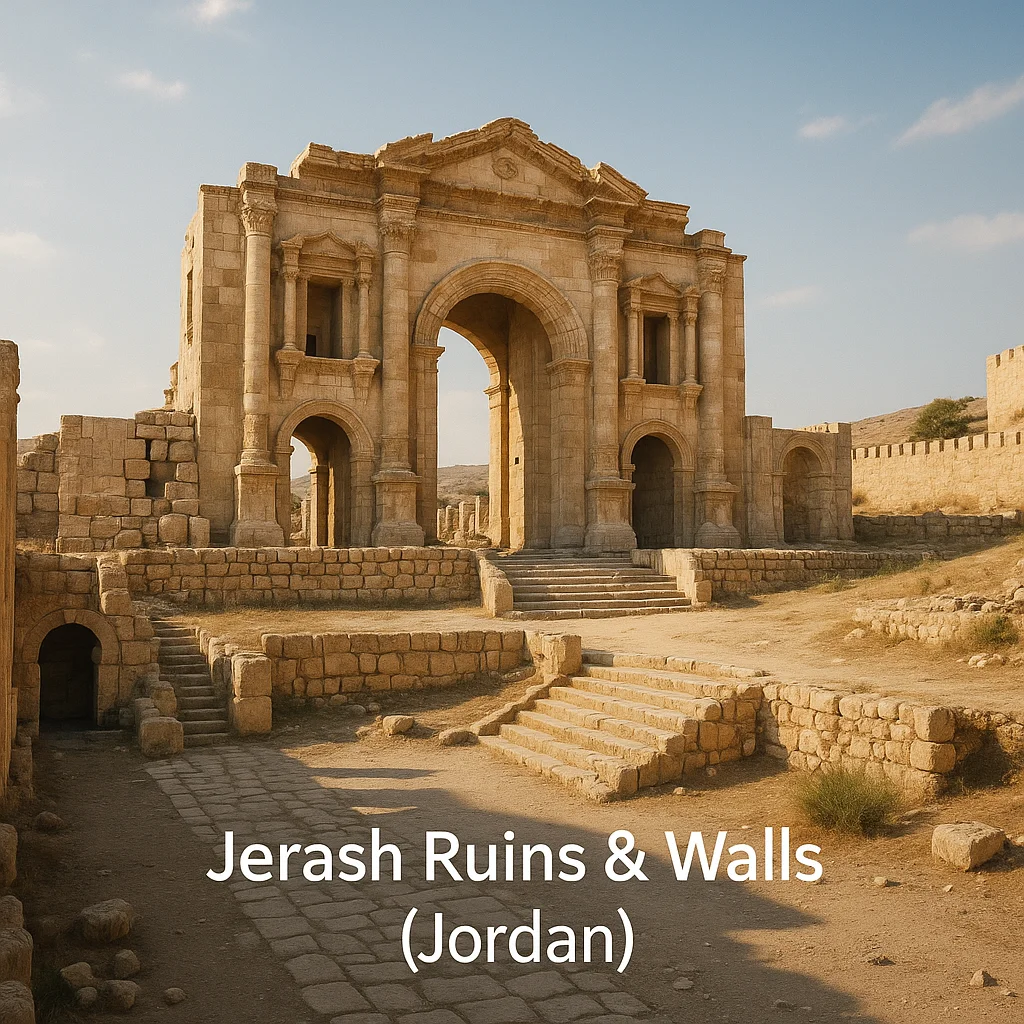
This ancient city offers a comprehensive glimpse into Roman provincial life, showcasing a blend of Greco-Roman and Eastern influences through its expansive and walkable ruins.
Visitors can expect a journey back in time to explore impressive temples, theaters, and plazas while learning about the history and architectural prowess of the Roman Empire in this guide.
- Location: Jerash, Jordan
- Era: Roman (1st to 7th centuries AD)
- Typical visit length: 2 to 4 hours
- Difficulty: Moderate walking on uneven surfaces
- Best season: Spring (March-May) for pleasant weather
- Highlights: Hadrian's Arch, Oval Plaza, Temple of Artemis
🗺️ Where It Is and How to Orient Yourself
Jerash is situated in the northwestern part of Jordan, a region known for its rich history and archaeological significance. It is approximately 48 kilometers north of Amman, the capital city of Jordan.
Amman serves as the typical gateway for visitors, with an international airport providing access to this bustling city. From Amman, Jerash is conveniently reachable for a day trip by car or public transport.
Nestled in a mountainous valley, Jerash offers visitors a scenic drive through rolling hills and picturesque landscapes, providing a stunning mental map for those planning a visit.
🕰️ History in a Nutshell
Built by the Romans around the first century AD, Jerash thrived as a vibrant city, with its peak during the second and third centuries due to its strategic location for trade and commerce.
Originally founded as a Greco-Roman city, it flourished under Roman rule and later became an important center for Byzantine and Islamic cultures.
Jerash began to decline after a series of earthquakes and invasions, becoming a ruin; however, its remains survive today due to historical reverence and protective restoration efforts.
⭐ Top Highlights You Should Not Miss
- Hadrian's Arch
- Oval Plaza
- Temple of Artemis
- North Theater
- South Gate
Hadrian's Arch, built in honor of Emperor Hadrian's visit, stands as a monumental entrance to the city, offering a full structure visible from the surrounding area.
The Oval Plaza, a uniquely designed forum, is perfect for panoramic views with its complete oval shape encircled by 56 Ionic columns.
The Temple of Artemis, dedicated to the patron goddess of the city, is renowned for its massive Corinthian columns that can be fully appreciated in a wide view with the sky as a backdrop.
The North Theater, smaller and more intimate than its southern counterpart, offers excellent acoustics and the opportunity to visualize ancient performances in a serene environment.
The South Gate marks the boundary of ancient Jerash, providing a welcoming wide view that frames the city's historical passageway beautifully.
🧱 Architecture, Materials, and Design (Made Simple)
Jerash was built predominantly using limestone and granite, common materials of the time, which were assembled using Roman engineering methods like arches and vaults for added strength.
The architecture is heavily influenced by Roman design, evident in the colonnaded streets, temples, and theaters, showcasing a blend of Eastern and Western styles.
Key features include the city's arches and columns, the well-preserved reliefs depicting mythical and historical themes, and the intricately carved inscriptions that offer insight into the daily life and governance of its time.
While several parts have undergone careful restoration to stabilize the structures, many original remains are apparent, providing a faithful representation of its historical splendor.
🎟️ Visiting Guide (Time, Tickets, and What to Expect)
Visitors can choose from a quick visit of around 2 hours up to a more in-depth exploration of 4 hours to fully appreciate the site’s wonders.
Entry to Jerash typically involves purchasing a ticket; certain areas may require separate tickets, and guided tours are available for a more informative experience.
The site generally operates from morning to late afternoon, with seasonal changes affecting exact timings, so it is advisable to check local details before planning a visit.
For first-time visitors, it's recommended to arrive early to avoid crowds, carry water and snacks, and wear comfortable shoes suitable for uneven ground and varying terrain.
🚆 How to Get There and Move Around
Traveling to Jerash is convenient via public buses from Amman, taxi services, or by renting a car for more flexibility in exploring the area.
The main entrance is visitor-friendly, allowing easy access to all major attractions, with marked paths guiding your journey through the ruins.
For those with mobility challenges, it's important to note that the site includes steep steps and uneven ancient stones, making certain areas less accessible but offering ample opportunity to appreciate the beauty from accessible vantage points.
🌤️ Best Season, Weather, and Time of Day
Spring is considered the best season to visit Jerash due to mild temperatures and blooming flora, while autumn offers similarly comfortable weather conditions.
Early morning or late afternoon visits provide a more pleasant experience, avoiding the midday heat and offering dramatic light for photography.
In the event of rain, exploring nearby museums in Amman provides an excellent alternative to continue the historical journey indoors.
⚠️ Safety, Rules, and Respectful Etiquette
Visitors should wear sturdy footwear to navigate uneven and sometimes slippery surfaces, and modest clothing out of respect for local customs.
While photography is usually allowed, the use of flash and drones may be restricted, and visitors are encouraged to follow posted guidelines.
Conservation practices are vital: avoid climbing on ruins, touching fragile artifacts, and always stay on designated paths to preserve the site for future generations.
Being cautious of natural risks like hot weather, maintaining hydration, and safeguarding belongings helps ensure a safe and respectful visit.
🗺️ Nearby Places and a Simple One-Day Itinerary
- Morning: Explore Hadrian's Arch and the Oval Plaza
- Midday: Visit the Temple of Artemis and enjoy a packed lunch
- Afternoon: Discover the North and South Theaters
- Evening: Return to Amman or explore local dining options
Nearby, the Ajloun Castle offers an additional historical exploration opportunity with panoramic views, while the bustling Souk in Amman provides a vibrant cultural experience.
🧩 Stories, Myths, and Common Questions
Q: Was Jerash a lost city? A: While sometimes referred to as a "lost city," Jerash was continuously inhabited and rediscovered by Europeans in the early 19th century, leading to renewed interest and excavation.
Q: How challenging is the walk around the site? A: Walking around Jerash requires moderate physical effort on uneven surfaces, but most key attractions are easily accessible on foot.
Q: Is a guide necessary? A: While not necessary, a knowledgeable guide can enhance the experience by providing historical context and pointing out details that might be overlooked.
Q: Is Jerash suitable for children? A: The site is suitable for children with adult supervision, offering educational opportunities, but parents should be mindful of the terrain and appropriate footwear.
📌 Summary and Who This Site Is Best For
- What it is: Ancient Roman city ruins
- Where it is: Northern Jordan, near Amman
- Key history takeaway: Roman provincial city with Greco-Roman and Eastern influences
- Top highlights: Hadrian's Arch, Oval Plaza, Temple of Artemis
- Architecture/materials: Limestone, granite, Roman style
- Visit length guidance: 2 to 4 hours
- Best season/time: Spring or autumn, early morning or late afternoon
- Safety/etiquette: Wear sturdy shoes, respect local customs
- Nearby add-ons: Ajloun Castle, Amman Souk
- One memorable fact: Jerash hosts a renowned annual cultural festival celebrating its rich history
Jerash Ruins appeals to a variety of visitors, including families, photographers, and history enthusiasts, who will appreciate its rich historical narrative and breathtaking architecture.
The site provides a unique educational experience, allowing visitors to step back in time and imagine life in a vibrant Roman city.
By visiting Jerash Ruins responsibly, you contribute to the preservation of its historical legacy for future generations to enjoy.