🏛️ Himeji Castle (Japan)
🔎 Quick Facts and Why It Matters
Himeji Castle, located in Japan, is one of the most beautiful and well-preserved examples of Japanese feudal castles. It is renowned for its unique architectural beauty and historical significance, often referred to as the "White Heron Castle" for its elegant, white exterior.
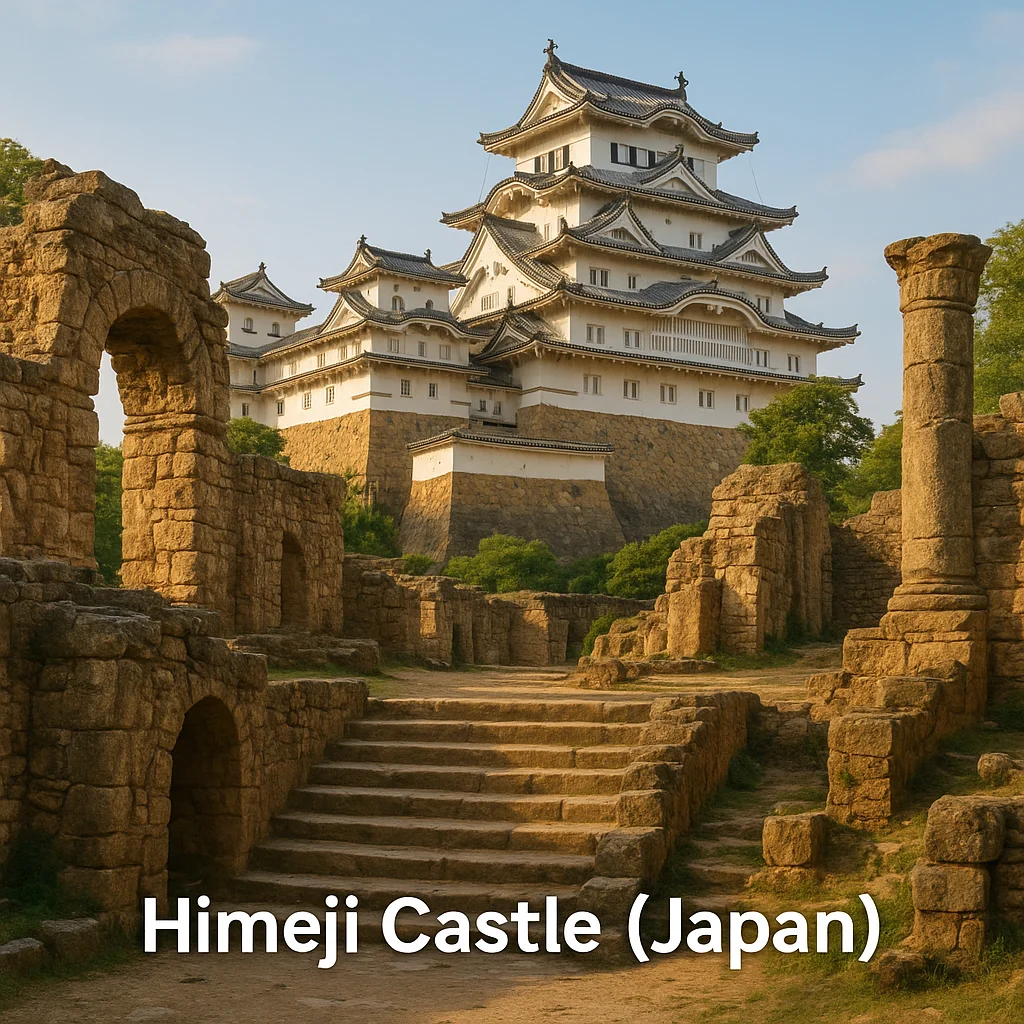
This iconic structure offers visitors a journey through time as they explore its intricately designed corridors, towering walls, and stunning viewpoints. Unlike many other historical sites, Himeji Castle is almost entirely accessible, allowing explorers to immerse themselves fully in its centuries-old atmosphere.
In this guide, you'll learn about the castle's rich history, architectural marvels, and essential tips for planning a memorable visit. Whether you're a history enthusiast or a curious traveler, Himeji Castle promises to fascinate and inspire.
- Country: Japan
- Era of Construction: Early 17th century
- Typical Visit Length: 2-3 hours
- Visiting Difficulty: Moderate (steep stairs)
- Best Season to Visit: Spring and autumn for mild weather
- Highlight: Panoramic views and well-preserved architecture
🗺️ Where It Is and How to Orient Yourself
Himeji Castle is located in the city of Himeji, in the Hyōgo Prefecture of Japan. It is easily accessible from the major hub of Osaka, making it a convenient destination for both domestic and international visitors. The nearest major airport to Himeji is Kansai International Airport in Osaka.
For travelers based in Osaka or nearby cities like Kyoto, Himeji Castle is a feasible day trip by train. The Japan Rail (JR) services link these cities efficiently, providing a comfortable and scenic journey.
Situated on the western edge of the Kansai region, the castle is nestled in a flat plain area, providing clear views of its impressive structure against the backdrop of the surrounding landscape. This location makes it easy to navigate for first-time visitors.
🕰️ History in a Nutshell
Himeji Castle was initially constructed in the 14th century, but the imposing structure we see today was completed in the early 17th century under the rule of Ikeda Terumasa. It was built as a fortress to protect against adversaries and served as a symbol of power and prestige.
The castle reached its peak during the feudal era, standing as a testament to Japanese architectural and cultural sophistication. With the end of the feudal era and the abolition of the shogunate, the castle gradually fell out of political importance but was preserved due to its beauty and historical value.
Remarkably, Himeji Castle has survived the test of time, escaping destruction during the bombings of World War II and extensive fires that plagued similar sites. Its survival is often attributed to a combination of strategic luck and the dedicated preservation efforts that have since followed.
⭐ Top Highlights You Should Not Miss
- Main Keep (Tenshu)
- West Bailey (Nishi-no-Maru)
- Hishi Gate (Hishinomon)
- Kokoen Garden
- Panoramic Viewpoints
The Main Keep, or Tenshu, is the centerpiece of Himeji Castle. Standing tall with its brilliant white plastered walls, the entire façade is visible as you approach, showcasing its majestic presence. From the top floor, visitors are rewarded with a breathtaking view of the surrounding city.
The West Bailey, or Nishi-no-Maru, offers a window into the castle's residential areas and includes preserved chambers that once housed the family of local lords. The corridors here provide a glimpse into daily life during the castle's peak era.
Hishi Gate (Hishinomon) is the grand entrance to the castle. Its massive wooden doors, robust structure, and full view from the approach road signify its historical role in defense and welcome.
Kokoen Garden, adjacent to Himeji Castle, features landscaped traditional Japanese gardens providing a serene complement to the grandeur of the castle itself. It's a perfect spot to unwind and reflect on history.
The castle's panoramic viewpoints, located at various spots along the walking path, offer visitors the opportunity to see the entire castle complex in one frame, capturing the intricacies of its design against a vast skyline.
🧱 Architecture, Materials, and Design (Made Simple)
Himeji Castle is primarily constructed from wood, with plaster-covered mud walls for fireproofing and defense. The roof tiles are made from local clay, arranged in elegant curves that enhance the overall aesthetic.
The architectural style of Himeji Castle is distinctly Japanese, with influences from earlier Asian design principles adapted to local tastes and defensive requirements. It features interlocking structures that create a maze-like defense system.
Notably, the castle is adorned with decorative carvings on the clay roof tiles called "shachihoko"—mythical creatures designed to protect the castle from fire. The defensive design includes arrow slits and stone dropping windows, all seamlessly integrated into its elegant structure.
While the majority of Himeji Castle remains authentic, some parts of the complex have undergone careful restoration to preserve its integrity without compromising the historical atmosphere. Efforts are focused on maintaining materials and techniques true to the original construction.
🎟️ Visiting Guide (Time, Tickets, and What to Expect)
Visitors typically spend 2 to 3 hours exploring Himeji Castle, a duration that allows for a comprehensive tour of the main keep and surrounding areas. Quick visits of about an hour can be satisfying yet may miss out on the detailed exhibits.
Entry to the castle requires a ticket, which provides access to most of the site. Additional guided tours are available for those interested in a deeper historical context, although self-guiding with provided brochures can also be fulfilling.
The castle generally operates from morning to late afternoon, with some seasonal variation and days off. Visitors should check ahead of their visit as operating hours can change.
To make the most of a visit, it is advisable to arrive early in the day to avoid crowds and enjoy the peaceful ambiance. Bringing water, wearing comfortable shoes, and carrying a hat for sun protection are practical recommendations.
🚆 How to Get There and Move Around
Himeji Castle is easily accessible by public transport. The JR Himeji Station is a suitable arrival point for most travelers, with options including taxis, local buses, or a 20-minute walk to the castle.
For those driving, parking is available in the vicinity, though it's often simpler to use public transportation, especially during peak seasons.
Although the castle grounds are mostly accessible, visitors should expect some steep stairs and uneven surfaces. Those with mobility concerns should consider the easiest routes and possibly use the services of a local guide.
🌤️ Best Season, Weather, and Time of Day
The best times to visit Himeji Castle are during the spring and autumn months, when the weather is mild and the surroundings are at their most picturesque, with cherry blossoms or fall foliage providing a stunning contrast to the castle's white walls.
Early morning visits offer a tranquil experience with softer lighting ideal for photography, while late afternoon visits can provide equally beautiful views with the added bonus of vibrant sunsets.
On rainy days, visitors can enjoy the interior exhibitions without much disruption, and nearby museums offer additional indoor activities to complement the visit to the castle.
⚠️ Safety, Rules, and Respectful Etiquette
When visiting Himeji Castle, comfortable, non-slip shoes are necessary due to uneven ground and stairs. Modest clothing is recommended, respecting the cultural significance of the site.
Visitors are encouraged to remain quiet in certain areas out of respect for the historical ambiance. Photography is generally allowed, but flash and drones may be restricted. Always follow posted rules for responsible photo-taking.
Conservation is key, so it's vital to stay on designated paths, avoid touching fragile structures, and refrain from climbing on walls or artifacts. Caution should be exercised when navigating crowded areas, especially near stairs or steep sections.
🗺️ Nearby Places and a Simple One-Day Itinerary
Close to Himeji Castle, visitors can explore the Himeji City Museum of Art, the Hyogo Prefectural Museum of History, and the Engyoji Temple on Mount Shosha.
- Morning: Begin the day at Himeji Castle, taking time to explore its memorable features.
- Midday: Stroll through Kokoen Garden for a serene break and lunch.
- Afternoon: Visit the Himeji City Museum of Art for cultural enrichment.
- Evening: Relax with a walk or dinner in Himeji's traditional shopping streets.
🧩 Stories, Myths, and Common Questions
Q: Is Himeji Castle a 'haunted' location?
A: While many legends surround the castle, such as the tale of Okiku's Well, historians and researchers focus on its architectural and historical importance rather than ghost stories.
Q: Was it ever destroyed in battle?
A: Himeji Castle was never destroyed in warfare, primarily due to its strategic defenses and historical preservation efforts.
Q: Is it hard to walk through the castle?
A: The castle's walkways include steep stairs and narrow paths, which can be challenging for some. Visitors with mobility issues might find some parts less accessible, but there are still many areas to enjoy.
Q: Is a guided tour worthwhile?
A: Guided tours can enrich the experience, offering detailed historical context and insights that may not be immediately apparent to self-guiding visitors.
📌 Summary and Who This Site Is Best For
- What it is: A historic Japanese feudal castle.
- Where it is: Himeji, Japan.
- Key history takeaway: Remains historically intact since the 17th century.
- Top highlights: Main Keep, Hishi Gate, panoramic views.
- Architecture/materials: Primarily wood, traditional Japanese design.
- Visit length guidance: 2-3 hours for a thorough exploration.
- Best season/time: Spring and autumn for optimal weather.
- Safety/etiquette: Respect paths and posted guidelines.
- Nearby add-ons: Kokoen Garden, local museums.
- One memorable fact: Known as "White Heron Castle" due to its color and elegance.
Himeji Castle is an ideal destination for history enthusiasts, families, and photographers seeking to experience Japan's rich cultural heritage. Its impressive architecture and stunning viewpoints make it a rewarding visit.
Those who appreciate historical architecture or are interested in feudal Japanese culture will find Himeji Castle particularly engaging. Its well-preserved state provides a rare window into the past.
In closing, visiting Himeji Castle is a profound journey through history, offering insights into Japan's storied past while encouraging respectful exploration and preservation of its rich cultural legacy.