🏛️ Great Wall of China (China)
🔎 Quick Facts and Why It Matters
The Great Wall of China is one of the most iconic structures in the world, renowned for its length and historical significance as an ancient defensive structure.
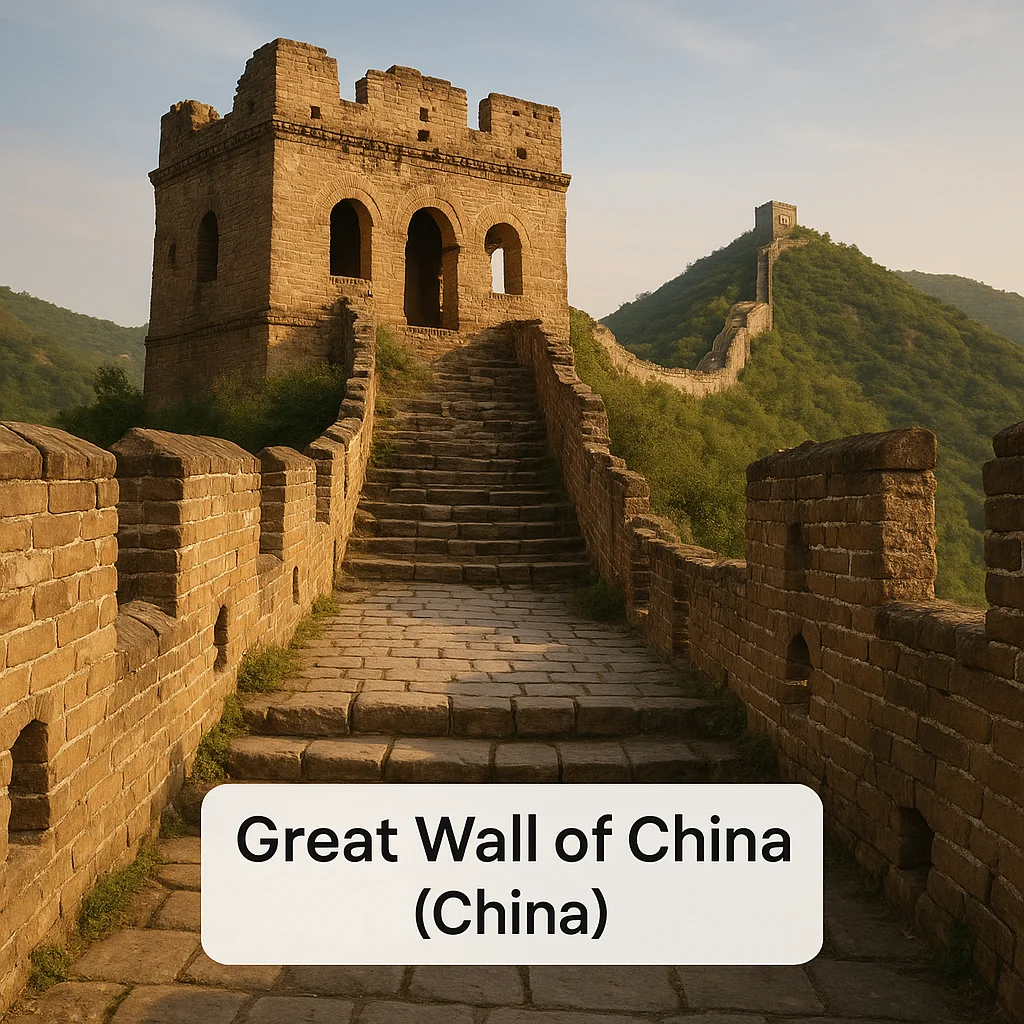
Stretching over thousands of miles, the Great Wall offers visitors a chance to walk along its ancient pathways, providing a remarkable view of China's landscape and a glimpse into its extensive history.
This guide will introduce you to the essential aspects of the Great Wall of China, including its historical context, architectural features, and practical tips for planning a visit.
- Location: China
- Era: Constructed primarily from the 7th century BC to the 16th century AD
- Typical Visit Length: 1-3 days
- Accessibility: Moderate due to varying terrain
- Best Season to Visit: Spring and autumn for comfortable weather
- Highlight: Majestic views from the Mutianyu section
🗺️ Where It Is and How to Orient Yourself
The Great Wall of China stretches across northern China, traversing various regions and landscapes. It is closest to Beijing, which serves as a common starting point for visitors.
Beijing is the nearest major city, and the international airport there serves as a primary gateway for international travelers looking to visit the Wall.
While parts of the Wall can be visited on a day trip from Beijing, a more comprehensive experience often requires an overnight stay, especially for those looking to explore less accessible sections.
Mental mapping of the site involves picturing the Wall snaking through mountain ranges, forming a defensive line that appears almost continuous from a distance.
🕰️ History in a Nutshell
The Great Wall was primarily built by several Chinese dynasties, including the Qin and Ming, starting from as early as the 7th century BC.
Originally, its purpose was to protect Chinese states and empires from invasions and raids by various nomadic groups from the north.
The Wall underwent significant rebuilding and enhancement during the Ming Dynasty (1368–1644), marking its peak period.
While much of the Wall has deteriorated over time due to natural and human factors, restoration efforts have allowed key sections to be preserved for historical and educational purposes.
⭐ Top Highlights You Should Not Miss
- Mutianyu Section
- Badaling Section
- Jinshanling Section
The Mutianyu section is renowned for its superb preservation and scenic surroundings. Visitors can capture the entire structure visible from its best vantage points, with a wide context of forested hills.
Badaling is the most popular section and offers a wide view with surrounding historical structures. Its accessibility makes it ideal for a first-time visit.
Jinshanling presents a less crowded experience, with portions of the Wall in their original state. It provides fantastic panoramic photography opportunities with the full structure visible against the rolling mountains.
🧱 Architecture, Materials, and Design (Made Simple)
The Great Wall was constructed using diverse materials including stone, brick, tamped earth, and wood, chosen based on local resources.
The Wall reflects Chinese fortification styles, with influences seen in its watchtowers, parapets, and battlements, designed primarily for defense.
Distinctive features such as crenellated walls and strategic watchtowers make the Wall easily recognizable. Some parts have been restored to preserve these unique architectural elements while maintaining an educational perspective on the original designs.
🎟️ Visiting Guide (Time, Tickets, and What to Expect)
Visit lengths can vary, with quick visits lasting about two hours and more immersive experiences taking a full day or more.
Usually, there is a ticket fee for popular sections like Badaling and Mutianyu. Guided tours are available offering historical insights.
The Wall is generally open from morning to late afternoon, though operating patterns may change seasonally. Visitors are advised to check local schedules as they can vary.
Arriving early is recommended to avoid crowds. Carrying water, wearing comfortable shoes, and planning for sun protection are practical tips for visitors.
🚆 How to Get There and Move Around
Travelers can reach the Wall using public transport, organized tours, or private taxis from Beijing. Driving is also an option for those comfortable with navigation.
The Mutianyu section is often recommended for beginners due to its moderate accessibility and clear signage. This section provides a manageable walk with rewarding views.
Visitors should be prepared for steep steps and uneven stones. Some sections, like Badaling, offer cable cars for easier access.
🌤️ Best Season, Weather, and Time of Day
The best time to visit the Wall is during spring or autumn when the weather is comfortable, and the landscape is particularly picturesque with blooming flowers or vibrant autumn leaves.
Early morning visits are ideal for avoiding crowds and enjoying cooler temperatures. Late afternoon provides softer light for photography, enriching the viewing experience.
If faced with rainy weather, exploring museums in Beijing can offer a great alternative indoor experience.
⚠️ Safety, Rules, and Respectful Etiquette
It is wise to wear sturdy shoes for navigating the uneven and sometimes steep terrain of the Wall.
Visitors should respect quiet areas and traditional customs. There are often clear signs indicating sacred or restricted spaces.
Photography is generally allowed, but flash and drone usage may have restrictions. Visitors should follow posted signs to ensure compliance.
To help preserve the Wall, do not climb on delicate sections or stray from marked paths. Caution is also advised on slippery stones, especially during wet weather.
🗺️ Nearby Places and a Simple One-Day Itinerary
- Morning: Visit the Badaling section of the Wall
- Midday: Explore the Great Wall Museum nearby
- Afternoon: Stroll through Juyongguan Great Wall to appreciate its historical gate and architecture
- Evening: Relax with a local meal in a Beijing hutong
Nearby attractions include the Great Wall Museum, Juyongguan, a historically significant section, and the lively hutongs of Beijing.
🧩 Stories, Myths, and Common Questions
Q: Is the Great Wall visible from space? A: This is a popular myth. While it is long, the Wall is not visible to the naked eye from space.
Q: Who built the Great Wall? A: Different Chinese dynasties over centuries contributed to its construction, not just the Qin dynasty.
Q: Is the Wall a continuous structure? A: No, the Wall is made up of various segments and not a single, unbroken line.
Q: How difficult is the walk? A: Difficulty varies. Some sections are steep and rugged, while others, like Badaling, are more accessible.
Q: Is a guide necessary? A: While not necessary, a guide can enrich the experience with detailed history and insights.
📌 Summary and Who This Site Is Best For
- The Great Wall of China, a monumental defensive structure
- Located throughout northern China, nearest to Beijing
- Built by various dynasties primarily for defense
- Must-see sections include Mutianyu and Badaling
- Constructed using stone, brick, and earth
- Recommended visit length varies from a few hours to a few days
- Best visited in spring or autumn
- Prepare for uneven terrain and respect local customs
- Nearby attractions: Great Wall Museum and Juyongguan
- Fascinating historical legacy dating back centuries
The Great Wall of China is an ideal destination for families, photographers, history enthusiasts, and hikers, offering a unique exploration opportunity.
Its magnificence and historical depth make it undoubtedly worth the effort of visiting, offering educational insights and memorable views.
As you plan your journey, remember to tread lightly and respectfully, preserving the Wall's beauty and history for future generations to enjoy.