🏛️ Edinburgh Castle (Scotland, UK)
🔎 Quick Facts and Why It Matters
Edinburgh Castle is one of Scotland's most iconic landmarks, renowned for its historic significance and stunning location atop Castle Rock. As a fortress and royal residence, it has played a pivotal role in Scotland's history and offers unparalleled views of the city below.
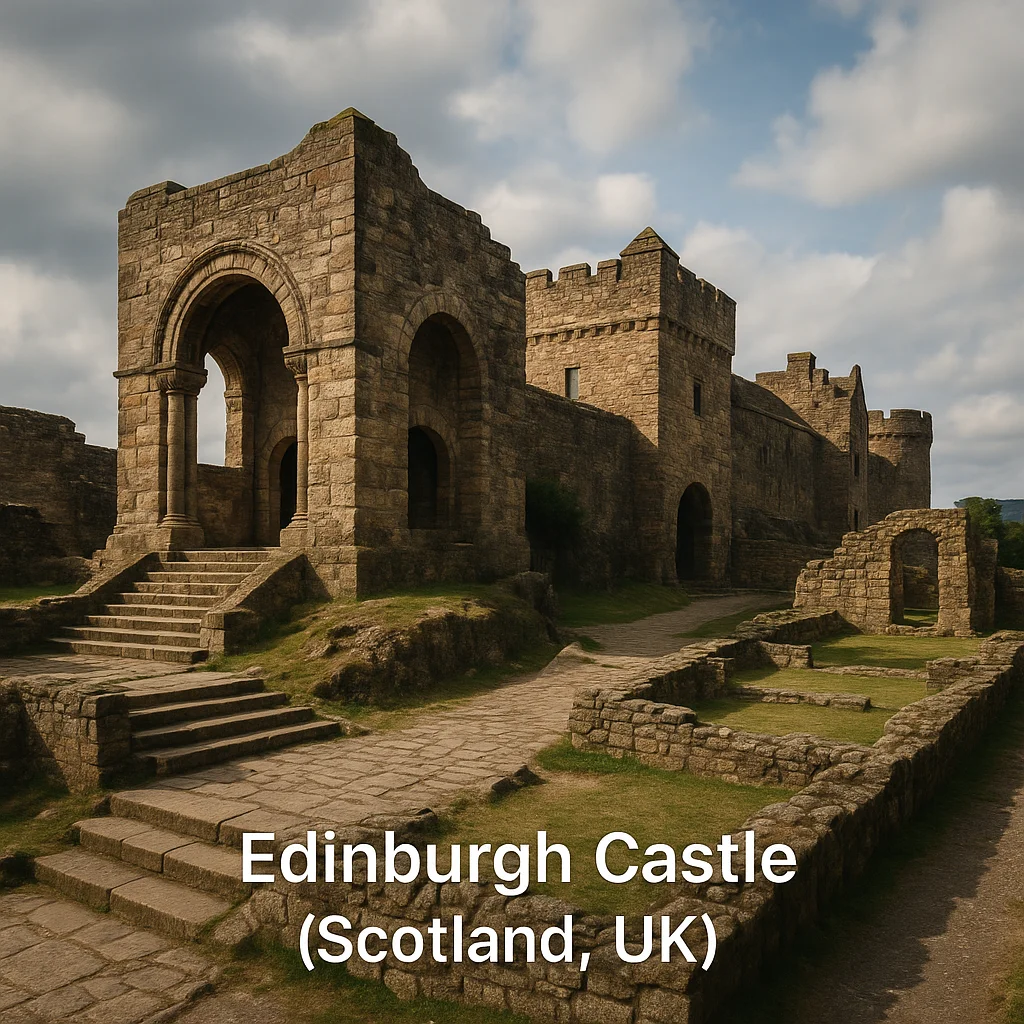
What makes Edinburgh Castle special is its strategic position, affording visitors a chance to walk through centuries of history while enjoying panoramic views over Scotland's capital. The site includes both ruins and well-preserved structures, providing a comprehensive experience of Scotland's tumultuous past.
Visitors can expect a museum-style experience with opportunities to explore various exhibits, including royal regalia, ancient weapons, and famous prisoners of war tales. In this guide, you'll learn about its historical milestones, architectural features, and visitor tips for an enriching visit.
- Country/Region: Scotland, UK
- General Era: 12th century to present
- Typical Visit Length: 2 to 4 hours
- Difficulty: Moderate, with some steep walks
- Best Season: Spring and summer for better weather
- Highlight: The Crown Jewels of Scotland
🗺️ Where It Is and How to Orient Yourself
Edinburgh Castle is located in the heart of Edinburgh, Scotland's capital city. It sits atop Castle Rock, a volcanic hill offering a dominant position over the surrounding landscape.
The nearest major city is Edinburgh itself, which is well-connected by Edinburgh Airport and the city's main rail station, Waverley Station. The castle is an easy reach for city-goers, making it a realistic day trip or a stop on a longer stay in Edinburgh.
When envisioning its location, think of a majestic fortress sitting on a rocky outcrop, offering sweeping views of the city and the picturesque Scottish landscapes beyond. The surrounding area of the Old Town is filled with winding streets and historic sites.
🕰️ History in a Nutshell
Edinburgh Castle was initially established as a royal fortress in the 12th century, though human habitation of Castle Rock dates back much earlier. Over the centuries, it evolved from a simple fort into a royal residence and military stronghold.
The castle's peak period was during the late Middle Ages when it became a focal point of Scottish independence struggles, notably during the Wars of Scottish Independence. It later transitioned into a military barracks and today functions as a popular heritage site.
The structure's status as a partial ruin is due to centuries of military use and historical sieges, although much has been preserved. Twentieth-century efforts, led by heritage conservationists, have kept the site partly intact, enabling visitors to explore both ruins and restored areas.
⭐ Top Highlights You Should Not Miss
- The Crown Jewels and Stone of Destiny
- St. Margaret's Chapel
- The Great Hall
- The Royal Palace
- The National War Museum
The Crown Jewels of Scotland, alongside the Stone of Destiny, are must-sees. These royal treasures, housed in the Crown Room, have deep historical significance as symbols of the Scottish monarchy.
St. Margaret's Chapel, the oldest surviving building in Edinburgh, offers an intimate glimpse into the past. Built in the 12th century, its Romanesque architecture is a testament to the era's craftsmanship.
The Great Hall is remarkable for its stunning medieval interior and an impressive collection of weapons and armor, making it a visually striking location for photos.
The Royal Palace tells the story of Scottish royalty with its period furniture and decor, while the National War Museum provides a comprehensive exploration of Scotland's military history.
🧱 Architecture, Materials, and Design (Made Simple)
Edinburgh Castle is primarily constructed from locally sourced stone, a common building material in medieval Scotland. Its rugged appearance fits seamlessly with its natural surroundings, emphasizing its defensive purpose.
The design features a blend of Romanesque and later influences, showcasing elements like rounded arches and fortified walls. The use of stone vaults and stout towers reflects the practical needs of its time while also adding grandeur.
Notable architectural details include the portcullis at the main gatehouse and the iconic Half Moon Battery, whose thick stone walls were critical in the castle's defensive history. Restoration efforts have carefully maintained these features, balancing original construction with modern conservation.
🎟️ Visiting Guide (Time, Tickets, and What to Expect)
A visit to Edinburgh Castle can range from a quick two-hour tour to an in-depth exploration lasting half a day. Guided tours are available and recommended for first-timers to gain insights into the site's multifaceted history.
Entry typically requires a ticket, with different areas like the museums and specific exhibits accessible under these general entries. There might be options for audio guides or scheduled live tours providing richer narratives of the site.
The castle is generally open from morning to late afternoon, with variation in opening times depending on the season. Visitors should check current schedules as these can change, especially during holidays or special events.
First-time visitors are advised to arrive early to avoid crowds, carry water, particularly in warmer months, and wear comfortable shoes due to the uneven terrain.
🚆 How to Get There and Move Around
The most convenient way to reach Edinburgh Castle is by public transport, with buses and trams connecting the area from key city points. Those driving will find parking nearby, though walking is often the easiest from city center accommodations.
Entering via the main entrance at the top of the Royal Mile is recommended for beginner visitors, providing a direct route to the castle entrance. Although the site involves uphill walking, it is navigable for those with moderate fitness.
Accessibility considerations are in place, but some areas may have steep steps and uneven surfaces, making them challenging for visitors with mobility issues. However, alternative routes and assistance can often be found.
🌤️ Best Season, Weather, and Time of Day
The best time to visit Edinburgh Castle is during the spring and summer months when the weather is generally mild and conducive to outdoor exploration. These seasons also tend to attract larger crowds.
Visiting early in the morning or late in the afternoon can enhance the experience, offering softer lighting for photography and potentially fewer visitors. The calm of early mornings especially allows for a more intimate experience.
On rainy days, consider spending more time in the castle's indoor exhibits or heading to nearby museums within the city. Edinburgh's varied cultural offerings can easily fill a day regardless of the weather.
⚠️ Safety, Rules, and Respectful Etiquette
Visitors are encouraged to wear sturdy footwear for navigating uneven ground and steep steps within the castle complexes. The city's weather can be unpredictable, so wearing layers is advisable.
Being a site of historical and cultural importance, it's crucial to respect signage, maintain quiet in sacred areas such as St. Margaret's Chapel, and follow photography rules, which may include restrictions on flash or drone use.
Conservation practices require visitors to stay on designated paths, not to touch fragile structures, and avoid climbing any ruins. These measures help preserve the site for future generations.
Common practical warnings include being cautious of slippery stone surfaces during wet weather and staying vigilant about personal belongings, especially in crowded areas where pickpocketing might occur.
🗺️ Nearby Places and a Simple One-Day Itinerary
Edinburgh offers a wealth of nearby attractions to complement your visit to the castle. Notable sites include the Royal Mile, Holyrood Palace, and the Scottish National Gallery.
- Morning: Start with Edinburgh Castle and enjoy the city views.
- Midday: Stroll down the Royal Mile and explore its shops and cafes.
- Afternoon: Visit Holyrood Palace, another royal residence.
- Evening: Conclude with a relaxing visit to the Scottish National Gallery or explore the local dining scene.
With an array of historical and cultural sites in close proximity, Edinburgh caters to a range of interests, from art to royal history and local gastronomy.
🧩 Stories, Myths, and Common Questions
Q: Is it true that the castle was never captured? A: While Edinburgh Castle was considered nearly impregnable, it has changed hands through various sieges in history, such as during the Wars of Scottish Independence.
Q: How old is Edinburgh Castle? A: Parts of the castle date back to the 12th century, but Castle Rock has been a site of human activity for thousands of years.
Q: Can kids enjoy a visit to the castle? A: Yes, the castle offers family-friendly activities and educational exhibits tailored for younger visitors, making it a good destination for families.
Q: Is a guided tour necessary? A: While not necessary, guided tours can greatly enhance your understanding of the site's complex history and significant events.
📌 Summary and Who This Site Is Best For
- An iconic fortress and royal heritage site
- Located on Castle Rock in Edinburgh, Scotland
- Features centuries of history from the 12th century onwards
- Highlights include the Crown Jewels and St. Margaret's Chapel
- Constructed from local stone, featuring Romanesque influences
- Optimal visit duration: 2 to 4 hours
- Best seasons: Spring and summer for favorable weather
- Be respectful of historical sites and safety guidelines
- Nearby sites: Royal Mile, Holyrood Palace, Scottish National Gallery
- Known for its rich history tied to Scottish independence and royalty
Edinburgh Castle is an ideal destination for those with an interest in history, architecture, and stunning cityscapes. Its extensive exhibits and rich tales cater to both families and individual travelers, ensuring an educational and memorable visit.
With its prominent position and extensive history, Edinburgh Castle rewards those willing to explore its storied grounds. Its cultural significance and spectacular views make it a worthwhile venture for visitors to Scotland's capital.
By following practical visiting tips and showing respect for its historical importance, visitors can fully appreciate the grandeur and legacy of Edinburgh Castle.