🏛️ Dubrovnik City Walls (Croatia)
🔎 Quick Facts and Why It Matters
The Dubrovnik City Walls are a major historical landmark in Croatia, renowned for their impressive medieval architecture and stunning views of the Adriatic Sea.
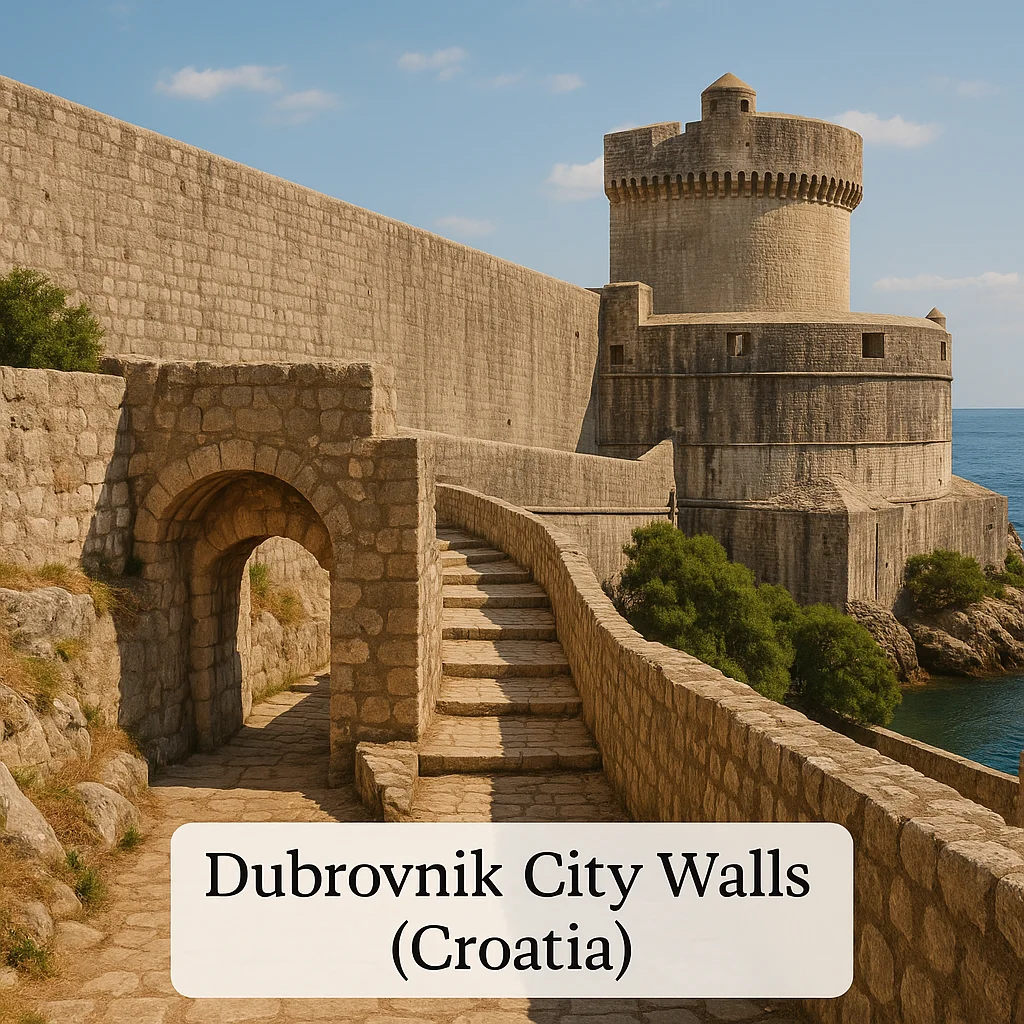
These walls are special because they have been remarkably preserved over the centuries, allowing visitors to walk along the top and explore the fortifications that once protected the city.
Visitors to the Dubrovnik City Walls can expect an immersive experience complete with breathtaking panoramas, a peek into the past, and various towers and bastions to explore.
In this guide, you'll learn about the history, architecture, and top highlights of the Dubrovnik City Walls, along with practical tips for visiting this UNESCO World Heritage Site.
- Location: Croatia, Dalmatia region
- Era: Medieval (constructed mainly between the 12th and 17th centuries)
- Typical visit length: 2 to 3 hours
- Difficulty: Moderate (involves walking and climbing stairs)
- Best season: Spring and early fall for pleasant weather and fewer crowds
- Highlight: Views of the Adriatic Sea and Dubrovnik's Old Town
🗺️ Where It Is and How to Orient Yourself
The Dubrovnik City Walls are located in the Dalmatia region of Croatia, surrounding the historic Old Town of Dubrovnik.
Dubrovnik is well-connected by its airport, which lies about 20 kilometers from the city center, making it accessible via international flights. Alternatively, travelers can reach Dubrovnik by ferry from other Croatian coastal cities.
While it is possible to visit the walls on a day trip, spending at least a night in Dubrovnik will enhance your experience. This allows you to explore the Old Town, enjoy local cuisine, and take in the evening ambiance.
For mental mapping, picture the walls hugging a peninsula that juts out into the azure waters of the Adriatic, providing both defensive protection and stunning vistas.
🕰️ History in a Nutshell
The walls of Dubrovnik were built by the Republic of Ragusa, a powerful city-state that flourished between the 12th and 17th centuries. These fortifications served primarily to protect the city from invasions and attacks.
During their peak in the 15th and 16th centuries, the walls helped Dubrovnik repel numerous sieges and attacks, thanks to the city-state's robust maritime trade and diplomatic efforts. However, the political landscape changed with the decline of Ragusa in the 18th century.
Today, the walls remain due to careful preservation efforts and their historical significance. This is why Dubrovnik is often called the "Pearl of the Adriatic."
⭐ Top Highlights You Should Not Miss
- Minceta Tower
- Bokar Fortress
- Lovrijenac Fortress
- Pile Gate
- Pilgrims' Bastion
The Minceta Tower offers the highest point along the walls, providing an excellent full structure view and sweeping vistas of the Old Town and the sea beyond. This location is an excellent spot for panoramic photos.
Bokar Fortress is an essential stop, known for its role in defending the city from naval attacks. Its circular design stands majestically with the entire façade in frame overlooking the sea.
The Lovrijenac Fortress, located on a cliff to the west of the Old Town, provides a grand scene of coastal stronghold views, with the fortress fully visible against the sea backdrop.
Pile Gate is the main entrance to the Old Town, and its robust medieval gates and drawbridge offer a picturesque setting right at the entrance of the city walls.
Pilgrims' Bastion is noted for its strategic outlooks and the ability to capture wide views with surrounding context of both the walls and the bustling streets below.
🧱 Architecture, Materials, and Design (Made Simple)
The Dubrovnik City Walls are primarily constructed from limestone, a material abundant locally and used extensively throughout the Mediterranean for its durability and strength in construction.
The design is heavily influenced by medieval Gothic architecture, with elements like robust fortifications, rounded towers, and narrow passageways.
Notable unique features include the wide esplanades along the top of the walls, the precise stonework of the bastions, and the cleverly designed loopholes for archers.
While much of the original architecture remains, certain areas have undergone careful restoration to maintain structural integrity and aesthetic appeal, always preserving the historical narrative of the site.
🎟️ Visiting Guide (Time, Tickets, and What to Expect)
A standard tour of the Dubrovnik City Walls typically lasts between 2 to 3 hours, depending on the areas of interest and the pace at which you explore.
Entry into the walls requires purchasing a ticket, which provides access to the walkway along the walls and some of the towers. While exact ticket options vary, expect an entry fee with potential discounts for guided tours or package deals including other attractions.
The walls are generally open from morning until late afternoon, with seasonal shifts in operating hours. Visitors should verify current schedules upon planning their visit.
For first-time visitors, it's advisable to arrive early to avoid crowds, especially during peak tourist seasons. Bring water, wear a hat, and plan for some shade breaks, as the sun can be quite intense.
🚆 How to Get There and Move Around
Travelers can reach the walls via public transportation with local buses dropping visitors near the Old Town gates. Taxis and rideshare services also provide convenient access from various parts of the city.
For those arriving by car, parking is available outside the Old Town due to the pedestrian-only zones within the walls.
The main entrance for beginners is through Pile Gate, offering a direct entry to the walls and access to guided tours. This approach allows for a comprehensive and circular route around the city.
Accessibility considerations include steep stone stairs and uneven surfaces, requiring comfortable walking shoes. Those with mobility challenges should be mindful of these conditions.
🌤️ Best Season, Weather, and Time of Day
The best times to visit the Dubrovnik City Walls are during spring and early fall, when the weather is mild and crowds are manageable.
Visiting early in the morning or later in the afternoon enhances the experience with softer lighting for photography and cooler temperatures.
In the event of rain, visitors can explore the many museums within the Old Town or visit sheltered attractions such as the Dubrovnik Cathedral and Rector's Palace.
⚠️ Safety, Rules, and Respectful Etiquette
Visitors should wear sturdy shoes as the terrain along the walls includes uneven stones and steep steps, which can be slippery, especially after rain.
Respect for the site's cultural heritage is important; quiet is encouraged in sacred spaces, and visitors should adhere to any posted signage regarding photography.
Photography is generally allowed, though flash and drone use may be restricted, and all guests should follow posted rules regarding these activities.
Conservation efforts mean visitors must stay on designated paths and avoid climbing on or touching any fragile elements of the structure. Crowds can also present pickpocketing risks, so keeping valuables secure is recommended.
🗺️ Nearby Places and a Simple One-Day Itinerary
The area surrounding the Dubrovnik City Walls offers plenty of additional attractions to explore.
- Morning: Start by walking the Dubrovnik City Walls
- Midday: Visit the Rector's Palace for historical exhibits
- Afternoon: Explore the Franciscan Monastery's Museum and Pharmacy
- Evening: Relax with dinner at a sea-view restaurant in the Old Town
Additional nearby spots include the Sponza Palace, the charming streets of the Old Town, and a short boat trip to the beautiful Lokrum Island for a nature escape.
🧩 Stories, Myths, and Common Questions
Did Game of Thrones film here? Yes, some scenes from the series used the walls as a backdrop, adding to Dubrovnik's fame in recent years.
Are the walls part of a "lost city"? Some visitors mistakenly view them as ancient ruins separate from the current city. In fact, the walls are integral to Dubrovnik's continuously inhabited Old Town.
Is walking the walls challenging? The walk is moderate, with various stairs and inclines which may be tiring, but manageable for most visitors.
Is it kid-friendly? While children can enjoy the walk, supervision is advised due to elevated sections and crowds.
Do I need a guide? While not necessary, guides can provide valuable insights and historical context, enriching the visit.
📌 Summary and Who This Site Is Best For
- Historical fortification
- Located in Dubrovnik, Croatia
- Medieval heritage with a strong trade history
- Notable highlights include towers and vistas
- Constructed from local limestone
- Visit typically lasts 2-3 hours
- Best visited in spring or fall
- Stay on paths and respect heritage rules
- Nearby Old Town and museums
- Offers stunning views and rich history lessons
- Great for families, photographers, history enthusiasts
- Provides sense of scale and medieval defense
The Dubrovnik City Walls are a paradise for history buffs, photographers, and families alike, offering insight into its storied past and the stunning beauty of Croatia's Dalmatian Coast.
Visiting the walls is a journey through time, providing both educational and aesthetic enjoyment, with incredible viewpoints and a vibrant history unfolding at every turn.
A visit to the Dubrovnik City Walls is sure to be rewarding, nurturing appreciation for historical preservation and cultural heritage. Enjoy a respectful and enriching experience while exploring this remarkable site.