🏛️ Amber Fort (India)
🔎 Quick Facts and Why It Matters
Amber Fort is a stunning fusion of Hindu and Mughal architecture, situated on a hilltop overlooking the Maota Lake in India. Known for its intricate carvings and expansive courtyards, it is a monumental example of India's rich historical tapestry.
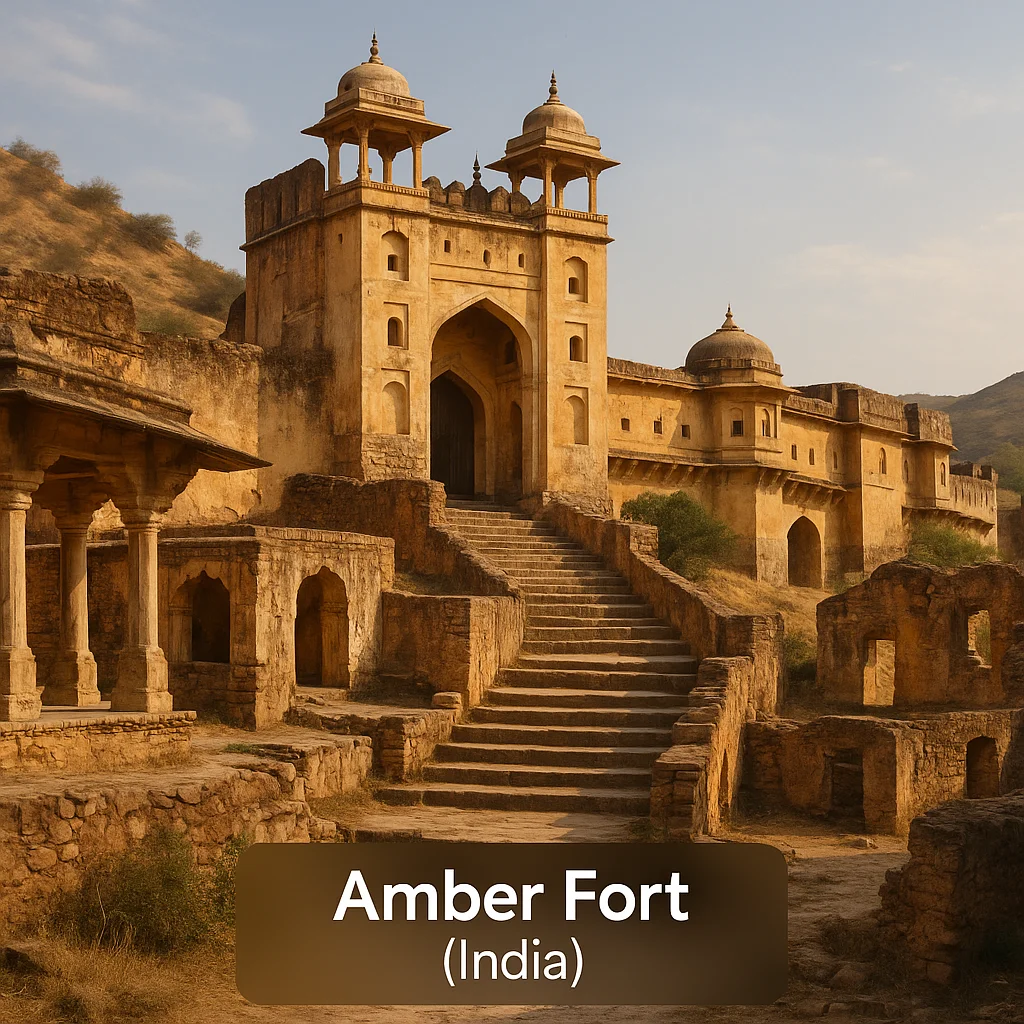
Built to serve as a royal residence, the fort is now a major tourist attraction, offering visitors the chance to explore its labyrinthine passages and spacious areas. The experience is one of walking through history, with each corner revealing a new story.
This guide will provide an overview of what to expect when visiting Amber Fort, including historical context, key highlights, architectural details, and practical visiting tips. By the end, you'll have a well-rounded understanding of this breathtaking heritage site.
- Country/Region: India/Rajasthan
- General Era: Late 16th century
- Typical Visit Length: 2 to 4 hours
- Difficulty: Moderate (hilly area with stairs)
- Best Season: Winter (October to March)
- Highlight: Sheesh Mahal (Mirror Palace)
🗺️ Where It Is and How to Orient Yourself
Amber Fort is located near the city of Jaipur in the state of Rajasthan, India. Jaipur, the capital city of Rajasthan, serves as the primary gateway for most visitors to the fort.
The fort is approximately 11 kilometers from the city center of Jaipur, making it a viable day-trip option. Travelers often reach Jaipur by air through the city's international airport or by train using its major railway junction.
The fort is set against the rugged Aravalli Hills and offers panoramic views of the surrounding landscape. When picturing Amber Fort, imagine it perched majestically on a hillside, with broad views filled with rolling terrain and the reflective surface of Maota Lake below.
🕰️ History in a Nutshell
Amber Fort was commissioned by Raja Man Singh I in the late 16th century and completed by Mirza Raja Jai Singh I. The fort served as the principal residence of the Rajput Maharajas and their families.
At its peak, Amber Fort was a center of local governance and a symbol of the ruling dynasty's wealth and power. Its lavish interiors and strategic location depict its significant role during the era.
Over time, the capital was moved to Jaipur, causing the fort to decline in political importance. Fortunately, its architectural and cultural value led to its preservation and restoration, allowing it to remain a well-preserved testament to the region's history.
⭐ Top Highlights You Should Not Miss
- Sheesh Mahal (Mirror Palace)
- Ganesh Pol (Entrance Gate)
- Man Singh Palace
- Diwan-e-Aam (Hall of Public Audience)
- Sukh Niwas
The Sheesh Mahal, or Mirror Palace, is renowned for its exquisite mirror work and mosaic decorations that shimmer in candlelight. A wide view from the central courtyard allows all facets of its design to be appreciated.
Ganesh Pol, the entrance to the private palaces, is celebrated for its vibrant frescoes and carvings. It provides a photo-worthy moment with the entire arch and adjoining structures in view.
Man Singh Palace is one of the oldest parts of the fort and features a unique blend of architectural styles. The broad forecourt ensures visitors can see the complete structure.
Diwan-e-Aam offered a place for the king to address his subjects. This area is ideal for wide-angle shots capturing the grandiose arches and the surrounding courtyards.
Sukh Niwas, known for its cooling effect, illustrates how ancient engineering was utilized to battle the desert heat using water flow and breeze. The complete façade can be observed from the entrance path.
🧱 Architecture, Materials, and Design (Made Simple)
Amber Fort's construction mainly utilizes red sandstone and marble, materials that provide robustness and a deep, warm aesthetic. The architectural style is a blend of Hindu and Mughal influences, noted for its ornate carvings and exquisite detailing.
The fort features large ramparts, series of gates, cobbled paths, and beautiful courtyards. Its unique elements include the ornate Ganesh Pol, intricate mirror work, and latticed windows, which allow for cool air circulation.
Careful restoration work has been undertaken to preserve its features. While modern conservation techniques are used to ensure stability, experts strive to maintain authenticity to the greatest extent possible.
🎟️ Visiting Guide (Time, Tickets, and What to Expect)
Visitors typically spend 2 to 4 hours exploring the fort, depending on interest and pace. Various zones within the fort require a paid ticket, while guided tours can offer enriched experience for those interested in detailed narratives.
The fort is generally open from morning till late afternoon, with seasonal changes noted. It is advisable for first-timers to arrive early to avoid crowds and to carry essentials like water, a hat, and sunscreen.
Ticket prices and access may vary, so it is wise to check official sources or tourist guides for the latest information before planning a visit.
🚆 How to Get There and Move Around
Visitors can reach Amber Fort by taxi, bus, or car from Jaipur. Public buses run frequently between the city and the fort area. Some prefer hiring a taxi for convenience, offering door-to-door service.
The main entrance for visitors is well-marked and designed to accommodate all visitors, though the site involves climbing steps and walking over uneven surfaces. Those with mobility concerns should prepare accordingly.
For those exploring on foot, wear comfortable shoes as the fort's cobbled paths and steep staircases require good footing to navigate smoothly.
🌤️ Best Season, Weather, and Time of Day
The best time to visit Amber Fort is during the cooler months from October to March, when the weather is pleasant and ideal for exploration. The summer months can become quite hot, making it less comfortable for lengthy trips.
Early mornings and late afternoons present the best light conditions for photography, highlighting the fort's colors and surroundings. Sunsets can cast enchanting hues on the structure and should not be missed.
In case of rain, parts of the fort provide indoor areas for shelter, and alternative indoor activities in Jaipur can keep visitors entertained.
⚠️ Safety, Rules, and Respectful Etiquette
Visitors should opt for sturdy footwear to manage the fort’s uneven paths and steep stairs. Modestly-dressed visitors are always appreciated, respecting the site's cultural significance.
Certain areas may have photography restrictions, so it’s essential to observe any posted signs regarding photography, particularly in sacred or private spaces.
For safety and conservation, it's crucial to stick to designated paths and not touch any delicate carvings. Keeping hydrated and being mindful of weather conditions will ensure a comfortable visit.
🗺️ Nearby Places and a Simple One-Day Itinerary
Besides Amber Fort, the city of Jaipur offers a variety of nearby attractions. The City Palace, Hawa Mahal, and Jantar Mantar are excellent additional visits on the same day.
- Morning: Explore Amber Fort and enjoy its grand architecture.
- Midday: Visit the City Palace in Jaipur for royal exhibits.
- Afternoon: Wander around the historic Hawa Mahal.
- Evening: Conclude your day with the astronomical observatory, Jantar Mantar.
🧩 Stories, Myths, and Common Questions
Does Amber Fort have any myths associated with it? There are numerous tales, often exaggerated in popular culture. However, historians focus on its architectural and strategic significance.
How difficult is the walk within the fort? The fort has uneven pathways and steps, so while it's manageable, wearing comfortable shoes and taking necessary breaks is advised.
Is the fort kid-friendly? Yes, but keeping watch on young children is necessary due to the elevation and stone paths.
Is a guide necessary? While not mandatory, guided tours enrich the experience by providing historical context and stories.
📌 Summary and Who This Site Is Best For
- Historical fort with rich Mughal and Hindu designs
- Located near Jaipur in Rajasthan, India
- Showcases royal life and strategic architecture from the 16th century
- Must-see features include Mirror Palace and Ganesh Pol
- Built with red sandstone and marble, highlighting Rajputana style
- Plan for a 2 to 4-hour visit, depending on interest
- Best visited in the cooler months, particularly early morning
- Stay on paths and respect rules for safe touring
- Nearby attractions include Jaipur's City Palace and Hawa Mahal
- Amber Fort remains a crown jewel of Rajasthan for its stunning architecture and vibrant history
Amber Fort is perfect for history enthusiasts, families, and photographers who appreciate grand architecture and historical narratives. The fort’s design and strategic setting offer unique insights into the past.
The captivating stories and striking architecture make a visit to Amber Fort well worth the journey. By exploring this site, visitors gain a deeper understanding of India's rich cultural heritage and royal history.
Please remember to respect the preservation efforts and timeless beauty of Amber Fort during your visit. Enjoy your exploration and the stories that await at every corner.