🏛️ Tikal (Guatemala)
🔎 Quick Facts and Why It Matters
Tikal is an ancient city in Guatemala, famous for its impressive ruins that speak volumes of the once-mighty Maya civilization.
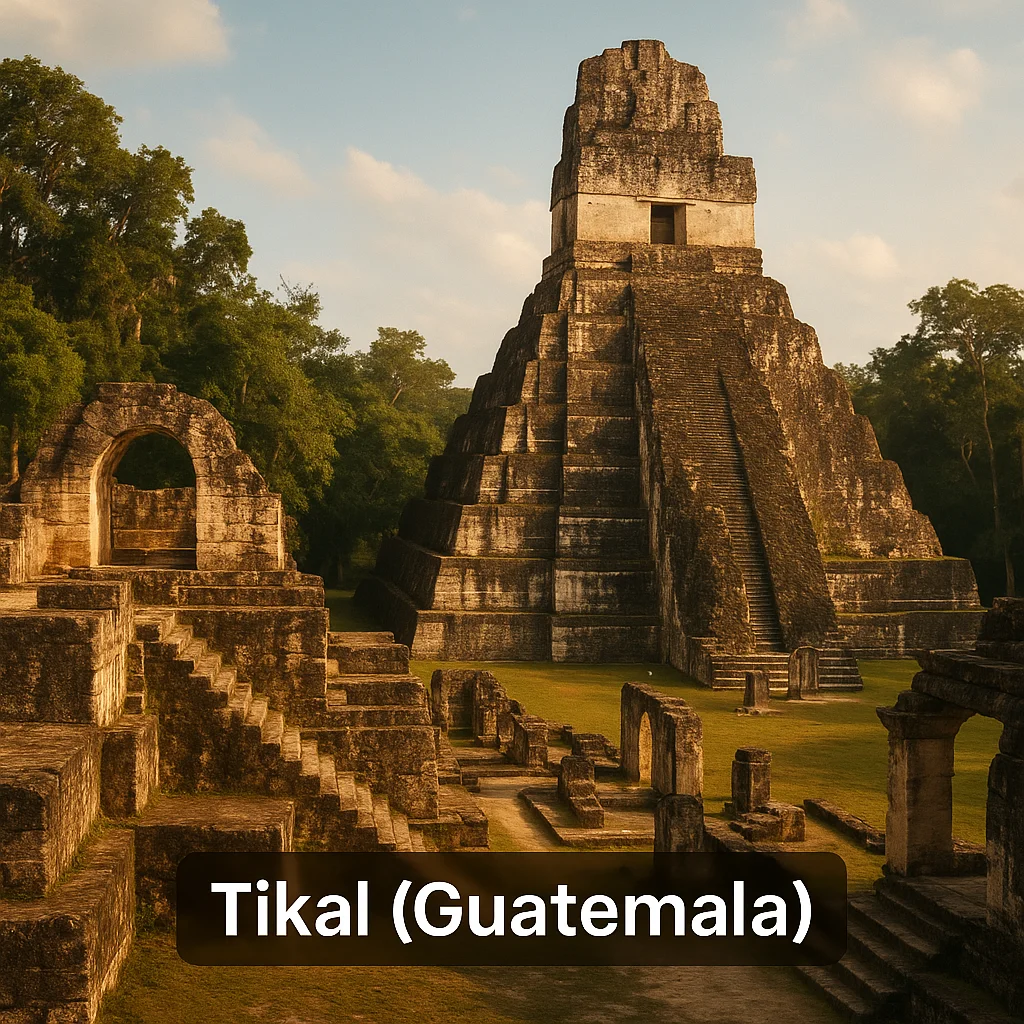
This site stands out due to its majestic temples and sprawling plazas. Its importance lies in providing insight into Maya architecture, astronomy, and daily life.
The experience of Tikal offers visitors a chance to explore vast, walkable ruins amidst a lush jungle setting. It feels both intimate and grand, inviting exploration and reflection.
In this guide, you will learn about Tikal's history, its must-see aspects, and how to make the most of your visit, ensuring a memorable and educational journey.
- Location: Northern Guatemala, Petén region
- Era: Mainly Late Classic Maya period (600-900 AD)
- Typical visit length: Half-day to full-day
- Difficulty: Moderate walks, uneven terrain
- Best season: Dry season from November to April
- Main highlight: Temple IV and the Great Plaza
🗺️ Where It Is and How to Orient Yourself
Located in the dense jungles of the Petén region in northern Guatemala, Tikal is near the town of Flores, which serves as a common starting point for visitors.
The nearest major city with an airport is Guatemala City. From there, travelers usually journey to Flores, often by domestic flight, as part of their trip to Tikal.
Tikal is best experienced with at least a one-night stay nearby. While a day trip is possible, staying overnight allows for a fuller exploration at a relaxed pace.
Picture Tikal situated in a flat lowland jungle, accessible through well-marked paths leading into the heart of the ancient city, surrounded by lush green overrunning ruins and wildlife.
🕰️ History in a Nutshell
Tikal was established by the Maya civilization as early as the 4th century BC and flourished during the Late Classic Period.
The city served as a major political, economic, and religious center, rich with striking pyramids and plazas used for ceremonies and governance.
Tikal reached its peak between 600 and 900 AD, but declined due to unknown reasons, possibly environmental stress or sociopolitical changes, leading to its eventual abandonment.
The site fell into obscurity, reclaimed by the jungle, until its rediscovery by explorers in the 19th century, which has since allowed it to reveal countless insights into Maya history.
⭐ Top Highlights You Should Not Miss
- Temple IV
- Great Plaza
- Temple of the Jaguar
- Lost World (Mundo Perdido)
Temple IV is the tallest structure in Tikal and offers sweeping views over the canopy. For photos, the platform at sunrise provides a full structure visible against the skyline.
The Great Plaza, surrounded by towering temples and open squares, exemplifies classic Maya city design. A great photo spot is from Temple II, capturing the full grandeur of the plaza.
The Temple of the Jaguar, notable for its steep, stepped design, offers a glimpse of ancient artistry. It’s ideal to photograph from the far end of the plaza for the entire façade in frame.
Lost World, one of the oldest parts, highlights early Maya architecture. Standing on the central pyramid grants a wide view with surrounding context, perfect for photos.
🧱 Architecture, Materials, and Design (Made Simple)
The buildings in Tikal were constructed using limestone blocks, a common material in Maya architecture, often quarried locally.
The architecture is distinctively Maya, characterized by tall, steep pyramids and intricate carvings, reflecting both religious and astronomical significance.
The massive stepped pyramids, inscribed stelae, and breathtaking plazas are recognizable features. Restoration efforts have stabilized certain areas while others remain unchanged to protect authenticity.
🎟️ Visiting Guide (Time, Tickets, and What to Expect)
A typical visit can vary from a quick half-day tour to a more in-depth full-day experience, allowing for exploration of off-beat paths.
Entry usually requires a ticket, with guided tours available for those seeking detailed historical context. Check for costs that may change with time.
Visitors are advised to arrive early for cooler temperatures and fewer crowds. Operating hours typically extend from early morning to late afternoon; these may alter by season.
First-time visitors should bring water, a hat, and sturdy shoes for the challenging terrain and to beat the tropical heat. Planning for shade and rests is advisable.
🚆 How to Get There and Move Around
Flores is the common gateway, accessible by plane from Guatemala City. From Flores, shuttles or taxis take you directly to the ruins.
The Grand Entrance is recommended for beginners due to clear paths and access to site highlights. Expect some steep steps and uneven ground.
Those with mobility issues should note the lack of accessibility in steep areas but can explore some plazas that offer more level routes.
🌤️ Best Season, Weather, and Time of Day
The ideal time to visit Tikal is during the dry season from November through April, avoiding the heavy rains of the wet season.
Arriving at dawn or late afternoon provides comfortable temperatures and captures the best light for photography, with vibrant colors and long shadows.
On rainy days, options include visiting the on-site museum or exploring covered areas, with short breaks under awnings if needed.
⚠️ Safety, Rules, and Respectful Etiquette
Visitors should wear sturdy shoes suitable for uneven ground and protection against occasional slipping from moisture.
Respectful behavior is essential, particularly in temples and quiet areas designated as sacred. Following signage ensures preservation and respect.
Photography without flash is generally allowed, but drones are restricted and rules should be followed as posted.
Conservation efforts ask that visitors stay on paths, avoid climbing on fragile structures, and refrain from touching delicate carvings or materials.
Practically, be cautious of slippery surfaces, stay hydrated to manage heat, watch for crowded passages, and secure valuables to deter pickpockets.
🗺️ Nearby Places and a Simple One-Day Itinerary
Nearby attractions include Yaxha archaeological site, Lake Petén Itzá, Flores Island, the Ixpanpajul Nature Park, and the Ceibal ruins.
- Morning: Explore Tikal's main structures including Temple IV and the Great Plaza.
- Midday: Break for lunch in Flores to sample local Guatemalan cuisine.
- Afternoon: Visit the on-site archaeology museum, then head to Yaxha for a late-day exploration.
- Evening: Enjoy a quiet dinner with views over Lake Petén Itzá.
🧩 Stories, Myths, and Common Questions
Is Tikal a "lost city"? It was rediscovered under dense jungle but was never completely forgotten by local populations.
Was Tikal built by aliens? Despite popular myths, evidence suggests it was constructed by the highly skilled Maya civilization.
How difficult is the walk? It requires moderate effort with some steep climbs, suitable for those in reasonably good health.
Is Tikal kid-friendly? Yes, with supervised exploration and cautious handling of steps; children often enjoy the open plazas and wildlife.
Is a guide necessary? A guide enriches the experience with details on history and culture, but self-guided tours allow for leisurely exploration.
📌 Summary and Who This Site Is Best For
- Tikal is a major Maya archaeological site.
- It is located in the Petén region of Guatemala.
- Key history focuses on its rise and decline during the Classic Period.
- Top highlights include Temple IV, Great Plaza, and Lost World.
- Architecture features limestone blocks and distinctive Maya designs.
- Visit length varies from a few hours to a whole day.
- Best visited during the dry season for optimal weather.
- Visitors should respect cultural etiquette and site rules.
- Local add-ons: Yaxha, Lake Petén Itzá, Ixpanpajul Nature Park.
- A memorable fact: Tikal was among the largest cities of the Maya civilization.
Tikal is best suited for history enthusiasts, families, and nature lovers who appreciate deep cultural experiences. The site rewards photographers with stunning dawn and dusk settings.
The effort to get there is well worth it, offering a chance to walk through ancient history, witness impressive architecture, and connect with natural beauty.
Whether you're drawn by sight, history, or the serene experience among centuries-old ruins, Tikal provides an unforgettable journey into the past, encouraging mindful tourism and exploration.