🏛️ Teotihuacan (Mexico)
🔎 Quick Facts and Why It Matters
Teotihuacan is an ancient Mesoamerican city located in Mexico, renowned for its impressive pyramids and cultural significance in pre-Columbian history. This archaeological site, once one of the largest cities in the world, continues to captivate visitors with its grand scale and mysteries.
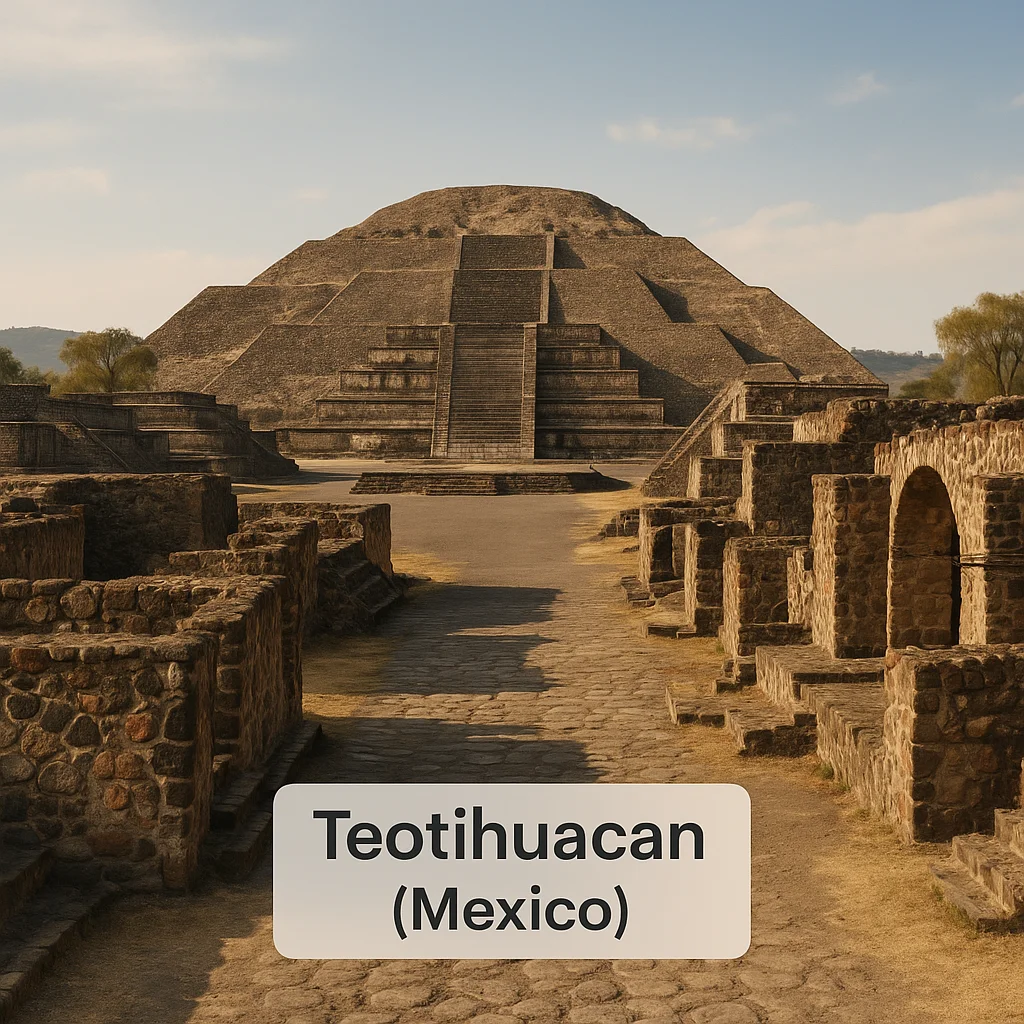
Teotihuacan's most notable structures, the Pyramid of the Sun and the Pyramid of the Moon, dominate the landscape and offer breathtaking views of the surrounding area. Walking through the ruins, visitors can explore temples, plazas, and residential compounds that reveal the city's historical and cultural layers.
In this guide, you'll learn about the site's history, architectural highlights, and practical tips for visiting. Whether you're drawn to its enigmatic past or its monumental architecture, Teotihuacan offers a fascinating glimpse into an ancient civilization.
- Location: Mexico, near Mexico City
- Era: Approximately 100 BCE to 550 CE
- Typical Visit Length: 3 to 6 hours
- Difficulty: Moderate, with some steep climbs
- Best Season: Dry months, typically November through April
- Highlight: Pyramid of the Sun and its panoramic view
🗺️ Where It Is and How to Orient Yourself
Teotihuacan is situated in the Basin of Mexico, about 40 kilometers northeast of Mexico City. This proximity makes it a popular day-trip destination for those staying in the capital. Visitors usually travel via guided tours or public transport to access the site conveniently.
The nearest major gateway to Teotihuacan is Mexico City, which is well-connected by Benito Juárez International Airport. While a day trip is feasible, some travelers might prefer an overnight stay at nearby lodgings to explore at a more relaxed pace.
To picture its location, imagine the vast Valley of Mexico, nestled between mountain ranges. Teotihuacan occupies a flat landscape, historically advantageous for agriculture and trade, making it an important center for ancient inhabitants.
🕰️ History in a Nutshell
Teotihuacan was established around 100 BCE, and its construction reached its peak between 100 and 250 CE. The city's creators remain a subject of scholarly intrigue, but it is known that Teotihuacan served as a major urban center, characterized by its diverse population and cultural influence.
This city was a hub for religious activities, commerce, and political power. Its vast ceremonial complexes and residential structures reflect an organized and sophisticated society with connections across Mesoamerica.
Teotihuacan began to decline around 550 CE, possibly due to internal conflicts, environmental factors, or external pressures. Despite its fall, the remains of Teotihuacan were preserved and continue to draw curious visitors and researchers from around the world.
⭐ Top Highlights You Should Not Miss
- Pyramid of the Sun
- Pyramid of the Moon
- Avenue of the Dead
- Temple of the Feathered Serpent
- Palace of Quetzalpapálotl
- Teotihuacan Museum
The Pyramid of the Sun, the largest structure at Teotihuacan, offers a stunning viewpoint. With the full structure visible and surrounded by smaller buildings, it's the best spot for panoramic photos of the site.
Similarly, the Pyramid of the Moon provides a comprehensive view of the ceremonial centers and the Avenue of the Dead stretching below. Its vantage point is ideal for capturing the essence of the ancient city.
The Avenue of the Dead, a central thoroughfare, allows visitors to experience the scale and linearity of Teotihuacan's urban plan. Walking its length, you'll see how it connects the major pyramids and plazas.
At the far end, the Temple of the Feathered Serpent showcases fantastic stone carvings of the feathered serpent deity, reflecting the artistry and religious significance of the site.
The Palace of Quetzalpapálotl features intricate murals and architectural styles unique to Teotihuacan. With its entire front façade in frame, it offers a glimpse into the ceremonial and residential aspects of the city.
Finish your visit at the Teotihuacan Museum, where artifacts and detailed exhibitions provide historical context, adding depth to your exploration of the ruins.
🧱 Architecture, Materials, and Design (Made Simple)
The builders of Teotihuacan used local resources, like volcanic stone, to construct solid structures that have remarkably survived the centuries. Stone blocks were fitted together with mortar, providing longevity and strength.
The architectural style of Teotihuacan is characterized by stepped pyramids and large-scale urban planning, demonstrating an advanced understanding of construction and city design. Influences from various cultures can be seen in its decorative motifs, such as those from the Maya and Olmec.
Unique design details include the temple facades adorned with intricate carvings and the use of talud-tablero architecture—a design style featuring a sloping talud (platform) with a tablero (panel) on top. The murals found throughout the site stand as testimony to the artistic endeavors of its inhabitants.
Some restoration efforts have been made to preserve the site's features for future generations, ensuring that they stay as true to the originals as possible. Visitors will notice a blend of preserved ancient elements and carefully restored sections.
🎟️ Visiting Guide (Time, Tickets, and What to Expect)
Expect to spend 3 to 6 hours at Teotihuacan, depending on your interest in in-depth exploration or photography. Ticket systems typically include access to the main archaeological zone, and there are options for guided tours.
The site generally operates from morning until late afternoon, aligning with the best visiting hours to avoid the midday sun. It's wise to check for seasonal variations in opening times.
To enhance your visit, consider arriving early to enjoy the cooler morning air and fewer crowds. It's advisable to carry water, wear comfortable shoes, and bring a hat to shield from the sun.
🚆 How to Get There and Move Around
Visitors can access Teotihuacan by public transportation from Mexico City, with buses departing frequently from north-central stations. Taxis and ride-sharing services provide another comfortable option, especially for those traveling in groups.
For a beginner-friendly experience, use the main entrance, which is well-signposted and offers easy access to the major landmarks. Paths within the site are mostly flat, although some areas have steep steps and uneven surfaces.
🌤️ Best Season, Weather, and Time of Day
The best time to visit Teotihuacan is during the dry season, from November to April, when the weather is pleasant, and the risk of rain is minimal. This season also provides clearer skies, enhancing the photographic quality of the ancient site.
Morning visits are ideal for comfortable temperatures and fewer visitors, while late afternoons present favorable lighting for photographs. On rainy days, the museum offers an engaging indoor alternative with detailed exhibits.
⚠️ Safety, Rules, and Respectful Etiquette
When visiting Teotihuacan, dress for comfort on rough terrain, wearing sturdy shoes to navigate uneven paths and steps. Clothing should be respectful of cultural traditions, with coverage in sacred areas.
Photography is generally permitted, but restrictions on flash and drone usage are common; always observe posted rules and signs. It's crucial to remain on defined paths and refrain from touching or climbing the fragile structures to preserve them.
Be mindful of practical risks such as slippery stones, intense heat, and crowded environments. Staying alert and respectful ensures a positive experience for everyone.
🗺️ Nearby Places and a Simple One-Day Itinerary
Extend your visit by exploring nearby attractions, like the charming town of San Juan Teotihuacan or the famous Basilica of Our Lady of Guadalupe in Mexico City. Nature enthusiasts can enjoy hiking in the nearby Otumba Valley.
- Morning: Arrive early at Teotihuacan, exploring the main pyramids and Avenue of the Dead
- Midday: Visit the Temple of the Feathered Serpent and the Palace of Quetzalpapálotl, then enjoy lunch in a local eatery
- Afternoon: Spend time at the Teotihuacan Museum for a comprehensive historical overview
- Evening: Return to Mexico City or stay locally to relax and reflect on your day
🧩 Stories, Myths, and Common Questions
Is Teotihuacan a "lost city"? While often referred to as a "lost city," Teotihuacan was never truly lost. Its significance remained in local lore, and it was rediscovered by explorers much later.
Who built Teotihuacan? Although initially mysterious, evidence suggests the city was built by a now-extinct Mesoamerican culture, distinct from the later Aztecs who regarded it as sacred.
Is the climb difficult for children? The pyramids have steep steps that can be challenging, so parental supervision and caution are advised. Consider taking breaks and exploring flatter areas.
Is a guide necessary? While not essential, hiring a knowledgeable guide can enrich your understanding of the site's history and significance with interpretive insights.
📌 Summary and Who This Site Is Best For
- Ancient Mesoamerican city with profound cultural significance
- Located near Mexico City in the Valley of Mexico
- Built around 100 BCE; peak from 100 to 550 CE
- Highlights: Pyramids of the Sun and Moon, Avenue of the Dead
- Features stone structures, unique architecture, and colorful murals
- Visit typically lasts 3 to 6 hours
- Best visited during the dry season, November to April
- Respect rules to protect the site; prepare for rough terrain
- Nearby highlights: San Juan Teotihuacan, Basilica of Our Lady of Guadalupe
- A remarkable cultural site with an enduring legacy
Teotihuacan is a fascinating destination for history enthusiasts, families looking to explore ancient cultures, and photographers eager to capture stunning architecture. Its enigmatic nature and massive scale make the journey worthwhile for anyone curious about pre-Columbian civilizations.
Visiting Teotihuacan offers a unique opportunity to walk through history, marvel at architectural achievements, and uncover the secrets of an ancient way of life. It's an adventure that invites reflection and wonder.
May your visit be enlightening and respectful, as you tread the paths once traveled by the enigmatic people of Teotihuacan.