🏛️ Petra (Jordan)
🔎 Quick Facts and Why It Matters
Petra, often referred to as the "Rose City" due to its pink sandstone cliffs, is an ancient archaeological site located in modern-day Jordan. It is renowned for its rock-cut architecture and water conduit system, showcasing the ingenuity of its Nabataean creators.
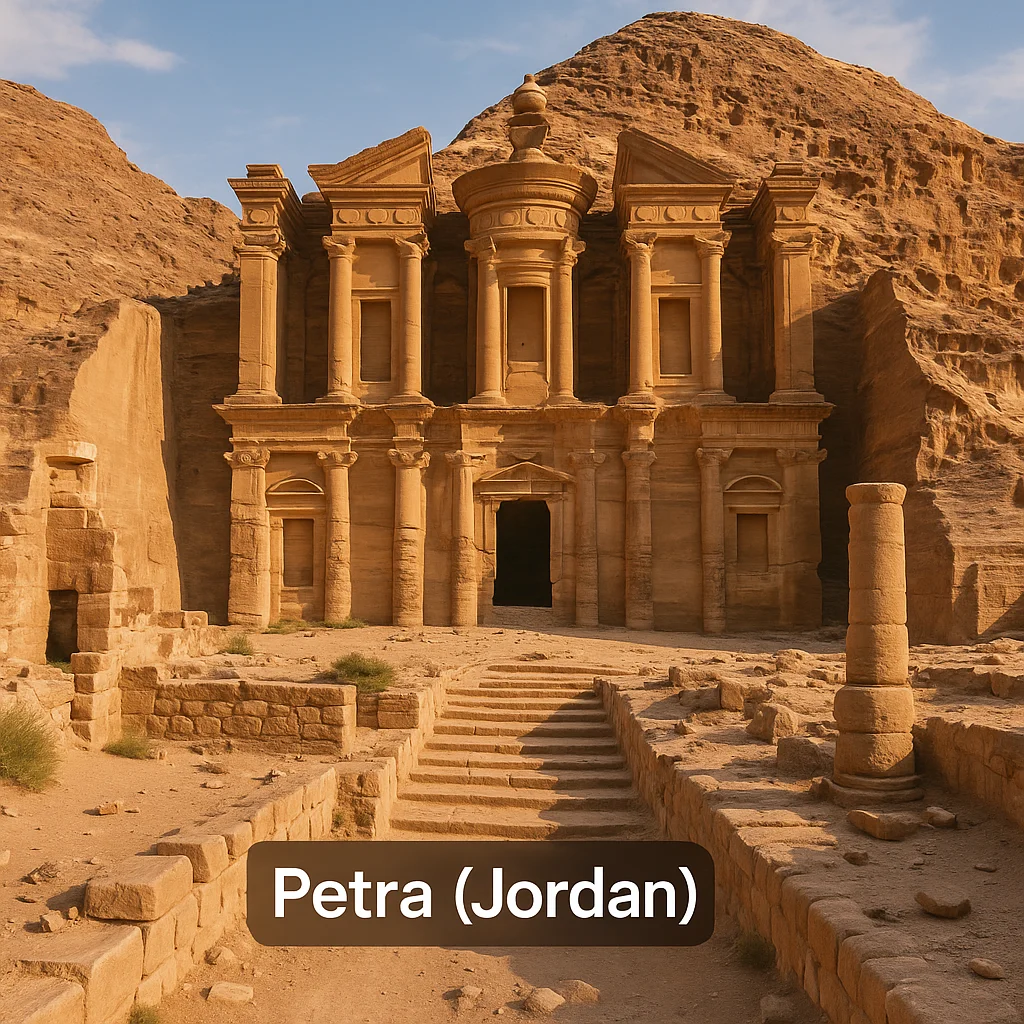
What makes Petra such a special site is its remarkable blend of natural beauty and historical intrigue. As visitors venture through its narrow gorge, they are greeted with stunning views of ancient temples and tombs, all intricately carved into sandstone cliffs. This experience is walkable, allowing visitors to fully immerse themselves in its expansive ruins.
This guide will introduce you to Petra’s fascinating history, top attractions, and practical travel tips to enhance your visit. From understanding its architectural significance to navigating the best paths, you'll be prepared for an enlightening journey through one of the world’s most extraordinary heritage sites.
- Location: Ma'an Governorate, Jordan
- Region: Jordan Southern Desert
- Era: Nabataean Kingdom, around 4th century BC to 2nd century AD
- Visit Length: Typical visits range from 4 hours to a full day
- Difficulty: Moderate, due to uneven paths and some climbing
- Season: Spring (March to May) and Autumn (September to November) for best weather
- Highlight: The Treasury, Al-Khazneh, with its iconic façade
🗺️ Where It Is and How to Orient Yourself
Petra is situated in the Ma'an Governorate in southern Jordan. It lies within a broad valley basin among the rugged and arid desert hills of Wadi Musa. The nearest major city is Aqaba, a notable trading port on the Red Sea, from which many visitors access Petra via a picturesque drive.
The most common gateway to Petra is through Queen Alia International Airport in Amman, Jordan's capital. While some attempt to visit Petra as a day trip, it is much more rewarding to stay overnight in Wadi Musa, allowing ample time to explore the extensive ruins.
To visualize its setting, think of Petra as a hidden city carved into towering sandstone cliffs, accessed through a narrow opening called the Siq. It's like discovering a hidden world tucked away in the folds of the earth, offering astonishing views and historical insights at every turn.
🕰️ History in a Nutshell
Petra was established as early as the 4th century BC by the Nabataeans, a nomadic Arabian tribe that later became a major force in the region. They developed Petra into a thriving trade hub, specializing in incense routes that stretched from Arabia to the Mediterranean.
The peak of Petra’s prosperity was during the 1st century BC and into the 1st century AD, becoming famous for its elaborate public works and architectural grandeur. However, shifts in trade routes and a major earthquake in 363 AD contributed to its decline and eventual abandonment.
Today, Petra is a UNESCO World Heritage Site, its ruins offering a window into the past, preserved by the dry climate and protected as a national park. The site has captivated archaeologists and travelers alike, revealing secrets of the Nabataean civilization and their remarkable achievements.
⭐ Top Highlights You Should Not Miss
- The Treasury (Al-Khazneh)
- Monastery (Ad-Deir)
- The Siq
- Royal Tombs
- The Amphitheater
The Treasury, often the first iconic structure you’ll see exiting the Siq, is notable for its grandiose façade carved from a sandstone cliff. This site offers a "best photo spot" with the entire structure visible and framed by the dramatic canyon walls of the Siq.
The Monastery sits atop a mountainous location that requires a moderate hike, offering breathtaking vistas and a chance to see the entire façade surrounded by the expansive Jordanian landscape.
The Siq, a narrow, winding gorge, creates a dramatic path carved by natural forces and sets the stage for Petra’s grandeur. It's an experience in itself, with rich colors and geological features teeming at every turn.
The Royal Tombs are larger-than-life structures that dominate the landscape. Located in full view within an elevated position, they allow visitors to appreciate their scale and intricate rock carvings.
The Amphitheater is a testament to Rome’s influence on Petra, offering a semicircular seating area hewn directly from the rock. The site allows wide views of the seating rows and stage in natural stone, harmonizing the man-made and the landscape.
🧱 Architecture, Materials, and Design (Made Simple)
Petra is marvelously crafted from the rose-red sandstone cliffs that typify the region. The Nabataeans utilized simple tools to carve intricate designs directly from the rock face, a monumental achievement when considering the technology of the time.
The architectural style of Petra incorporates Roman and Hellenistic influences blended with native Nabataean elements, reflected in the grand columns and elaborate carvings. The signature feature is the rock-cut façades, making Petra both a city of stone and a city carved from stone.
Unique details include the Treasury’s ornate sculptures, the Monastery’s monumental size, and the intricately carved reliefs found throughout the site. Partial restorations have preserved the most fragile structures, ensuring these glimpses into ancient times endure.
🎟️ Visiting Guide (Time, Tickets, and What to Expect)
A visit to Petra can be tailored to the time you have available. Quick visits lasting around 4 hours can cover the Treasury and part of the Siq. A standard visit of a full day allows you to explore deeper points like the Monastery and Royal Tombs. Deep dives, extending over two days, provide time to uncover the more secluded sections.
Petra is a paid entry site, with ticket patterns varying. They usually include entry for a full day, with options for guided tours that can be particularly insightful for first-time visitors. Seasonal opening times range from early morning to late afternoon, subject to change.
For a comfortable visit, it is wise to arrive early to avoid crowds, bring water, a hat, and wear comfortable shoes suitable for uneven surfaces. Always check current opening times and entry fees before traveling.
🚆 How to Get There and Move Around
Visitors can reach Petra by public bus from Amman or Aqaba, with taxi options available for more direct travel. Many choose to self-drive, which provides flexibility and convenience, especially if combining Petra with other destinations in Jordan.
Entering Petra typically involves walking through the Siq’s narrow passage. To minimize backtracking, follow the main route starting through the main visitor entrance. Due to its size, exploring Petra requires walking long distances, with some steep and uneven pathways in places.
Be mindful that the terrain can be demanding for some, with accessibility varying throughout. Those who may find the trek challenging can consider hiring a donkey or camel ride for parts of the journey.
🌤️ Best Season, Weather, and Time of Day
The ideal times to visit Petra are during spring (March to May) and autumn (September to November), when temperatures are milder, making for more comfortable exploration. These seasons also mean fewer tourists compared to peak summer months.
Plan to start your visit early in the morning or late in the afternoon for the best light for photography and cooler temperatures. The early hours provide a chance to explore tranquility before crowds swell, while sunset enhances the natural reddish hue of Petra’s stone.
If you encounter a rainy day, consider visiting the Petra Museum to delve into the history and artifacts safely indoors. The museum provides a complementary experience rich with historical context.
⚠️ Safety, Rules, and Respectful Etiquette
When visiting Petra, wear sturdy shoes due to uneven and rocky paths. Lightweight, breathable clothing and a hat will protect against sun exposure during hotter days.
Respect the cultural significance of Petra by observing quiet in its sacred spaces and adhering to posted signs and guidelines. Refrain from climbing on ruins or touching delicate carvings to help with preservation efforts.
Photography is generally welcome, but flash and drone use may be restricted in certain areas, so ensure you follow local rules. Always stick to designated paths to avoid damaging fragile sites or putting yourself at risk on unstable ground.
While Petra is generally safe, it is prudent to watch for slippery surfaces, especially after rain, stay hydrated, and be aware of your surroundings to avoid pickpockets in crowded areas.
🗺️ Nearby Places and a Simple One-Day Itinerary
After exploring Petra, consider visiting nearby places such as the Little Petra (Siq al-Barid), offering a similar rock-carved experience in a less crowded setting. Alternatively, hike the cliffs of Wadi Rum, another Unesco World Heritage Site rich in natural beauty.
In the city of Wadi Musa, the Petra Museum offers additional insights and artifacts from the ancient city, while exploring the nearby Dana Biosphere Reserve allows for excellent hiking opportunities and wildlife viewing.
- Morning: Enter Petra through the Siq, visit the Treasury
- Midday: Explore the Royal Tombs, quick lunch at site entrance
- Afternoon: Climb to the Monastery, then relax with views
- Evening: Discover Wadi Musa town or enjoy a cultural show
🧩 Stories, Myths, and Common Questions
Is Petra truly an ancient “lost city”? While often called a "lost city", Petra remained known to locals even when not highlighted in Western narratives until its rediscovery by Swiss explorer Johann Ludwig Burckhardt in 1812.
Did aliens or advanced civilizations help build Petra? There is no evidence supporting such theories. Petra was built by the Nabataeans using techniques widely understood at that time, enhanced by their trading knowledge.
Is the walk to Petra difficult? The initial walk through the Siq is manageable, but deeper exploration requires moderate effort, including climbs and longer treks.
Is Petra suitable for children? Yes, however, supervision is crucial, and be aware of the challenging terrain that can tire young ones quickly.
Is hiring a guide recommended? Engaging a guide can enrich your visit, providing context and uncovering stories that are not immediately visible to the casual visitor.
📌 Summary and Who This Site Is Best For
- Petra is a historical wonder known for its rock-cut architecture.
- Located in the Ma'an Governorate, Jordan.
- Built by the Nabataeans around the 4th century BC.
- Features highlights like The Treasury and Monastery.
- Constructed with intricate stone carvings from rose-red sandstone.
- Visit between 4 hours to multiple days based on depth of exploration.
- Best seasons are spring and autumn for mild weather.
- Respectful attire and adherence to conservation rules recommended.
- Nearby attractions include Little Petra and Wadi Rum.
- Petra offers a unique blend of spectacular architecture set against a stunning desert landscape.
Petra is ideal for history enthusiasts, photographers, avid hikers, and families looking for an enriching cultural experience. The site's well-preserved ruins and spectacular landscapes offer endless opportunities for discovery and exploration.
Its unique combination of natural and man-made beauties makes a visit to Petra rewarding and memorable. Discovering Petra's secrets is a journey through time and ingenuity, etched into the rose-red cliffs of Jordan.
When visiting, remember to explore responsibly, ensuring that this incredible cultural and historical landmark remains preserved for future generations to enjoy.