🏛️ Machu Picchu (Peru)
🔎 Quick Facts and Why It Matters
Machu Picchu is a 15th-century Inca citadel perched high in the Andes Mountains of Peru, renowned for its well-preserved ruins and breathtaking panoramic views.
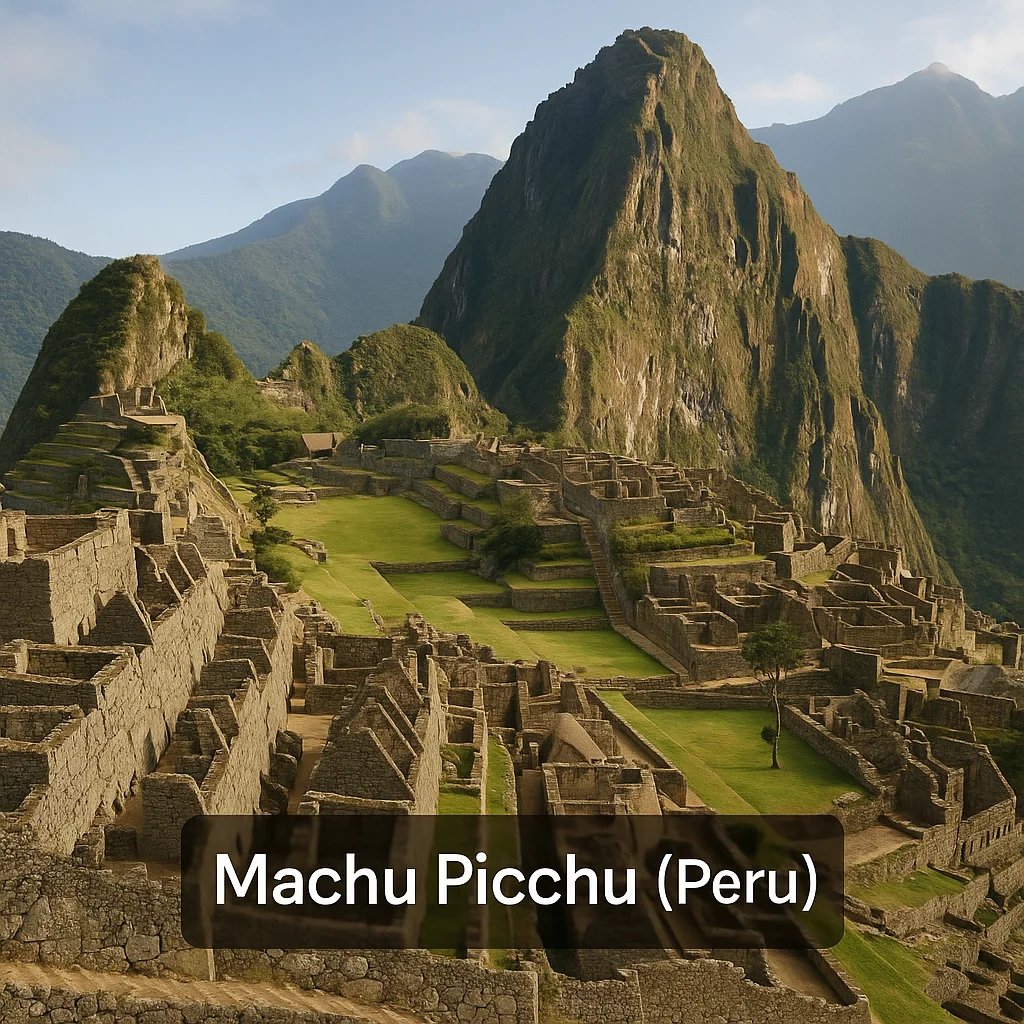
This iconic site is a marvel of engineering, showcasing the impressive architectural skills of the Inca civilization. Visitors can walk through a range of ruins set against a stunning backdrop of mountains, offering a profound sense of history and majesty.
In this guide, you'll learn about the cultural significance of Machu Picchu, the intriguing history behind its construction, and practical tips for planning your visit.
- Country/Region: Peru, Andes Mountains
- Era: 15th-century Inca civilization
- Typical Visit Length: 1–2 days
- Difficulty: Moderate, walking required
- Best Season: May to September (dry season)
- Highlight: Intihuatana stone and panoramic views
🗺️ Where It Is and How to Orient Yourself
Machu Picchu is located in the Andes Mountains of Peru, near the city of Cusco. It is situated on a mountain ridge above the Sacred Valley.
The nearest major city is Cusco, which serves as the primary gateway for visitors arriving by plane. Travelers typically reach Machu Picchu via a train ride from Cusco to the town of Aguas Calientes, followed by a bus journey up the mountain.
While it's possible to visit Machu Picchu as a day trip, an overnight stay in Aguas Calientes allows visitors to explore the site at a more relaxed pace, especially if you want to catch the sunrise over the ruins.
🕰️ History in a Nutshell
Machu Picchu was built in the 15th century by the Inca emperor Pachacuti. It is believed to have served as a royal estate or a religious retreat.
The site's peak period was during the reign of the Inca Empire, but it was later abandoned in the 16th century during the Spanish Conquest.
Machu Picchu remains well-preserved today due to its remote location, which kept it hidden and protected for centuries. It was rediscovered in the early 20th century, and preservation efforts have maintained its enigmatic allure.
⭐ Top Highlights You Should Not Miss
- Intihuatana Stone
- Sun Gate (Inti Punku)
- Temple of the Sun
The Intihuatana Stone, a ritual stone associated with astronomical values, is a highlight not to be missed. It was used by the Incas as an astronomical clock or calendar and offers an enriching cultural insight.
The Sun Gate is the main entrance to Machu Picchu from the Inca Trail, providing a breathtaking view over the entire site at sunrise. Standing at this viewpoint, you can see the full grandeur of the citadel.
The Temple of the Sun, a semicircular structure dedicated to sun worship, showcases stunning Inca stonework. Located in the heart of the ruins, it provides excellent insight into Inca religious practices.
🧱 Architecture, Materials, and Design (Made Simple)
Machu Picchu is primarily constructed from finely cut stone blocks that fit together so snugly that mortar was unnecessary. This construction method suggests both advanced skills and remarkable precision.
The architectural style is distinctly Inca, characterized by polished dry-stone walls and terraces for agriculture. The site's design reflects the Inca's ability to blend their structures harmoniously with the natural landscape.
Notable features include the terraces that cover the slopes around Machu Picchu, which helped in agricultural practices and prevented erosion, and the trapezoidal doorways that are an iconic element of Inca architecture.
🎟️ Visiting Guide (Time, Tickets, and What to Expect)
A typical visit to Machu Picchu can last from a quick two-hour tour to an entire day for a more in-depth exploration. Guided tours are highly recommended to enrich your understanding of the site.
Entry to Machu Picchu involves purchasing a timed ticket, and visitor numbers are limited to protect the site. It's advisable to book tickets in advance, especially during the peak season.
Visiting hours generally align with early morning to late afternoon, with seasonal variations. It's wise to carry water, wear a hat, and plan for varying weather conditions, which can shift quickly in the mountains.
🚆 How to Get There and Move Around
To reach Machu Picchu, most visitors take a train from Cusco to Aguas Calientes, followed by a bus ride up to the site. Walking enthusiasts can consider the challenging but rewarding Inca Trail.
For beginners, approaching the site from Aguas Calientes offers a straightforward route, as buses are frequent and the path to the ruins is well-marked.
Accessibility considerations include steep steps and uneven stones, making it essential to wear sturdy shoes and take your time navigating the ruins.
🌤️ Best Season, Weather, and Time of Day
The best time to visit Machu Picchu is during the dry season, from May to September, when the weather is relatively cool and clear, providing optimal conditions for exploring and taking photos.
Early morning or late afternoon visits are recommended for the most peaceful experience and the best lighting for photography, as well as cooler temperatures.
On rainy days, consider visiting indoor sites or local museums in Aguas Calientes where you can learn more about the Inca history.
⚠️ Safety, Rules, and Respectful Etiquette
When visiting Machu Picchu, wear sturdy walking shoes suitable for uneven ground and potentially slippery stones, particularly after rain.
Respect the cultural and historical significance of the site by abiding by all posted rules, including respecting quiet areas and sacred spaces, and refraining from using flash photography in sensitive areas.
Conservation is vital; do not climb on the ruins or touch fragile carvings. Always stay on the designated paths to help preserve the site for future generations.
Be mindful of altitude, which can affect visitors differently. Staying hydrated and allowing time to acclimatize is key, along with basic precautions against pickpocketing in crowded areas.
🗺️ Nearby Places and a Simple One-Day Itinerary
While in the region, there are several recommended sites to enhance your visit to Machu Picchu, such as the Inca Bridge, Huayna Picchu, and the town of Aguas Calientes itself.
- Morning: Visit the Sun Gate for sunrise and initial views of Machu Picchu.
- Midday: Explore the main attractions including the Intihuatana Stone and Temple of the Sun.
- Afternoon: Visit Huayna Picchu if tickets are available or explore the Inca Bridge.
- Evening: Enjoy a relaxing evening in Aguas Calientes, perhaps visiting a local hot spring.
🧩 Stories, Myths, and Common Questions
Is Machu Picchu the Lost City of Atlantis? While some myths suggest farfetched connections, most historians agree that Machu Picchu was a royal estate or religious site, not the enigmatic Atlantis.
Why was Machu Picchu abandoned? It is believed that the site was vacated after the Spanish Conquest, although it was never discovered by the Spanish.
Can children visit Machu Picchu? Yes, the site is child-friendly, though families should be prepared for some climbing and take appropriate safety measures.
Is hiring a guide worth it? Absolutely, as expert guides can provide historical context and interpret the significance of various structures and artifacts.
📌 Summary and Who This Site Is Best For
- Iconic Inca citadel with stunning mountain views
- Located near Cusco, Peru, accessible via train and bus
- Built in the 15th century; used as a royal estate
- Highlights include the Intihuatana Stone and Sun Gate
- Features distinct Inca stonework and terracing
- Visit lengths range from a few hours to a full day
- Best visited during the dry season (May–September)
- Respect local rules and conservation efforts
- Nearby attractions include Huayna Picchu and the Inca Bridge
- Geological and astronomical marvel with rich history
Machu Picchu will captivate history enthusiasts, nature lovers, and photographers with its remarkable blend of stunning landscapes and historical intrigue. The site offers a glimpse into the advanced civilization and enigmatic culture of the Incas.
For families, adventure seekers, and casual tourists, the journey to Machu Picchu is an enriching endeavor filled with cultural learning and breathtaking scenery.
Visit with an open mind and a spirit of respect to make the most of this unforgettable experience, keeping in mind the cultural importance and natural beauty of Machu Picchu.