🏛️ Leptis Magna (Libya)
🔎 Quick Facts and Why It Matters
Leptis Magna is an ancient Roman city located in present-day Libya, renowned for its remarkable and well-preserved ruins. It offers a glimpse into the grandeur of Roman architecture and urban planning at its height.
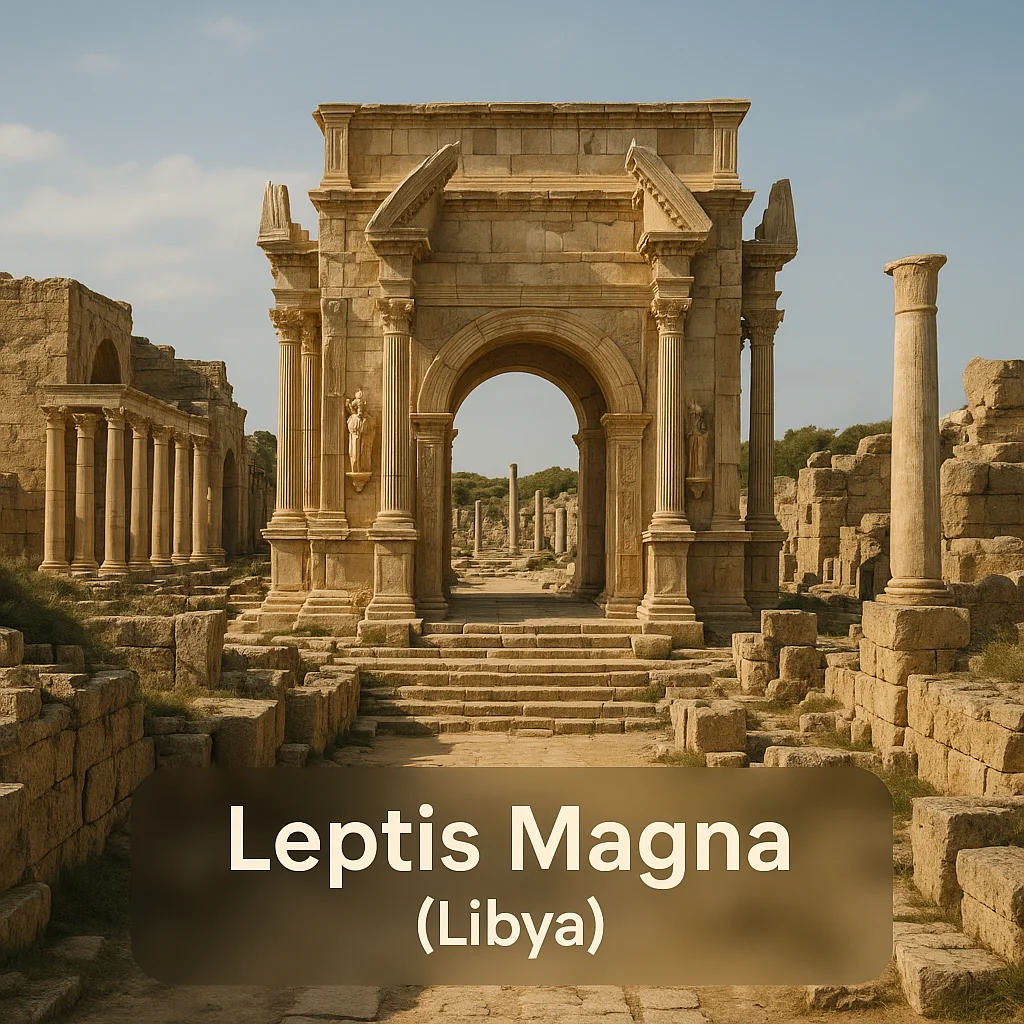
The site stands out due to its large, walkable ruins which reveal the splendor of Roman civilization outside Italy. Visitors can stroll through extensive remains including theatres, baths, and market areas, all offering insights into Roman daily life.
This guide will walk you through the essentials of visiting Leptis Magna, from historical context to practical advice on making the most of your trip. Learn about the highlights, architecture, and key details to enrich your visit.
- Country/Region: Libya, North Africa
- Era: Roman Empire, 1st century BC to 3rd century AD
- Typical Visit Length: 3–5 hours
- Access Difficulty: Moderate, with uneven surfaces
- Best Season: Spring and autumn for mild weather
- Main Highlight: The Arch of Septimius Severus
🗺️ Where It Is and How to Orient Yourself
Leptis Magna is located in the Tripolitania region of Libya, east of the modern-day city of Khums. It lies near the Mediterranean coast, lending it mild weather most of the year.
The nearest major city is Tripoli, which serves as the primary gateway for international visitors, reachable via its main airport. While it is possible to visit Leptis Magna as a day trip from Tripoli, an overnight stay nearby allows for a more comprehensive experience.
Mentally picture the site as a sprawling set of ruins stretching along the coast. Its position on the coastal plain makes it an accessible destination, though some walking over uneven terrain is required to fully explore the ancient city.
🕰️ History in a Nutshell
Leptis Magna was originally founded by Phoenicians around the 7th century BC but flourished under Roman rule, especially during the reign of the Emperor Septimius Severus in the 3rd century AD, who hailed from the city.
The city served as a vibrant trade center in the Roman Empire, linking Africa with the Mediterranean world. It boasted grand public buildings, markets, and a bustling port.
After the fall of the Roman Empire and due to shifting trade routes and repeated attacks, the city gradually fell into decline. The remnants of its glorious past remain remarkably intact due to the encroaching desert sands preserving its structures.
⭐ Top Highlights You Should Not Miss
- The Arch of Septimius Severus
- The Roman Theatre
- The Hadrianic Baths
- The Basilica of Severus
- The Market Place
- The Amphitheatre
The Arch of Septimius Severus stands as a triumphal entry point to the city, monumental in both scale and design. A wide-angle photo fully captures its grandeur, framed against the clear Libyan sky.
The Roman Theatre is another marvel, providing an immersive view of ancient entertainment venues. From the top tier, visitors can enjoy a sweeping view of the stage and surrounding landscapes.
The Hadrianic Baths offer insight into Roman leisure and public hygiene practices. Walk through its halls to admire the intricate mosaic floors and towering columns.
The Basilica of Severus showcases classic Roman basilica architecture and was used as a venue for civic meetings. Its sheer size is best appreciated from a central viewpoint where the full structure is visible.
The Market Place is a must-see for a sense of Roman commerce. Visitors can walk through arcades where stalls once brimmed with goods, offering the perfect backdrop for photographs.
The Amphitheatre, just outside the main city area, nests in a natural depression. It hosted gladiatorial games, and a view from the top terraces places the arena in its complete geographical context.
🧱 Architecture, Materials, and Design (Made Simple)
Leptis Magna showcases Roman architecture at its finest, with structures made primarily from limestone and marble. The buildings feature intricate carvings and reliefs typical of Roman design.
The city embodies Roman urban planning with columns, arches, and vaults as defining architectural elements. Relief sculptures and intricate mosaics adorn many of the public buildings and baths.
A unique aspect of Leptis Magna is the blend of Roman and local African architectural styles, noticeable in specific designs and decorative elements. While many structures remain original, some parts have undergone careful restoration.
🎟️ Visiting Guide (Time, Tickets, and What to Expect)
Visitors typically spend between 3 to 5 hours exploring the expansive ruins. Entry usually requires a ticket, with guided tour options often available to enrich the experience.
The site is generally open from morning to late afternoon, but these hours can change based on season and local holidays. Checking in advance is advisable.
First-time visitors should arrive early to beat the crowds and the midday heat. It is recommended to carry water and wear a hat for sun protection, as shade is limited.
🚆 How to Get There and Move Around
Travelers can reach Leptis Magna from Tripoli via taxi or rental car, with public transport sources being limited. Those driving should head east along the coastal road, a scenic route offering glimpses of the Mediterranean.
The site itself has only one main entrance; once inside, the ruins are best explored on foot. Prepare for uneven paving stones and some uphill paths.
The site is moderately accessible, though some areas might be challenging for those with mobility issues. Consider comfortable footwear to navigate the ancient streets.
🌤️ Best Season, Weather, and Time of Day
The optimal times to visit are spring and autumn when temperatures are milder, avoiding the extreme summer heat. During these seasons, the site sees fewer crowds, allowing for a more enjoyable exploration.
The best times for photography and avoiding heat are early morning and late afternoon, when the light casts a soft glow on the ruins. These periods also tend to offer cooler temperatures for walking.
On rainy days, rare but possible, consider exploring the covered sections of the Hadrianic Baths or nearby indoor exhibits.
⚠️ Safety, Rules, and Respectful Etiquette
Wear comfortable walking shoes to manage uneven terrain and steps. Dress modestly in respect of local traditions and bring a sun hat for protection.
Be mindful of cultural sensitivities; keep noise levels low in quiet areas and respect all posted signs. Flash photography may be restricted; always check local rules.
Help protect the site by avoiding climbing on structures or touching fragile carvings. Stick to designated paths to preserve the delicate surface stones.
Be cautious of slippery surfaces after rain and watch out for the occasional loose stone. While crime rates are low, remain vigilant with personal belongings.
🗺️ Nearby Places and a Simple One-Day Itinerary
After visiting Leptis Magna, consider exploring nearby attractions such as the modern city of Khums, offering local culture and dining.
Just a short drive away is the picturesque coastal town of Sabratha, another Roman archaeological site with well-preserved theatres and temples.
The small but insightful Tripoli Museum offers historical context on the region, complementing a visit to the ruins.
- Morning: Start early at Leptis Magna, exploring the Arch of Septimius Severus and Roman Theatre
- Midday: Enjoy lunch in Khums, experiencing local Libyan cuisine
- Afternoon: Visit Sabratha for more Roman ruins or relax along the Mediterranean coast
- Evening: Return to Tripoli for dinner and a restful night
🧩 Stories, Myths, and Common Questions
Was Leptis Magna really lost to the sands?
No, the city wasn't lost but rather abandoned and naturally preserved under desert sands until rediscovered by archaeologists.
Is Leptis Magna safe for families?
Yes, the site is relatively safe for children, provided they are supervised, particularly around uneven paths and steps.
Do you need a guide to visit?
A guide can greatly enhance your understanding of the site; however, it's possible to explore independently with a good map or guidebook.
How difficult is the walk?
The terrain is mostly flat with some uneven stones. Comfortable footwear will make the walk easier, even for novice explorers.
Are there any legends associated with Leptis Magna?
While myths are scarce, the historical significance and detailed preservation offer stories of Roman grandeur and daily life.
📌 Summary and Who This Site Is Best For
- An ancient Roman city of great historical value
- Located in Libya's Tripolitania region
- Initial settlement by Phoenicians; Roman expansion
- Highlights include the Arch of Septimius Severus
- Renowned for Roman architecture and preserved mosaics
- Typical visit range: 3 to 5 hours
- Best during spring or autumn for mild weather
- Follow safety rules for a pleasant and safe tour
- Nearby sites: Khums, Sabratha, Tripoli Museum
- Pivotal history: governed by Rome’s African emperor
Leptis Magna is a compelling destination for history enthusiasts, photographers, and families eager to experience a piece of Roman history outside Europe. Its impressive preservation makes the effort to reach it worthwhile.
Visitors will appreciate the city's grandeur and the insight it provides into ancient urban life. The welcoming local community and rich Libyan culture enhance the overall experience.
Consider visiting Leptis Magna to connect with a storied past while enjoying the serene beauty of its coastal surroundings. Always travel responsibly and respect the legacy preserved for future generations.