🏛️ Hampi (India)
🔎 Quick Facts and Why It Matters
Hampi is an ancient village in the southern Indian state of Karnataka, known for its rich history and stunning ruins from the Vijayanagara Empire.
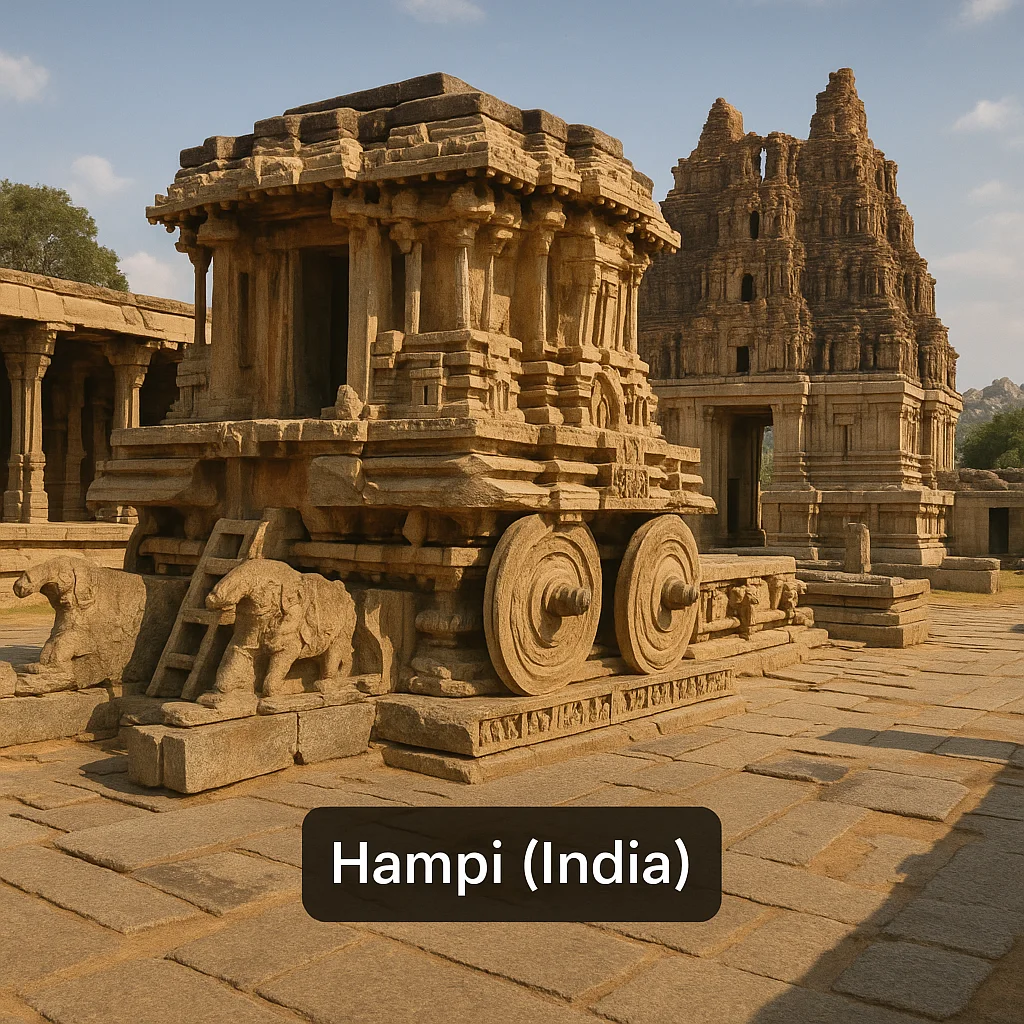
Once the capital of a powerful Hindu kingdom, Hampi offers an immersive experience with its walkable ruins, providing both big viewpoints and intricate architectural marvels.
This guide will introduce you to the significance of Hampi, offer tips for navigating its vast landscape, and highlight the must-see ruins that define this UNESCO World Heritage site.
- Country: India (Karnataka)
- Era: Vijayanagara Empire (14th-17th century)
- Typical Visit Length: 1 to 3 days
- Accessibility: Moderate (uneven terrain, need for extensive walking)
- Best Season: October to February (pleasant weather)
- Highlight: Vitthala Temple and Stone Chariot
🗺️ Where It Is and How to Orient Yourself
Hampi is situated in the state of Karnataka, approximately 350 kilometers northeast of the major city of Bangalore.
The nearest major city for travelers is Hospet, which serves as a typical gateway to Hampi. Hospet is accessible by rail and road, providing a convenient starting point for your exploration.
For visitors looking to fully immerse themselves in Hampi's history, it is advisable to plan an overnight stay as there is much to see and explore. The site sprawls across a hilly, rocky landscape that is typical of a river basin region.
🕰️ History in a Nutshell
Hampi was constructed by the rulers of the Vijayanagara Empire in the 14th century and evolved into a thriving metropolis known for its prosperity and grand architectural projects.
The city served as a major trade center and religious hub, at its peak attracting merchants and visitors from far and wide.
Over time, invasions and battles led to its decline and eventual abandonment in the late 16th century. The grandeur of Hampi's remains today echoes its former magnificence, drawing historians and tourists alike.
⭐ Top Highlights You Should Not Miss
- Virupaksha Temple
- Vitthala Temple
- Stone Chariot
- Hampi Bazaar
- Hemakuta Hill Temples
The Virupaksha Temple is one of the oldest structures in Hampi, revered for its towering gopuram (entrance tower) and significant spiritual heritage. Capture the entire façade in frame from the main entrance pathway, capturing the ancient structure's full glory.
The Vitthala Temple, known for its intricate carvings and musical pillars, is a masterpiece of Vijayanagara architecture. For an unforgettable view, take a wide photo with the Stone Chariot fully visible, showcasing the temple in its entirety with the chariot in the foreground.
The Stone Chariot is a remarkable monument found in the courtyard of the Vitthala Temple complex. Considered an iconic symbol of Hampi, it is best viewed in soft morning light with the entire complex in context.
The Hampi Bazaar, once a lively marketplace, now offers glimpses into daily life during the Vijayanagara period. Walk through the entire stretch to soak up the historic vibe.
For panoramic views of the ruins, visit the Hemakuta Hill Temples, which offer breathtaking vistas of the ancient city and its surrounding landscape.
🧱 Architecture, Materials, and Design (Made Simple)
The buildings of Hampi are primarily constructed from granite, which was locally sourced from the area's rocky terrain. This hard stone enabled the creation of intricately carved structures.
The architectural style reflects influences from South Indian Dravidian design, characterized by towering gopurams (entrance gateways), pillared halls, and ornate sculptures.
Unique elements such as the musical pillars of the Vitthala Temple and the adorned stone chariots indicate the empire's attention to detail and artistic capabilities.
While many structures remain in their original ruined state, careful restoration efforts have stabilized several key sites, respectfully preserving their historical essence.
🎟️ Visiting Guide (Time, Tickets, and What to Expect)
A quick visit to Hampi could take about a day, focusing on a few major sites, while a more detailed exploration could extend to 2-3 days, allowing time to see more remote areas and savor each temple complex.
Entrance to the main sites often requires a ticket, with separate fees for the major temples and monuments. Guided tours are available and recommended for a deeper understanding of the ruins.
Hampi's sites generally open in the morning and close around dusk, but these times can vary with seasons and holidays, so check in advance. It's advised to carry water, wear comfortable shoes, and dress appropriately for the elements and sacred spaces.
🚆 How to Get There and Move Around
Travelers can reach Hampi primarily via the Hubli Airport or the rail junction at Hospet. Local transportation options include taxis, buses, and rented bicycles, enabling efficient exploration of the area.
Walking is also common, but some areas are less accessible due to rocky ground. Beginners should start at the Virupaksha Temple, where paths are relatively straightforward.
While many paths are well-trodden, expect uneven stones and occasional steep steps. Those with mobility issues should plan cautiously, opting for local guides where needed.
🌤️ Best Season, Weather, and Time of Day
October to February remains Hampi's peak visiting season, thanks to its cooler temperatures and minimal rainfall, making outdoor explorations pleasant.
Photographers will benefit from visiting in the early morning or late afternoon when the light accentuates the stone carvings and the sites are less crowded.
If rain interrupts your plans, consider visiting local museums or indoor archaeological galleries in nearby Hospet for a dry alternative.
⚠️ Safety, Rules, and Respectful Etiquette
Visitors are advised to wear sturdy footwear for navigating Hampi's uneven terrain and to remain respectful in religious areas by maintaining a quiet demeanor.
Photography is generally permitted, though flash and drones may be restricted. Always heed posted signs regarding access and conduct.
Given the site’s archaeological significance, refrain from climbing on ruins or touching ancient carvings. Follow trails to help preserve the integrity of the site.
Be aware of environmental risks such as slippery stones after rain, occasional high temperatures, and keeping belongings secure amidst crowds.
🗺️ Nearby Places and a Simple One-Day Itinerary
Include nearby stops such as the Archaeological Museum at Kamalapura, the Tungabhadra Dam, or the quaint town of Anegundi, which also boasts historical relevance.
- Morning: Visit the Virupaksha Temple and walk around Hampi Bazaar.
- Midday: Explore the Vitthala Temple and enjoy a break with local cuisine in Hospet.
- Afternoon: Head to the Hemakuta Hill Temples for panoramic views and serene temples.
- Evening: Relax at the banks of the Tungabhadra River for a tranquil sunset.
🧩 Stories, Myths, and Common Questions
Is Hampi's Stone Chariot older than the Roman Empire? Though often compared in scale to ancient wonders, the chariot dates back to the 16th century, well after the Roman era.
Why is Hampi sometimes referred to as a "lost city"? After its decline, nature began reclaiming Hampi until its rediscovery and recognition as a cultural landmark.
Are the ruins difficult to navigate for children? While the terrain can be challenging, many families find Hampi a rewarding experience with careful planning.
Is hiring a guide worth considering? For history enthusiasts, engaging a knowledgeable guide can greatly enrich the understanding of Hampi's vast stories.
📌 Summary and Who This Site Is Best For
- Famous site of the former Vijayanagara Empire
- Located in Karnataka, India
- Known for its historical and architectural significance
- Highlights include the Vitthala Temple and Stone Chariot
- Built from locally sourced granite with intricate carvings
- Plan for 1 to 3 days to explore
- Best weather from October to February
- Respectful attire and behavior expected
- Nearby attractions enhance the visit
- Remarkable for its storied history and visual impact
Hampi appeals to history buffs, architecture enthusiasts, and families who delight in adventurous walking tours through ancient landscapes.
The site provides a deep, tangible interaction with history, making it worth the trek for those who appreciate exploring cultural wonders and relics of the past.
Whether you are there for the rich cultural tapestry or the breathtaking ruins, visiting Hampi offers a unique, reflective experience that supports heritage conservation and sustainable tourism.