🏛️ Great Zimbabwe (Zimbabwe)
🔎 Quick Facts and Why It Matters
Great Zimbabwe is an ancient city in the southeastern hills of Zimbabwe, known for its extraordinary stone constructions. It is iconic for showcasing sophisticated design and engineering techniques dating back to the medieval period.
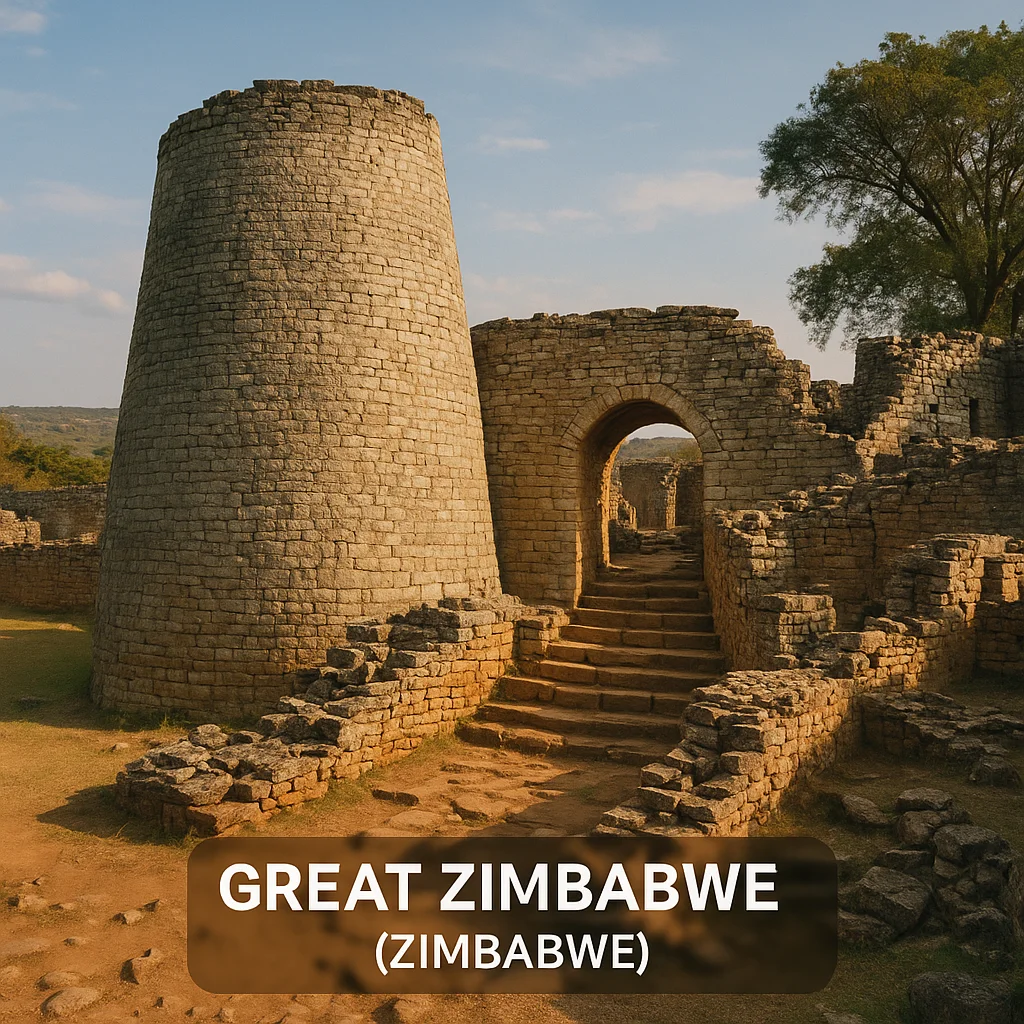
This heritage site is unique due to its grand architecture, exemplified by massive stone walls built without mortar. For visitors, Great Zimbabwe offers walkable ruins that provide insights into ancient African civilizations. It’s a place where history enthusiasts, educators, and tourists alike can explore history in a breathtaking natural setting.
In this guide, you’ll learn about the fascinating history, architectural marvels, and must-visit spots within Great Zimbabwe. You'll also find practical tips for planning your visit, along with insights into the cultural significance of this iconic site.
- Country/Region: Zimbabwe, Southern Africa
- General Era: 11th to 15th centuries
- Typical Visit Length: 2-3 hours
- Difficulty: Moderate walking, some steps
- Best Season: April to August (dry season)
- Highlight: The Great Enclosure, Hill Complex
🗺️ Where It Is and How to Orient Yourself
Great Zimbabwe is located in the southeastern central region of Zimbabwe, near the city of Masvingo. It is in a picturesque landscape surrounded by hills and valleys, making it an idyllic location for exploring ancient ruins amidst nature.
The nearest major city is Harare, which is about 300 kilometers away. Visitors typically arrive via Bulawayo airport or Harare’s international airport and then take a road trip to Masvingo. Driving or hiring a car is recommended for the flexibility and convenience it offers.
While it is possible to visit Great Zimbabwe as a long day trip from Masvingo, an overnight stay is often preferred. This allows for a more relaxed exploration and a chance to soak in the historical ambiance of this significant site.
🕰️ History in a Nutshell
Great Zimbabwe was constructed by the ancestors of the Shona people between the 11th and 15th centuries. It served as the capital of the Kingdom of Zimbabwe during the country’s Late Iron Age.
The city was a major trading center, connecting trade routes extending to the Indian Ocean, attracting merchants from as far as Persia and China. Its peak period was between the 13th and 14th centuries, after which it gradually declined due to overpopulation and resource depletion.
The remains stand today as a testament to the advanced construction techniques and vibrant culture of its time, showcasing impressive stone structures that continue to fascinate historians and visitors alike.
⭐ Top Highlights You Should Not Miss
- The Great Enclosure
- Hill Complex
- The Valley Ruins
The Great Enclosure is the largest single ancient structure in sub-Saharan Africa, with its high granite walls curving around a series of smaller ruins. Best viewed from a distance, the full structure is visible, offering a complete perspective of its grandeur.
The Hill Complex, also known as the Acropolis, is situated on top of a rocky hill and was likely used for religious or political purposes. The entire façade is visible when standing in the valley, providing a scenic backdrop for photographs.
The Valley Ruins consist of smaller houses and public buildings, offering a close-up look at the daily life of the ancient Zimbabwean civilization. Walking through the site, visitors can appreciate the intricate details of stonework up close.
🧱 Architecture, Materials, and Design (Made Simple)
The builders of Great Zimbabwe used local granite stone, shaping it into rectangular blocks and assembling the walls without mortar. This dry-stone technique is a defining feature of the site’s architecture.
The architectural style shows influences from various cultures, reflecting the extent of trade and interaction the society had with distant lands. Unique elements include massive walls, some over five meters high, and conical towers symbolizing leadership or authority.
While parts of the ruins have undergone restoration to preserve the structures for future generations, care has been taken to maintain the original techniques and appearance, allowing visitors to experience the ancient ambiance authentically.
🎟️ Visiting Guide (Time, Tickets, and What to Expect)
A quick visit to Great Zimbabwe can take around two hours, while a deeper exploration may require up to half a day. Entry typically involves a ticket fee, which supports the site's maintenance and conservation efforts.
Visitors usually enter during daylight hours, from morning until late afternoon. It’s advised to check for any seasonal changes in operating hours before planning your trip. Guided tours are available, offering insights and stories that enrich the visit.
First-time visitors should arrive early to avoid crowds, carry water to stay hydrated, and wear comfortable walking shoes. A hat and sunscreen are also recommended due to the open, sunny paths.
🚆 How to Get There and Move Around
Travelers can reach Great Zimbabwe by public transport, private taxi, or self-drive. For those driving, the roads are generally well-marked, making navigation relatively straightforward.
The site has a main entrance where visitors can start their exploration. Walking paths are marked, although some areas can be steep or rocky. Those needing assistance should plan for mobility challenges, particularly in the Hill Complex.
🌤️ Best Season, Weather, and Time of Day
The best time to visit is during the dry season, from April to August, when the weather is cooler and less prone to sudden rain showers. This allows visitors to enjoy uninterrupted exploration and better photographic opportunities.
Early morning or late afternoon visits provide the best light for photography and the chance to avoid the midday heat. In case of rain, nearby cultural centers or museums can serve as alternative indoor activities.
⚠️ Safety, Rules, and Respectful Etiquette
Comfortable walking shoes with good grip are essential due to uneven terrain and stone steps. Respect local customs by being quiet in sacred areas and observing signs for restricted zones.
Photography is generally allowed, though the use of flash or drones may be restricted, especially near wildlife or cultural objects. Stay on designated paths to prevent wear and tear on delicate structures.
While the site is relatively safe, visitors should be cautious of slippery stones, heat exposure, and personal belongings due to occasional crowds.
🗺️ Nearby Places and a Simple One-Day Itinerary
Following your exploration of Great Zimbabwe, several nearby attractions are worth visiting. These include Lake Mutirikwi, Kyle Recreational Park, and the Great Zimbabwe Museum.
- Morning: Explore Great Zimbabwe Ruins
- Midday: Visit Great Zimbabwe Museum
- Afternoon: Take a short trip to Lake Mutirikwi
- Evening: Relax with a scenic view at a nearby lodge
🧩 Stories, Myths, and Common Questions
- Myth: Great Zimbabwe was built by foreigners. Truth: Evidence supports it being built by local Shona ancestors.
- Misunderstanding: Great Zimbabwe is often called a “lost city.” Clarification: It was well-known historically and abandoned due to resource depletion.
- Visitor Question: Is the site suitable for children? Answer: Yes, but watch for uneven surfaces. Short walks are kid-friendly.
- Guide Worth It?: For first-timers, guided tours can enhance understanding of cultural nuances and history.
📌 Summary and Who This Site Is Best For
- What It Is: A medieval city with iconic stone ruins
- Where It Is: Southeastern Zimbabwe, near Masvingo
- Key History Takeaway: Capital of an ancient kingdom, thriving through trade
- Top Highlights: The Great Enclosure, Hill Complex
- Architecture/Materials: Dry-stone walled structures
- Visit Length Guidance: 2-3 hours recommended
- Best Season/Time: April to August, early morning or late afternoon
- Safety/Etiquette: Stay on paths, be respectful in sacred areas
- Nearby Add-ons: Museum, Lake Mutirikwi, Kyle Recreational Park
- One Memorable Fact: Largest ancient structure in sub-Saharan Africa
Great Zimbabwe offers something for every kind of traveler, whether you're a history enthusiast, a family looking for educational outings, or a photographer interested in capturing historical sites.
Visiting Great Zimbabwe is an opportunity to step back in time and appreciate the engineering brilliance and cultural richness of ancient southern Africa. The site’s remote yet accessible location makes it a rewarding addition to any travel itinerary.
This serene and historically rich destination welcomes all who wish to explore its majestic past while supporting its preservation for future generations.