🏛️ Ephesus (Turkey)
🔎 Quick Facts and Why It Matters
Ephesus is one of the most well-preserved ancient cities in the world, located in modern-day Turkey. Once a thriving metropolis of the Roman Empire, it is now a fascinating archaeological site that offers a glimpse into ancient urban life.
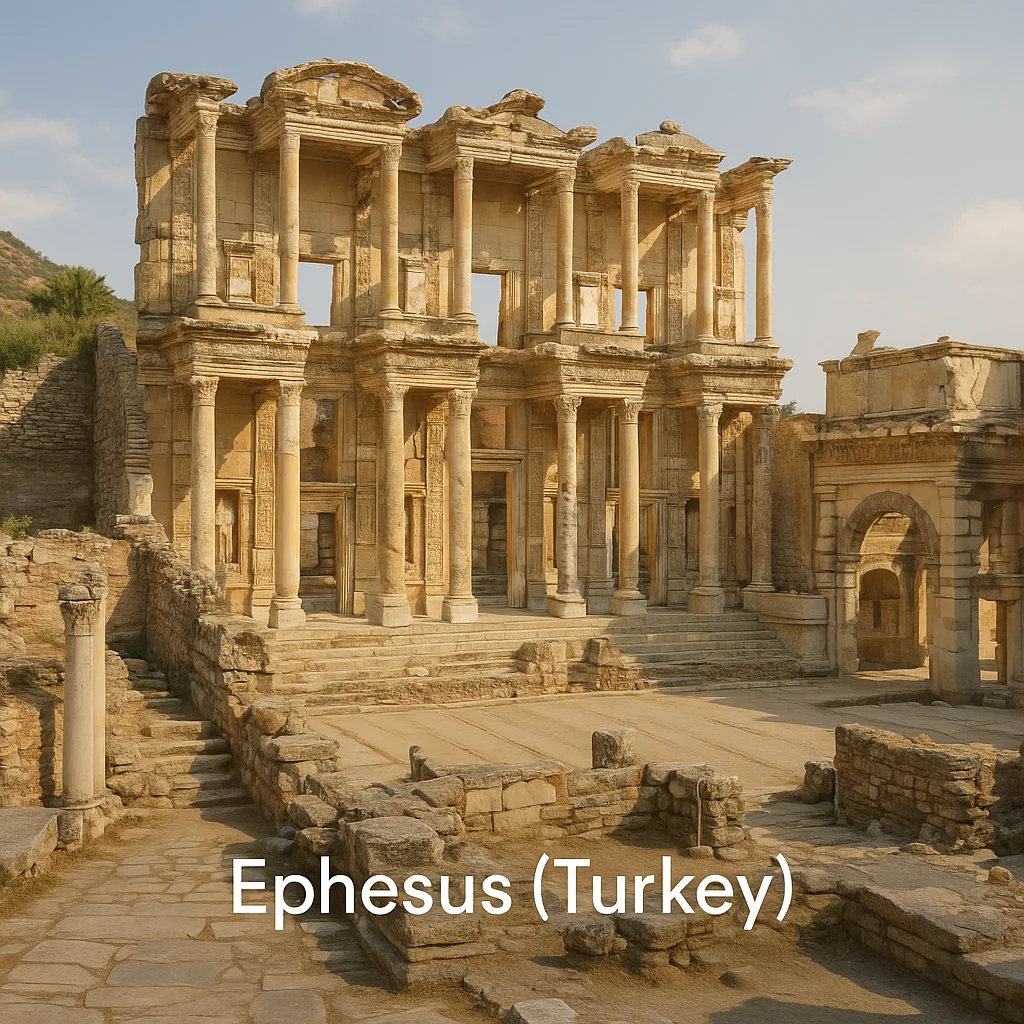
The site is celebrated for its remarkable ruins and significant historical influences, making it a must-visit for history enthusiasts and casual tourists alike. Ephesus provides a walkable experience where visitors can explore ancient streets, grand theatres, and intricate temples, all surrounded by picturesque landscapes.
This guide will help beginners understand the significance of Ephesus, featuring its history, architectural highlights, visiting tips, and more.
- Country/Region: Turkey, Aegean Coast
- General Era: Roman Empire, 1st century BC to 4th century AD
- Typical Visit Length: 2 to 5 hours
- Difficulty: Moderate walking, with some uneven grounds
- Best Season: Spring and autumn
- Highlights: Library of Celsus, Great Theatre, Temple of Artemis
🗺️ Where It Is and How to Orient Yourself
Ephesus is located near Selçuk in the Aegean region of Turkey. It's a short distance from the coast, nestled in a small valley surrounded by hills.
The nearest major city is İzmir, which is about an hour's drive from the site. İzmir's airport serves as the main gateway for international and domestic visitors, offering various transport options to reach Ephesus.
While visiting Ephesus can be managed as a day trip from nearby locations, an overnight stay in the charming town of Selçuk might offer a more relaxed experience and allow you to explore additional nearby attractions.
🕰️ History in a Nutshell
Ephesus was constructed by the ancient Greeks around the 10th century BC and was later expanded and flourished under Roman rule, becoming one of the most important cities of the Roman Empire.
Primarily a commercial center, Ephesus was also renowned for its Temple of Artemis, one of the Seven Wonders of the Ancient World.
The city was abandoned over time due to the silting of its harbor and repeated invasions. Today, the ruins offer insight into its past glory and significance in ancient times.
⭐ Top Highlights You Should Not Miss
- Library of Celsus
- Great Theatre
- Temple of Artemis
- Terrace Houses
- Hadrian's Temple
The Library of Celsus stands as a testament to ancient Roman architecture with its grand façade fully visible and representing a stunning photo opportunity, especially in the morning light.
The Great Theatre, carved into the side of a mountain, seats up to 25,000 spectators and offers an expansive view of the site and surrounding countryside when viewed from its upper tiers.
Although largely in ruins now, the Temple of Artemis’s remaining columns outline the grandeur it once had; you can visualize its historic importance through signs that share its storied past.
Hadrian's Temple displays intricate reliefs and features a unique rounded design at its entrance, best appreciated up close where these artistic details can be fully observed.
The Terrace Houses provide insight into the residential life of the wealthy Ephesians, showcasing preserved frescoes and mosaics within an enclosed area that is best explored with a local guide.
🧱 Architecture, Materials, and Design (Made Simple)
Ephesus was primarily constructed with locally sourced marble and stone, utilizing traditional Roman building techniques that included arches, columns, and vast public spaces.
Architecturally, it incorporates classical styles and recognizably Roman influences with ornate touches, seen in the detailed carvings and relief sculptures.
Unique features include the use of intricate column designs and decorative inscriptions that adorned buildings like the Library of Celsus, enhancing their grandeur and beauty.
Although many structures have undergone restoration to preserve their historical value, a significant part of the site reflects its original state, offering an authentic glimpse into the past.
🎟️ Visiting Guide (Time, Tickets, and What to Expect)
Most visits to Ephesus range from 2 to 5 hours, depending on one's interest and pace. A standard ticket usually covers the main archaeological area.
Separate entry may be required for attractions like the Terrace Houses, with guided tours often available to enrich your understanding.
The site typically opens to the public in the morning and closes by late afternoon, but opening times can change seasonally, so it’s wise to check before planning your visit.
For first-time visitors: arrive early to avoid crowds, wear comfortable shoes, bring water, a hat, and sunscreen to tackle the sun-exposed site.
🚆 How to Get There and Move Around
Visitors can reach Ephesus by taxi, public buses from İzmir, or rental cars, all of which offer flexibility in timing and route.
The main entrance is beginner-friendly, with facilities available at the start. Though largely accessible, some areas might require careful navigation due to uneven surfaces and ancient staircases.
🌤️ Best Season, Weather, and Time of Day
The best times to visit Ephesus are during spring (April to June) and autumn (September to October) when the weather is moderate and the crowds thinner.
Mornings and late afternoons offer the best lighting for photography and a more comfortable temperature for exploring.
If rain occurs during your visit, exploring nearby indoor attractions or museums in Selçuk provides a solid alternative.
⚠️ Safety, Rules, and Respectful Etiquette
Visitors should wear sturdy shoes suitable for uneven terrain and dress respectfully, especially when visiting sacred or quiet areas within the site.
Flash photography and drones might be restricted, and it’s crucial to adhere to posted signs and rules to ensure the preservation of these ancient ruins.
Stay on marked paths, do not climb on the structures, and avoid touching fragile carvings to prevent damage.
Practical risks include slippery stones, particularly when wet, and the potential for heat exposure in peak summer, so stay hydrated and shaded where possible.
🗺️ Nearby Places and a Simple One-Day Itinerary
The Ephesus Museum in Selçuk complements the ancient site with further artifacts and exhibits indoors.
The House of the Virgin Mary, a significant religious site, lies nearby and provides a serene atmosphere for contemplation.
St. John's Basilica offers historical insight into the region’s Christian past and is a short drive from Ephesus.
- Morning: Explore Ephesus starting at the Library of Celsus and the Great Theatre.
- Midday: Visit the Ephesus Museum in Selçuk for lunch and more historical context.
- Afternoon: Continue to the House of the Virgin Mary for spiritual reflection.
- Evening: Enjoy a local dinner in Selçuk with views of the stunning landscape.
🧩 Stories, Myths, and Common Questions
Q: Is Ephesus the same age as ancient Rome? A: Ephesus predates Roman control, with Greek influences from the 10th century BC.
Q: Are there any myths surrounding Ephesus? A: Many tales attribute it to Amazon warrior women, although this is largely folklore.
Q: Is Ephesus an actual "lost city"? A: No, scholars never lost track of its location; it was abandoned over time due to economic shifts.
Q: Is the site strenuous to walk? A: While parts are uneven, the main route is manageable with breaks.
Q: Should I hire a guide? A: Guides enhance understanding, offering detailed insights that aren't available from signs alone.
📌 Summary and Who This Site Is Best For
- Ephesus: An ancient city now a major archaeological site
- Located in Turkey's Aegean region near Selçuk
- Key History: Flourished under Roman Empire, known for its stunning architecture
- Top Highlights: Library of Celsus, Great Theatre, Temple of Artemis
- Architecture: Roman influences with marble and detailed carvings
- Visit Length: Typically 2–5 hours
- Best Season/Time: Spring and autumn, early morning/late afternoon
- Safety/Etiquette: Wear sturdy shoes, respect no-climb rules
- Nearby Add-Ons: Ephesus Museum, House of the Virgin Mary
- Memorable Fact: Home to the Temple of Artemis, one of the Seven Wonders
Ephesus appeals to a broad audience, including history buffs, families, and photographers keen to capture its ancient glory.
The site offers a unique chance to walk through history, providing rich educational experiences against a backdrop of beautiful ruins.
Visiting Ephesus offers a respectful journey into the past, encouraging all to appreciate and help preserve its enduring legacy.