🏛️ Chichén Itzá (Mexico)
🔎 Quick Facts and Why It Matters
Chichén Itzá is a world-famous archaeological site located in Mexico, known for its impressive pyramids and well-preserved ruins that offer a glimpse into the ancient Maya civilization. This site stands as a testament to the ingenuity and cultural richness of the Maya people.
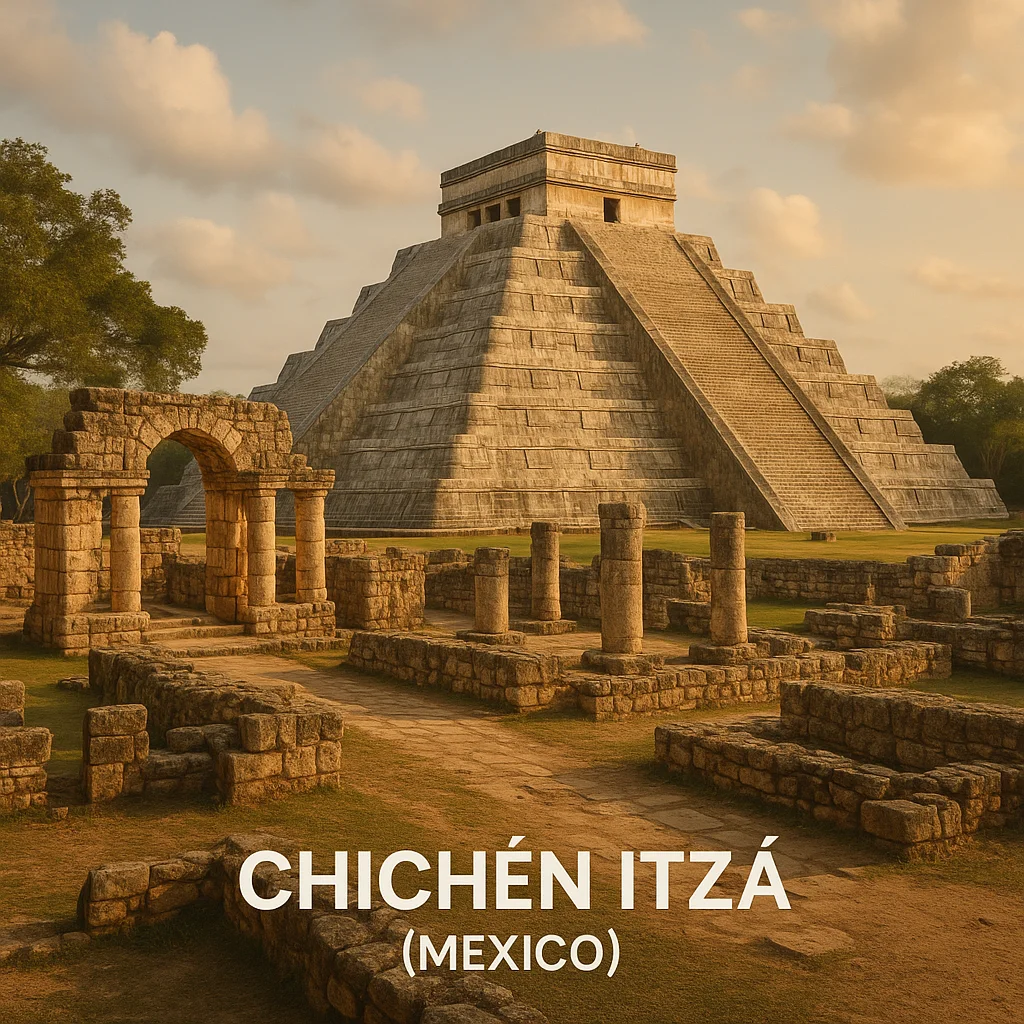
Visitors to Chichén Itzá can explore sprawling walkable ruins, offering panoramic viewpoints and a sense of stepping back in time. The site is vast, with numerous structures that showcase the architectural brilliance of the Maya civilization.
This guide aims to introduce you to the fascinating world of Chichén Itzá, offering insights into its history, architecture, and must-see highlights, ensuring you have a rich and informative visit.
- Location: Yucatán Peninsula, Mexico
- Era: Peak in the Late Classic period (around 600–900 AD)
- Typical Visit Length: 2 to 4 hours
- Exploration Difficulty: Moderate (due to uneven ground)
- Best Season: Winter months (November to March)
- Key Highlight: El Castillo (Temple of Kukulcán)
🗺️ Where It Is and How to Orient Yourself
Chichén Itzá is situated in the Yucatán Peninsula of Mexico, a region known for its rich history and vibrant culture. The site is approximately 120 kilometers from the city of Mérida, which serves as a convenient gateway for visitors.
Travelers often visit Chichén Itzá as part of a day trip from major tourist hubs like Cancún or Playa del Carmen. However, staying overnight in nearby towns such as Valladolid offers a more relaxed exploration experience.
Located in a lush, tropical setting, Chichén Itzá lies on relatively flat terrain, making it accessible for visitors of all ages. The site is an excellent representation of ancient Maya civilization nestled amidst the expansive jungle landscape.
🕰️ History in a Nutshell
Chichén Itzá was built by the Maya people, with its origins tracing back to the Classic period around the 6th century AD. The city functioned as a major regional center, featuring temples, palaces, and ball courts.
The site reached its zenith between 600 and 900 AD and remained an influential power until around 1200 AD. During its peak, Chichén Itzá was a hub for political, economic, and religious activities.
Chichén Itzá eventually declined due to a combination of factors, including internal strife and changing trade patterns. Today, it remains a significant archaeological site, preserved due to its cultural importance and historical value.
⭐ Top Highlights You Should Not Miss
- El Castillo (Temple of Kukulcán)
- The Great Ball Court
- The Temple of the Warriors
El Castillo, also known as the Temple of Kukulcán, is arguably Chichén Itzá's most iconic structure. This stepped pyramid is renowned for its astronomical significance, especially during the equinoxes when the shadow of a serpent appears to crawl down its steps. The wide view shows the full pyramid standing majestically against the sky.
The Great Ball Court is the largest and most well-preserved of its kind in ancient Mesoamerica. Visitors can explore the entire court, noticing the precisely carved stone rings high up on the walls, through which players once attempted to pass a rubber ball.
The Temple of the Warriors is a complex structure featuring a vast array of columns that once supported a large roof. This area suggests the presence of a bustling market or gathering space. Visitors will find a comprehensive view of the temple, complemented by the surrounding plaza.
🧱 Architecture, Materials, and Design (Made Simple)
The buildings at Chichén Itzá were primarily constructed using locally sourced limestone, expertly cut and fitted together without mortar. The precision of the stonework is a hallmark of Maya architectural skill.
The style at Chichén Itzá is a unique blend of Maya and Toltec influences, characterized by intricate carvings, including reliefs of warriors and snakes. Visitors can observe the signature stepped pyramids and massive stone columns, distinct features that make Chichén Itzá instantly recognizable.
While some restoration work has been done to preserve the structures, most of the visible features remain true to their ancient form, allowing visitors to experience a piece of history firsthand.
🎟️ Visiting Guide (Time, Tickets, and What to Expect)
Visitors typically spend 2 to 4 hours exploring Chichén Itzá. The site is open from early morning until late afternoon, with the busiest times around midday. Details can change, so checking current visitor information before arrival is advised.
Entry to Chichén Itzá requires a ticket, which may include access to both the archaeological site and additional exhibits. Guided tours are available for those interested in deeper historical insights.
Newcomers should consider arriving early to avoid the midday heat and busier crowds. It's wise to bring plenty of water, a hat, and sunscreen, as shaded areas are few and far between.
🚆 How to Get There and Move Around
Chichén Itzá is accessible by public transport from major cities like Mérida or Cancún, with bus services providing direct routes. Taxis and rental cars are also common options, offering more flexibility, especially for those staying overnight nearby.
The site's main entrance is the most convenient for first-time visitors, providing easy access to key structures. The main pathway connecting the highlights is well-marked but features uneven stones, requiring sturdy footwear.
While much of Chichén Itzá is walkable, some areas with steep steps or unpaved trails may pose challenges for those with mobility issues. Planning a leisurely pace can enhance the visit's enjoyment.
🌤️ Best Season, Weather, and Time of Day
The best time to visit Chichén Itzá is during the cool, dry season from November to March. The weather is more comfortable, and the light is ideal for photography, especially in the early morning or late afternoon.
Mornings provide the opportunity to explore with fewer crowds, while late afternoons might offer a spectacular golden hour experience. Be mindful that the site can be particularly hot and humid in the summer months.
If rain interrupts your visit, consider exploring exhibits or local museums in nearby towns, where you can continue learning about the region's history in climate-controlled comfort.
⚠️ Safety, Rules, and Respectful Etiquette
Visitors should wear sturdy shoes to navigate the site's uneven ground and steps safely. Keeping hydrated is crucial, especially on hot days.
Many areas within Chichén Itzá hold cultural significance and require respectful conduct. Visitors should refrain from loud conversations or actions that could disturb the site's tranquility.
Photography is generally allowed, but the use of flash or drones may be restricted. It's essential to follow posted regulations to ensure respectful and safe behavior.
Staying on designated paths helps protect the ruins from damage. Avoid climbing on fragile structures to preserve them for future generations.
🗺️ Nearby Places and a Simple One-Day Itinerary
Visitors to Chichén Itzá can enhance their experience by exploring nearby attractions, such as the colonial charm of Valladolid or the natural beauty of the cenotes.
- Morning: Arrive at Chichén Itzá for an early tour, avoiding the crowds.
- Midday: Visit the nearby cenote Ik Kil for a refreshing swim.
- Afternoon: Explore the town of Valladolid, with its historic buildings and local cuisine.
- Evening: Return to your accommodation, reflecting on the day's discoveries.
🧩 Stories, Myths, and Common Questions
Q: Is it true that Chichén Itzá was a "lost city"?
A: No, historians generally agree that while the site fell into decline, it was never completely forgotten.
Q: Can children visit Chichén Itzá?
A: Yes, the site is family-friendly, though it's advisable to prepare for the heat and bring water and snacks for youngsters.
Q: Is a guide necessary to explore the site?
A: While not essential, a guide can offer valuable insights and context, enhancing your understanding of the ancient civilization.
Q: Were the Maya the only builders of Chichén Itzá?
A: The site reflects a mix of Maya and Toltec styles, indicating influences from multiple civilizations over time.
📌 Summary and Who This Site Is Best For
- An ancient Maya archaeological site
- Located in the Yucatán Peninsula, Mexico
- Built during the Late Classic period
- Key highlights include El Castillo and the Great Ball Court
- Structures constructed primarily with limestone
- Typical visits last 2 to 4 hours
- Best visited in the cool, dry season
- Respect cultural rules and preserve the site
- Nearby attractions include cenotes and Valladolid
- Memorable effect during equinoxes with serpent shadows
Chichén Itzá offers a captivating journey into the past, appealing to history enthusiasts, cultural explorers, and families alike. Its remarkable structures and profound cultural heritage make it a destination worth experiencing.
Those who enjoy photography will find ample opportunities for stunning images, particularly during less busy times of the day. Visitors leave with a deeper appreciation for the ingenuity and artistry of the Maya civilization.
A visit to Chichén Itzá invites discovery and respect, encouraging all to walk softly and learn deeply as they explore this remarkable world heritage site.